U.S. military operation in Venezuela shocks the world: what happened and why it matters
On January 3, 2026, the United States carried out a sudden and unprecedented military operation against Venezuela that sent shockwaves through the international community.
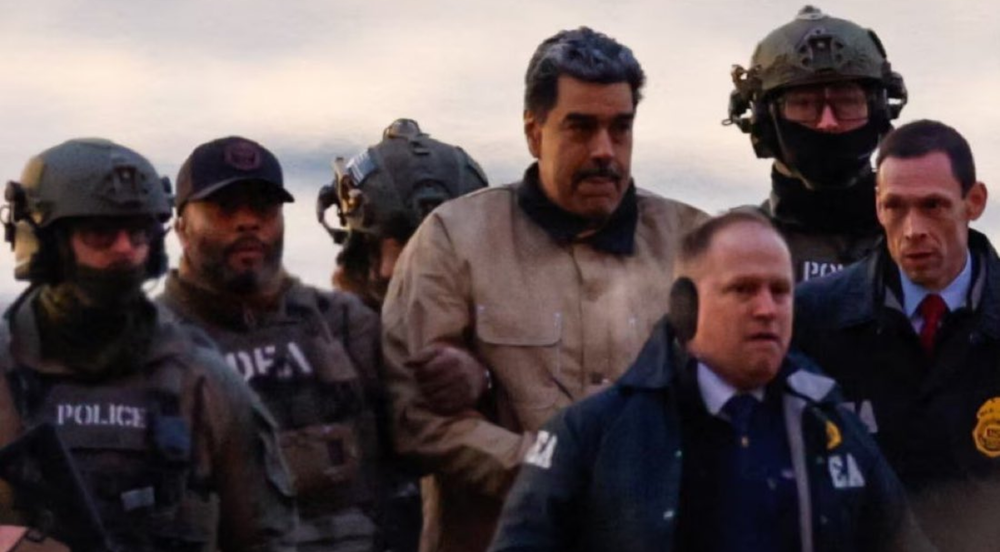
U.S. forces conducted coordinated airstrikes targeting Venezuelan air-defence systems and key military installations around Caracas, followed by a special-forces operation that resulted in the capture of Venezuelan President Nicolás Maduro.
He was subsequently transported out of the country and taken to the United States, where American authorities stated he would face criminal prosecution under U.S. law.
Washington justified the operation as a necessary action against transnational crime, alleging that the Venezuelan head of state was directly involved in narcotics trafficking and organized criminal networks. U.S. officials framed the strike as a limited operation designed to neutralize security threats and disrupt criminal infrastructure, rather than as a declaration of war. President Donald Trump described the mission as decisive and claimed it would help stabilize the region and protect U.S. interests.
In Venezuela, the response was immediate and severe. Government officials condemned the operation as an act of aggression and a violation of national sovereignty. A state of emergency was declared, and senior figures within the Venezuelan military announced that leadership of the country would continue under constitutional continuity.
Defence Minister Vladimir Padrino López assumed effective control of state security, presenting himself as the guarantor of national stability in the president’s absence. Officials in Caracas denounced the removal of Maduro as an illegal kidnapping and demanded international intervention.
International reaction was swift and deeply divided. Several governments across Latin America condemned the operation, warning that it undermined regional stability and set a dangerous precedent.
Countries including Brazil and Colombia expressed concern that the use of force would escalate tensions and potentially trigger refugee flows or wider conflict. Cuba, China, and Russia issued strong denunciations, characterizing the strike as an unlawful act of aggression and a breach of the fundamental principles of sovereignty enshrined in international law.
At the United Nations, diplomats called for emergency consultations and urged restraint. While no immediate consensus emerged, many representatives emphasized that the use of military force without Security Council authorization or a clear claim of self-defence raises serious legal concerns.
Under the UN Charter, states are prohibited from using force against another sovereign nation except in cases of self-defence against an imminent threat or with explicit international authorization. Critics argue that neither condition was clearly met in this case.
Legal scholars and international law experts have raised particular alarm over the capture and removal of a sitting head of state. Such actions are widely viewed as violations of established norms regarding sovereign immunity and non-intervention.
Even critics of the Maduro government have questioned whether criminal allegations, however serious, can justify unilateral military action and extraterritorial arrest without international cooperation or due process.
Supporters of the U.S. operation contend that Venezuela’s political system has long failed to hold its leadership accountable and that extraordinary measures were required. They argue that the action could open the door to political change within Venezuela.
Opponents counter that bypassing international institutions weakens the global legal order and risks encouraging similar interventions by other powerful states under the guise of law enforcement or security.
The regional consequences remain uncertain. The strikes have heightened military alert levels in neighbouring countries and intensified diplomatic friction between major powers. Within Venezuela, public opinion appears sharply divided, with some citizens welcoming Maduro’s removal and others fearing instability, foreign control, or prolonged conflict.
As events continue to unfold, key questions remain unanswered: who will govern Venezuela in the short and long term, how international bodies will respond to the use of force, and whether this episode marks a turning point in how powerful states interpret and apply international law.
What is clear is that the operation has challenged long-standing norms around sovereignty and intervention, and its implications will be debated far beyond Venezuela’s borders.