ADAMS: Edward Nixon Must Be Removed for His Conduct at a Political Event
I went to this political event in good faith.
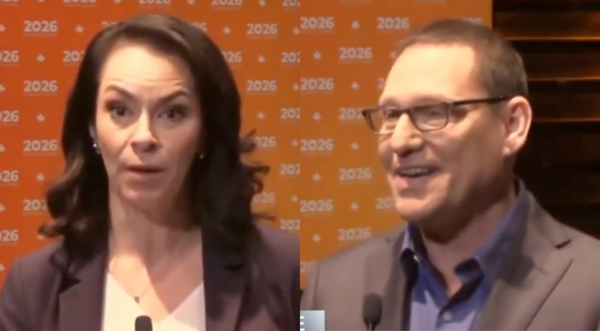
It was a joint appearance by Nate Erskine–Smith and Mary-Margaret McMahon, and for the most part, it was exactly what these events should be: accessible, conversational, and engaging. People were energized. Questions were thoughtful. The atmosphere was open. I left most of the evening feeling encouraged and excited.
Then something happened that shattered that feeling completely.
This op-ed is not written lightly. It's written because silence is how bad behaviour survives in political spaces.
As the event was winding down, with most people gathered around the MP and the MPP, I was seated next to a friend. That's when Edward Nixon, the President of the Scarborough Southwest EDA, approached us.
At first, he seemed eccentric but tolerable. He spoke loudly. He rambled. He made odd remarks about young people and drug use. It quickly became apparent he was intoxicated; his speech slurred, his eyes bloodshot, and he repeatedly forgot basic details of the conversation.
Then it escalated.
While I was introducing myself, he abruptly announced—out loud—that I was “annoying.” Without asking, without warning, he physically pushed me out of my chair, slid into my seat, and positioned himself next to my friend instead.
That alone would have been unacceptable.
What followed was worse.
He spoke at length about sex and drugs. He made degrading remarks, including saying my friend should “tie me up and put me in time out” for being “rude.” He touched her hand and shoulder repeatedly. He touched my thigh multiple times. None of this was invited. None of it was appropriate. All of it crossed clear personal boundaries.
This went on for over 15 minutes.
He fixated on my friend, repeating her name, memorizing it, all while being unable to remember mine. To confirm what was already obvious, when he asked for my name a second time, I gave him a completely different one.
“My name is Ross Tillman.”
He didn't notice. He accepted it without question.
That is how impaired he was.
There were no witnesses because everyone else was occupied, engaged in conversation with elected officials, assuming that the space was safe and professional.
This is how misconduct hides in plain sight.
Let me be very clear: this was not an “awkward interaction.” This was not a misunderstanding. This was a Liberal Party official abusing his position, his proximity, and the assumption of trust that comes with it—while intoxicated—in a setting where constituents & activists have every right to feel safe.
Political events are not private clubs for insiders. They are public spaces. They are civic spaces. And when someone in a position of authority behaves like this, it doesn't just harm the individuals involved: it undermines public trust.
Too often in politics, people are told to downplay these moments. To avoid “making a scene.” To protect the brand. To stay quiet for the sake of unity.
I reject that entirely.
If we want young people to participate in politics, if we want women to feel safe in political spaces, if we want the public to believe that politics isn't just a self-protecting elite, then accountability cannot be optional.
Alcohol is not an excuse.
Status is not an excuse.
Being “one of the organizers” is not an excuse.
Leadership is about responsibility. And responsibility means consequences.
Edward Nixon must be removed from his position.
Not quietly shuffled aside. Not given a talking-to behind closed doors. Removed. Because the standard for political conduct should not be “as long as no one important saw it.”
It should be higher than that.
I didn't go to this event looking for a story. I didn't want to write this. But I will not pretend it didn't happen, and I will not accept a political culture that protects people like Edward Nixon by default.
Politics does not belong to party insiders. It belongs to the public.
And anyone who forgets that—or thinks the rules don't apply to them—has no business holding power.
This column reflects the author's firsthand account of events experienced at a public political gathering. The individuals referenced were identified by name because the conduct described involves matters of public trust and accountability. No allegations beyond what the author directly observed and experienced are made. The purpose of publishing this account is not partisan, but to uphold basic standards of professionalism, consent, and safety in political spaces.