Adams: I Went to a Dominic Cardy Event. It Explained the CFP's Biggest Problem.
There's a certain rhythm baked into by-elections: local stakes, local answers. When I attended a Wednesday-night event in Toronto hosted by the Canadian Future Party featuring party leader Dominic Cardy, the pitch was simple enough: organizing around the University–Rosedale by-election triggered by Chrystia Freeland's resignation. The CFP wants to make a splash. Fine. But splashes are not strategies, and Wednesday night proved it.
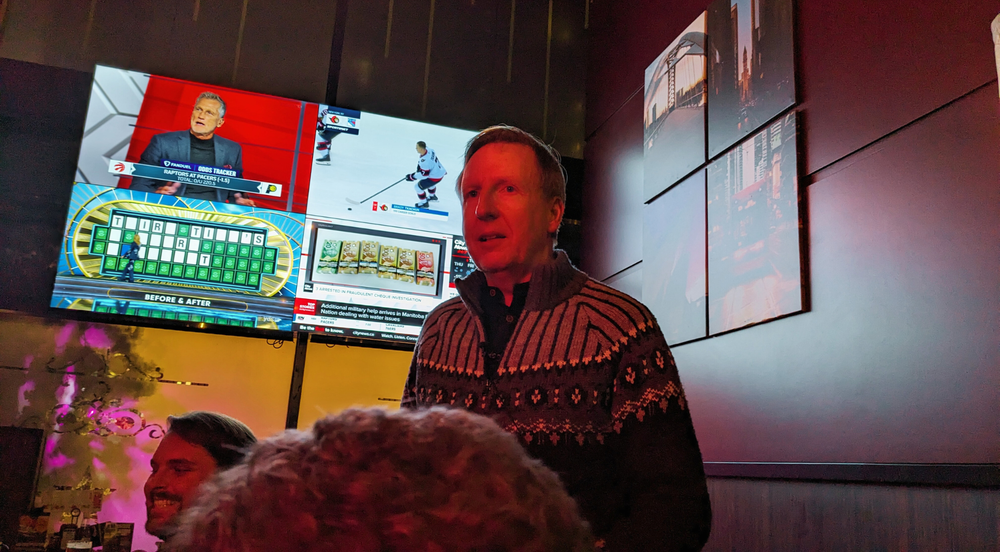
The event was supposed to be about establishing an EDA, nuts, bolts, ground game. In practice, it turned into a Dominic Cardy meet-and-greet with a side of foreign-policy sermonizing, cook medium-rare. When Cardy arrived, the room snapped to attention. People listened. And then, for the better part of the night, the by-election quietly disappeared.
Cardy spoke about democracy. He spoke about Russia and China, Ukraine and Taiwan, and the dangers of institutional weakness. He spoke about how Liberals and Conservatives are both “too extreme,” even though the Liberals—under the leadership of Mark Carney—now sit materially to the right of how he portrayed them. The tone was confident, certain, and unyielding. Everything was delivered as settled fact.
Listening to Cardy, I was reminded of the antagonist of Call Of Duty: Advanced Warfare, Jonathan Irons. Both men speak constantly of “democracy” while framing authority, discipline, and hard realism as reluctant but necessary obligations. It's the language of control in the name of stability. The result is a politics that talks about democratic values while advancing a worldview that is deeply top-down.
That might play in a think tank. It's a terrible fit for a by-election.
By-elections are brutally simple. Turnout is low. The people who actually vote are focused—almost exclusively—on pocketbook and local issues. You'll be lucky if 30% of the riding shows up. The remaining 70%—the people who care deeply about foreign policy—aren't there. They're at home. That's not an insult; it's a reality. Unless you're in an NDP stronghold where foreign policy has become a proxy identity fight, by-elections are about affordability, services, and credibility.
On that score, Wednesday night was thin gruel.
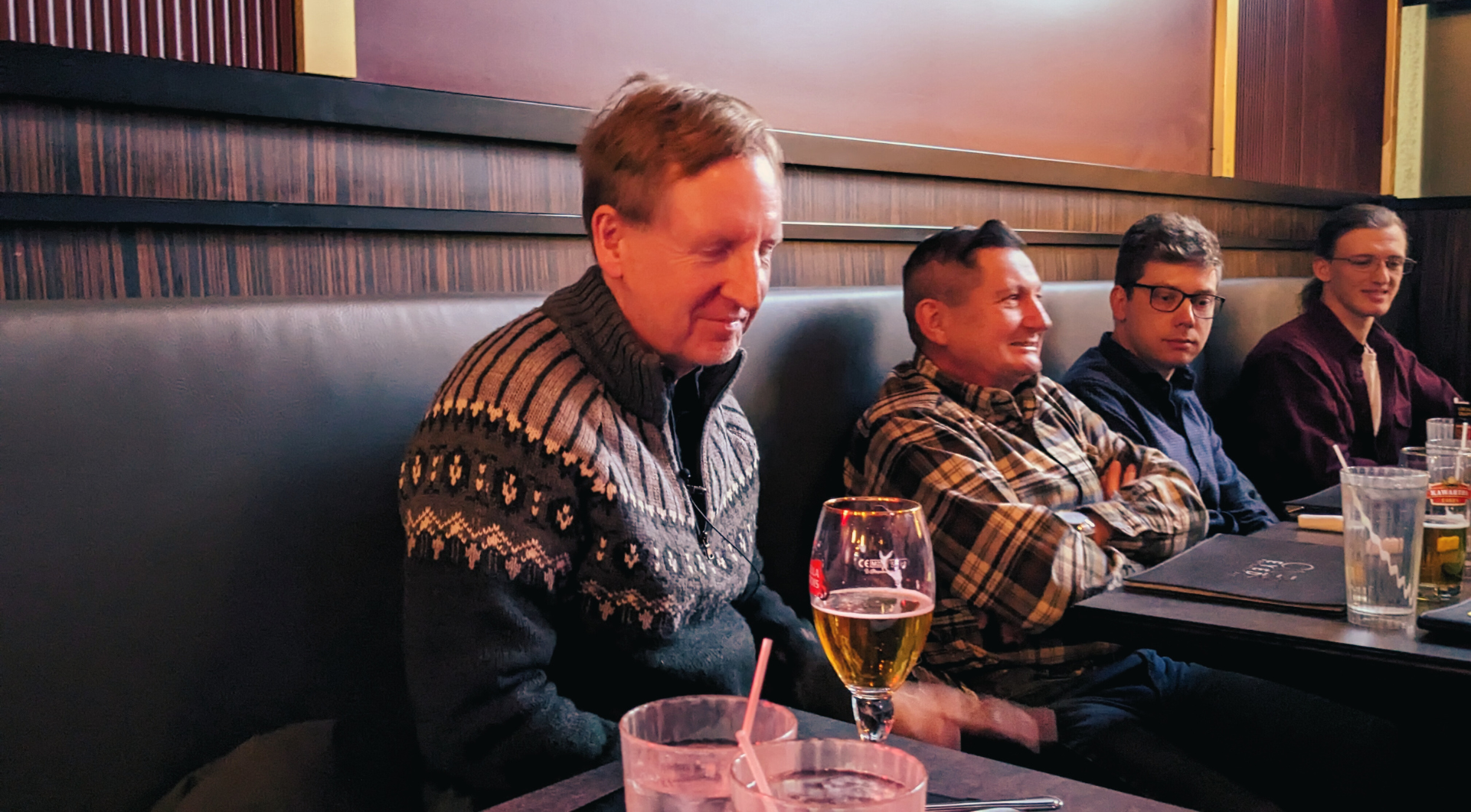
Most of the EDA talk happened before Cardy arrived. After that, organizing gave way to orbiting. Cardy worked the room. People queued for one-on-one conversations. The event became about proximity, not planning. Before Cardy's arrival, I asked the organizer direct questions about strategy:
“Which party is the CFP competing directly against here?”
“What rhetorical lane are you taking to ensure the candidate performs well?”
The answer was dodged. People assumed I was confused about which by-election we were discussing. I wasn't. The question was clear. The strategy was not.
My Conversation With Dominic
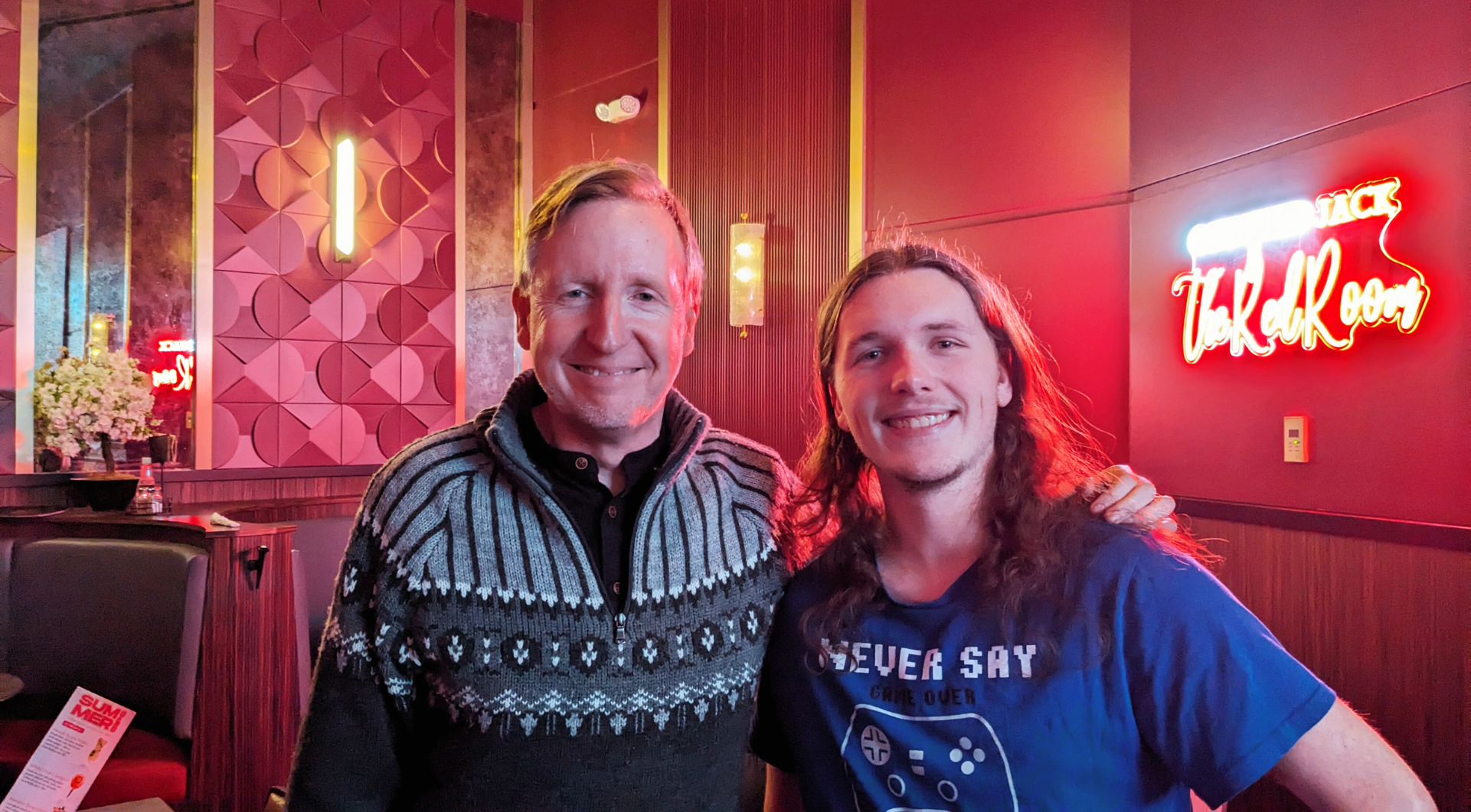
Eventually, Cardy and I spoke. I asked him many things, including why New Democrats don't like him. He laughed and said it was because he “called out Marxism.” Maybe. I've also heard allegations from people who say they worked under his leadership in New Brunswick that strong candidates were intentionally sabotaged so he could remain on top.
Who's right? Hard to say, I wasn't there. What I was there for, (and was also present for in the CFP Youth) is how easily complexity gets brushed aside by Cardy.
Cardy told me his favourite modern federal NDP leader was Thomas Mulcair. He agreed Mulcair fumbled marijuana legalization strategically, but when I suggested the balanced-budget fixation was the bigger mistake, Cardy went further; characterizing the majority of 2015 voters as ill-informed and stupid. That's a remarkable thing to say given what Canadians had just lived through under Harper, all in the name of “fiscal responsibility.”
On immigration, Cardy got half the story right. He correctly said Pierre Poilievre's Conservatives are wrong to scapegoat immigrants. He was wrong to claim the system's breakdown—backlogs, TFW exploitation—was wholly Trudeau's fault.
That history stretches back further, to when his favourite federal NDP leader was mocked for daring to suggest that TFW's shouldn't be working in fast food, and we didn't have nearly as many TFW's in 2013 as we do now.
Ironically, admitting that would only strengthen his argument by exposing how opportunistic Conservative panic really is. Instead, blame was redistributed to preserve a tidy narrative that makes the responsibility 50/5o for blame: Conservative extremism as an understandable—if regrettable—reaction to Liberal excess.
Cardy agreed the Alberta MOU was theatre. He maintained Carney should build pipelines. He didn't write off nuclear, which deserves credit, but insisted oil remains the biggest necessity for economic and energy policy. We debated it. We agreed on nuclear. We disagreed on oil. Thats fine. Debate is healthy. What wasn't healthy was how every position arrived pre-packaged with absolute certainty.
What did the room reveal? A lot, actually.
Many attendees described Poilievre as far-right while simultaneously insisting Carney is far-left, I found that to be an odd claim, as it suggests people are still fighting the Trudeau era, not the political reality in front of them. Older attendees spoke nostalgically about voting PC before the 2003 merger. Younger ones were there because Trudeau pushed them away. Across age and background, one thing was consistent: even supporters thought Cardy should take it down a notch with the pro-war, doomer framing.
That's the real takeaway.
The CFP has a recognizable figure who can command attention. What it doesn't yet have is by-election discipline. You don't win local races by treating voters like an audience for grand theory. You win by answering simple questions clearly and repeatedly:
Who are you competing against? What will you change here? Why should someone bother showing up?
Wednesday night didn't answer those questions. It danced around them.
And in a by-election, dancing isn't enough.
The views expressed in this piece are those of the author and do not necessarily reflect the editorial position of The Provincial Times or Left Lane Media Group. Read our Content Policy here.