ADAMS: I Went to an Yves Engler Rally. Here's What Surprised Me.
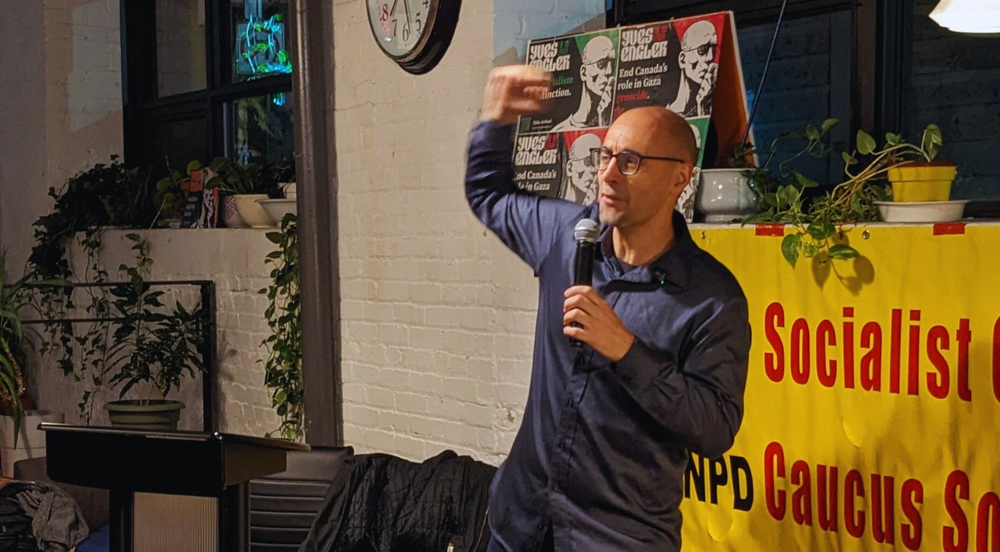
The night Yves Engler spoke in Toronto, it was already clear that this was not going to be a conventional leadership event. That impression has only hardened since the New Democratic Party formally rejected his leadership bid.
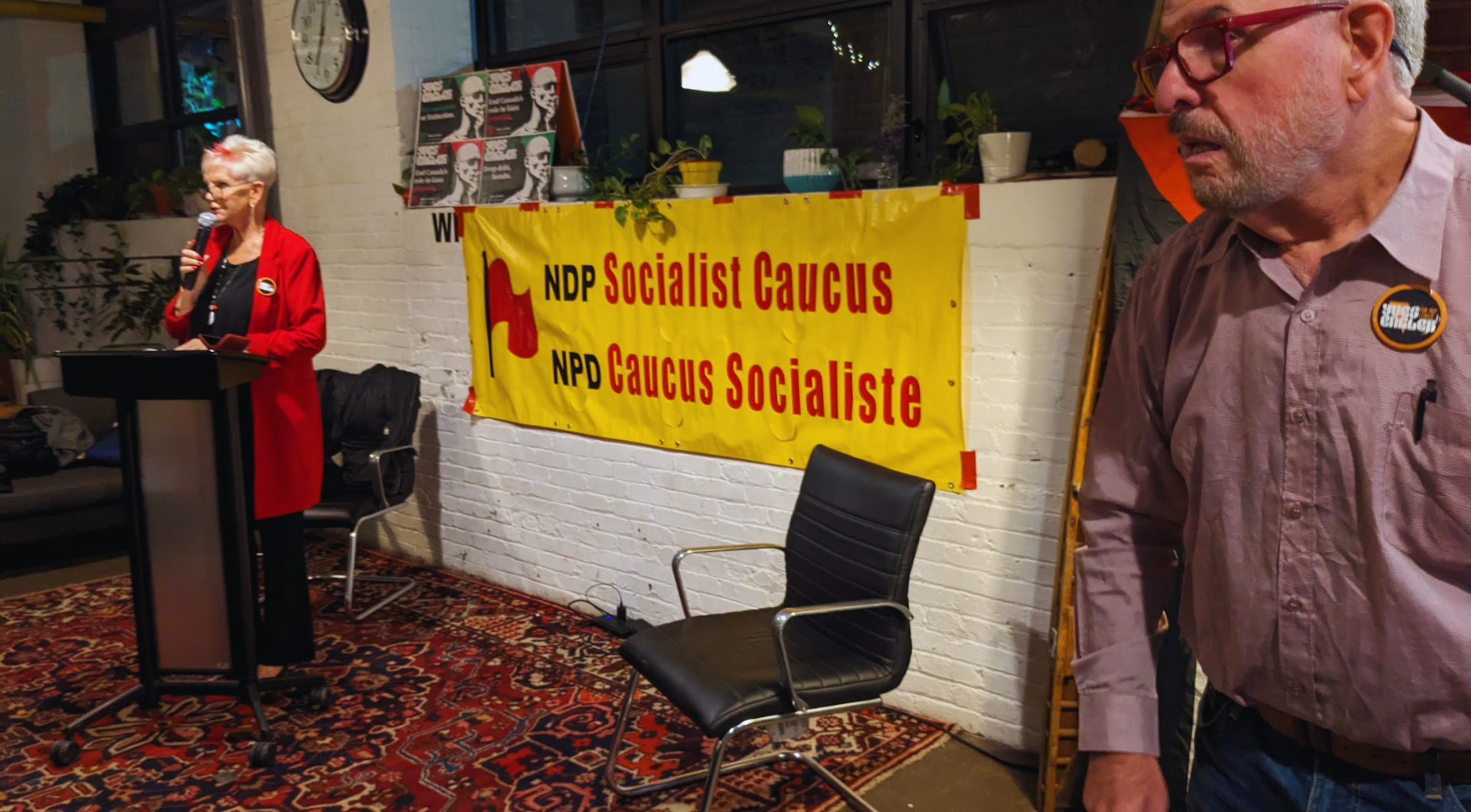
What I attended on October 14th was not merely a campaign rally. It was a window into a very specific political subculture; one that exists largely outside the NDP, often in open hostility to it, and one that the party ultimately decided it could not and would not absorb.

What Happened At The Event Itself

The evening opened with chants for Palestinian liberation and a land acknowledgement that explicitly connected Indigenous dispossession in Canada with Palestine, Sudan, and Kashmir. Organizers explained that the scheduled chair had been injured earlier in the day during a confrontation with police at another protest and was hospitalized—an announcement that set the emotional tone for the night: urgency, confrontation, and grievance.
Before remarks were made, the rules of engagement were laid out. Attendees were instructed not to engage with police, counter-protesters, or agitators, and to defer to marshals. This was framed as collective care, but also reinforced that this was not a neutral political space.
Several speakers preceded Engler, most notably labour activists and socialist organizers who framed his candidacy as the only serious anti-capitalist option in the NDP race. Speaker after speaker described the party as having resigned itself to irrelevance, neoliberal accommodation, or cowardice on militarism and NATO. Mark Carney, though not an NDP figure, was invoked repeatedly as a symbol of elite consensus—especially on military spending—and the crowd responded approvingly to denunciations of Canada's defence policy and NATO alignment.
A rabbi associated with Independent Jewish Voices spoke at length, grounding his support for Engler in Jewish ethical teachings about actively pursuing justice and peace. His remarks were among the most measured of the evening and framed Engler less as a personality than as a vehicle for ideas that others were unwilling to say aloud.
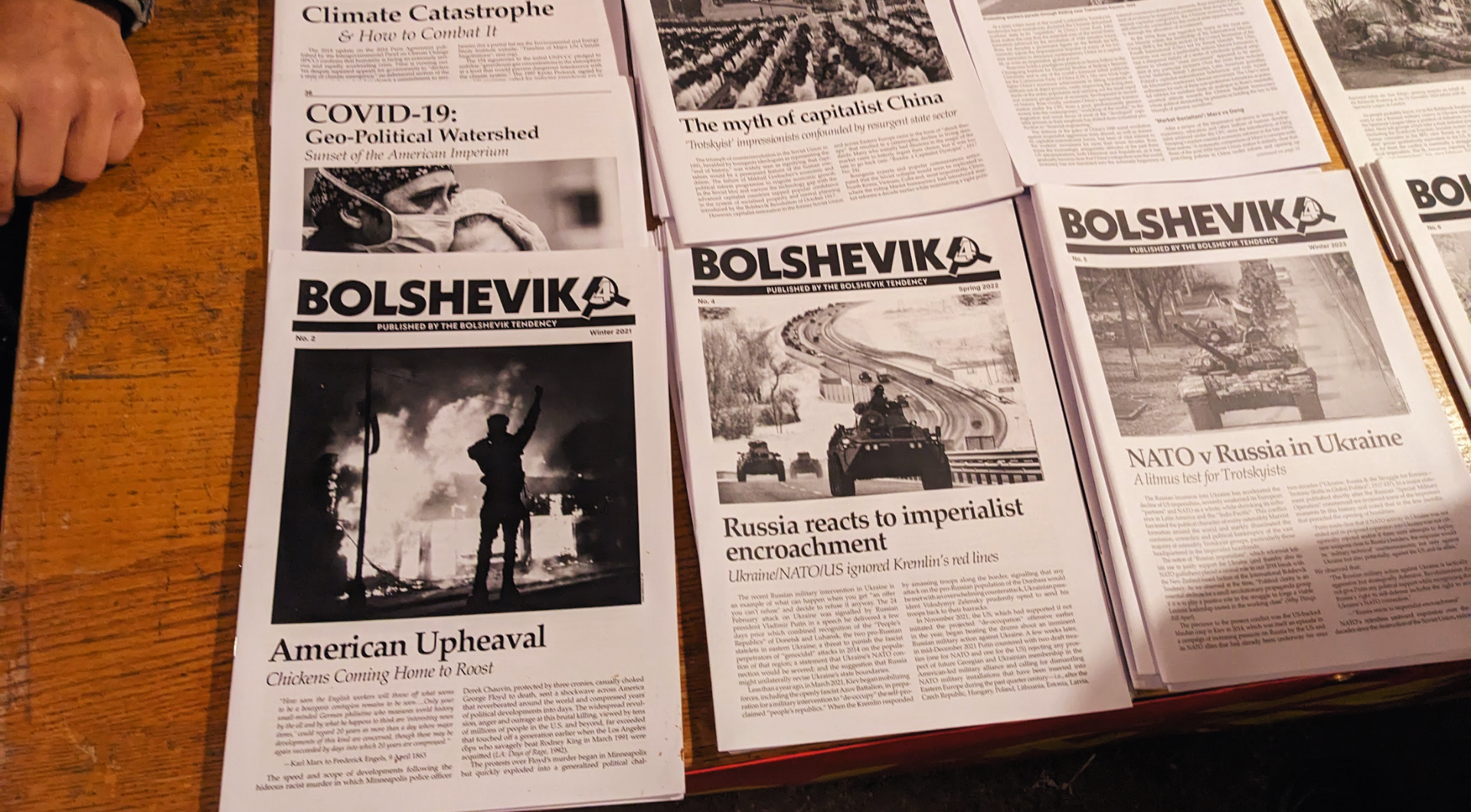
And then there was a detail that matters, because it was allowed to matter: a communist newspaper table was operating inside the event space, selling print material that—from what I observed—glorified Russia's war in Ukraine, painted Putin as a victim, and framed the invasion as NATO “forcing their hand.” In other words: apologetics for an imperial war, and for the cultural genocide of Ukrainians.
When Engler took the stage, he did not soften his message.
He described his campaign as one that challenges capitalism, imperialism, militarism, and colonialism outright. He condemned Canada's military spending, NATO membership, and foreign policy alignment with the United States. He argued that military budgets inevitably cannibalize social programs, and that even modest increases make housing, healthcare, and climate action mathematically impossible.
He was explicit in his condemnation of Israel and Canadian support for Israel, framing the war in Gaza as genocide and accusing Canadian institutions of failing to enforce their own laws on arms exports, war crimes, and foreign enlistment. On climate, Engler called for shutting down the tar sands, ending fossil fuel expansion, and embracing degrowth—a concept he returned to repeatedly, particularly around consumption, plastics, and advertising culture.
The audience largely responded with enthusiasm.
Where the Cracks Appeared
The event became more revealing during the open discussion period.
One exchange stood out sharply: a Chinese gentleman spoke about repression in Hong Kong, the misuse of “socialism” by authoritarian states, and the risks faced by activists opposing both Western imperialism and Chinese state power.
His intervention was thoughtful, personal, and clearly grounded in lived experience. The room's response was as disrespectful as it could possibly be.
As he began speaking, I could hear people say “shame.” Others audibly laughed. The reaction the crowd gave suggested that he was not being taken seriously, that his testimony was an inconvenience rather than a contribution to the conversation at large. It was not a moment of disagreement; it was a moment of dismissal.
That moment lingered. And it lingered alongside what I had already noticed: the normalization of propaganda inside the room.
It revealed an uncomfortable truth about the culture in the room: some experiences of repression are treated as morally urgent, while others are waved away if they complicate a preferred geopolitical narrative. The man was not defending Western imperialism, he was warning about authoritarianism being laundered through left-wing language.
Instead of engaging with that warning, parts of the audience chose mockery.
That moment lingered.
Where I Shift From Description to Judgment
At this point, neutrality would be dishonest.
Yves Engler does not represent the broad left. He represents a very specific subsection of it, what I will plainly call the actual radical left. Not social democracy. Not democratic socialism. Not labour-first pragmatism. But an ideologically rigid anti-imperialist current that too often collapses into “the enemy of my enemy is my friend.”
This was not just theoretical. It was present in the room. And it was present in the willingness to share space with pro-Russia publications. I am not talking about “controversial viewpoints,” I am talking about material that functioned as PR for an invasion, laundering a narrative of victimhood for the aggressor, and rationalizing the destruction of a neighbour's sovereignty and culture.
Engler did not address this. He allowed it.
That matters.
Many of Engler's most enthusiastic supporters were not New Democrats at all. They were members of explicitly socialist or communist organizations—including the Revolutionary Communist Party. These are protest movements, not electoral coalitions.
And it showed.
To be clear: every supporter I directly spoke with was kind, respectful, and welcoming. That is not in dispute. But kindness does not equal compatibility. What was clear—painfully clear—was that most of the room was not invested in the NDP as a party. The NDP was treated less as a vehicle to be strengthened and more as an obstacle to be breached, captured, or discarded. Engler himself reinforced this dynamic.
His rhetoric toward the NDP was openly antagonistic. The party was described as timid, compromised, unserious, or structurally incapable of real change. That posture may play well in activist circles, but it is a disastrous foundation for a leadership bid inside a mass party.
On Nuclear Energy, Where Engler Loses Me Completely
Engler's stance on nuclear energy is, frankly, unserious. His response to energy demand—repeated throughout the night—was simply that we must “consume less.” There was no serious elaboration on what that means, who bears the cost, or how that transition is managed without collapsing living standards for working people.
“Consume less” is not a policy. It is a slogan.
Does it mean de-industrialization? Energy rationing? Lower household standards? Who sacrifices, and who doesn't? These questions were not answered.
Rejecting nuclear power outright while offering only vague appeals to reduced consumption is not climate realism. It is abdication. A serious left-wing climate program must grapple with energy density, grid stability, and decarbonization at scale. On this file, Engler simply did not.
A Complicated Personal Note
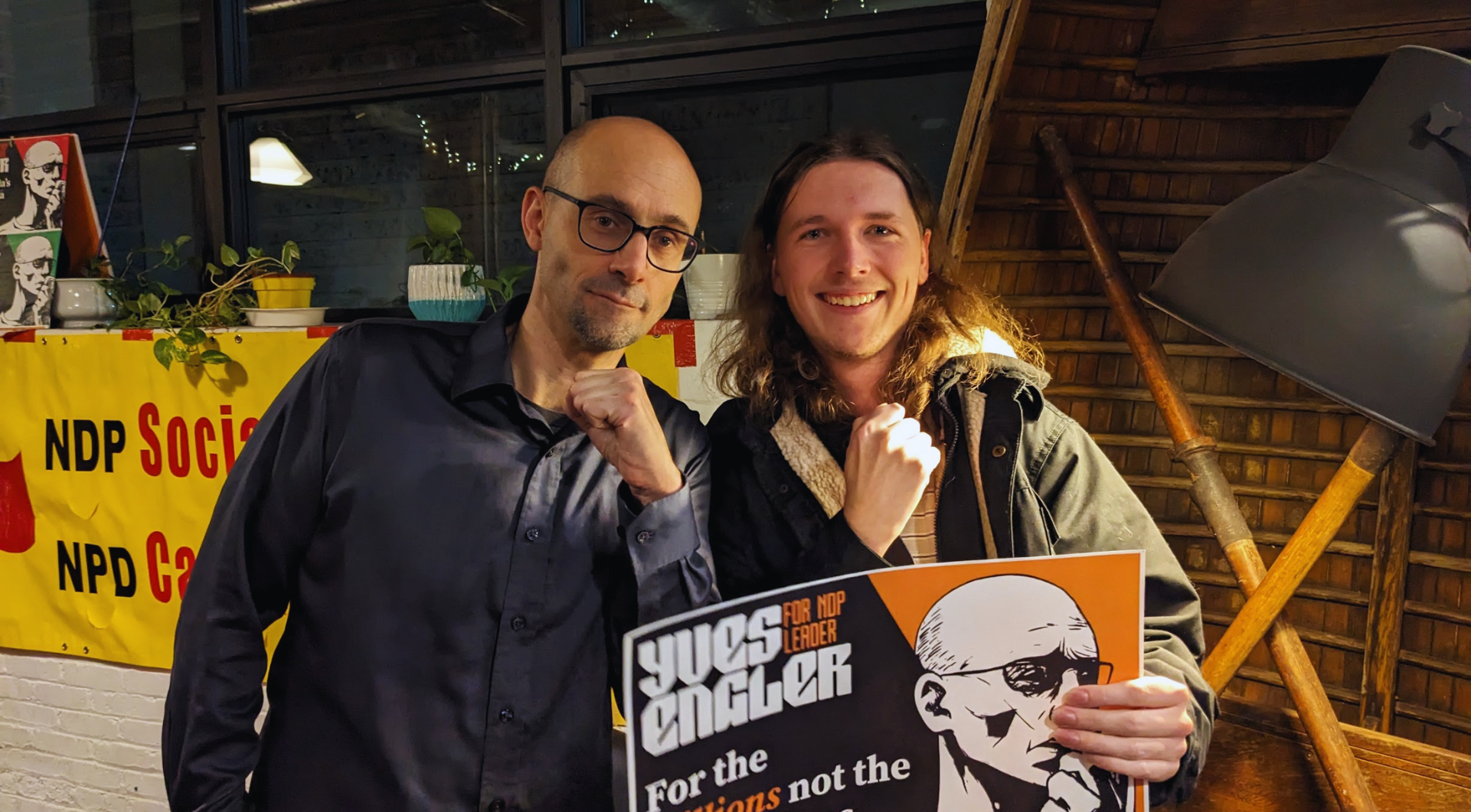
My personal interaction with Yves Engler was, unexpectedly, positive.
Despite knowing full well that I have publicly criticized his conduct and disagreed with him on multiple fronts, he treated me with respect. He told me he respects my work and believes I have potential as a writer. I believe he meant it.
That makes this harder, but not different.
Respectful conduct does not negate political reality. And political reality is this: Engler's campaign was never aligned with the NDP as it exists, nor with the coalition it must build to survive.
Engler's Rejection Was Inevitable
Yves Engler's event was not a failed leadership launch. It was a successful demonstration of something else entirely: a movement that is ideologically coherent, deeply committed, and fundamentally misaligned with the New Democratic Party as a governing project. That honesty deserves recognition. But honesty does not entitle a movement to capture an institution that exists to serve a broader, more fragile coalition of voters, workers, and communities.
The NDP rejected him because his campaign was openly hostile to the party, indifferent to its coalition, tolerant of authoritarian apologetics, and structurally rooted in movements that do not believe in electoral politics as such.
Engler will continue to shape debate from the outside, and his supporters will continue to organize with conviction. But leadership, especially in a democratic party, requires more than ideological clarity. It requires an understanding of power, responsibility, and the people who must live with the consequences.
The radical left Engler represents is real, organized, and articulate. It is also narrow. And the NDP, for all its flaws, cannot be rebuilt by a faction that fundamentally does not believe in it.
This piece was written by an individual contributor and reflects the editorial position of The Provincial Times and Left Lane Media Group. Read our Content Policy here.Read our Content Policy here.Read our Content Policy here.