ADAMS: Jamil Jivani's Narrow Politics of Young Men
Jamil Jivani wants to position himself as the voice of young men in Canada. It is an ambitious undertaking, and on the surface, a welcome one. For years, policymakers have treated male-specific challenges as either impolite to acknowledge or too politically dangerous to touch.
If someone wants to bring attention to those realities, good. But attention without honesty is not courage, it's branding. And Jivani's December column in the National Post, framed as a plea for non-partisan concern, is anything but.
When a politician tells you an issue is “bigger than partisanship,” the next paragraphs usually tell you what partisanship they have in mind. Jivani's piece is no exception. While claiming a national crisis for young men, he devotes more ink to attacking Liberals than addressing the actual substance of that crisis. And in doing so, he inadvertently contributes to one of the most corrosive trends affecting young men today: the reduction of our lives, struggles, and aspirations into talking points for someone else’s ideological marketing campaign.
As a young man myself, and someone who has lived many of the issues he claims to champion, I want something better than a pre-packaged narrative designed to fit neatly into Conservative positioning in advance of an election. I want honesty. I want policy. I want a recognition that the challenges young men face—economic, social, mental, educational, and yes, sometimes sex-specific—require more than assigning blame to the government of the day.
And I want something Jivani refuses to embrace: complexity.
The Crisis Is Real — But Simplifying It Isn't
Yes, there are real crises affecting young men in Canada: mental health struggles, higher dropout rates in college programs, higher rates of overdose, disproportionate homelessness among young men, and a justice system that often fails those who fall through the cracks early.
But Jivani's argument starts from the premise that this crisis has a singular cause—and conveniently, that cause is the federal Liberal Party.
That may make for an effective fundraising email, but it makes for poor analysis. These trends predate the Liberal government. They cross provincial boundaries. They are tied to structural issues—precarious work, a housing market tilted against new entrants, shrinking social infrastructure—not a single political party.
Conservatives run multiple provinces, including Ontario, where many of these challenges are most acute. If this is a crisis of political neglect, responsibility does not land neatly on one doorstep.
But Jivani's framing requires the Liberals to play the villain, because without the villain, the rest of the story collapses.
What Jivani Leaves Out: The Issues Affecting Young Men He Won't Touch
If Jivani wants to speak for young men, then he should be willing to confront the hard truths, including the ones that do not align comfortably with Conservative messaging.
There are issues that affect young men exclusively, and disproportionately, that never appear in his speeches, his media hits, or his glossy campus tours.
A glaring example:
In Canada, a male victim of sexual assault—even a minor—can be forced to pay child support to his abuser in a female-on-male sexual assault scenario.
That is not a hypothetical. It happens. It is a profound moral and legal failure, and one of the clearest illustrations of how male victimization is mishandled in practice. If you want to talk about the “state of crisis” facing young men, start there.
Yet Jivani never mentions it.
You will not find it in his book.
You will not find it in his speeches.
You will not find it in this latest column.
Why?
Because it does not fit neatly into the culture-war framework he relies on; a framework where young men's struggles must always be explained by DEI programs, Liberal elites, and “wokeness,” never by the actual gaps in our legal and social systems.
It's easier to blame diversity programs than to confront a real issue, like how courts treat male victims of sexual violence. It's easier to rail against American extremists like Nick Fuentes than to address how Canadian institutions often refuse to recognize men as victims in the first place.
This is the selective advocacy that defines Jivani's politics: championing the grievances that align with his faction, ignoring the ones that complicate his message.
We Don't Need More Divisive Storytelling
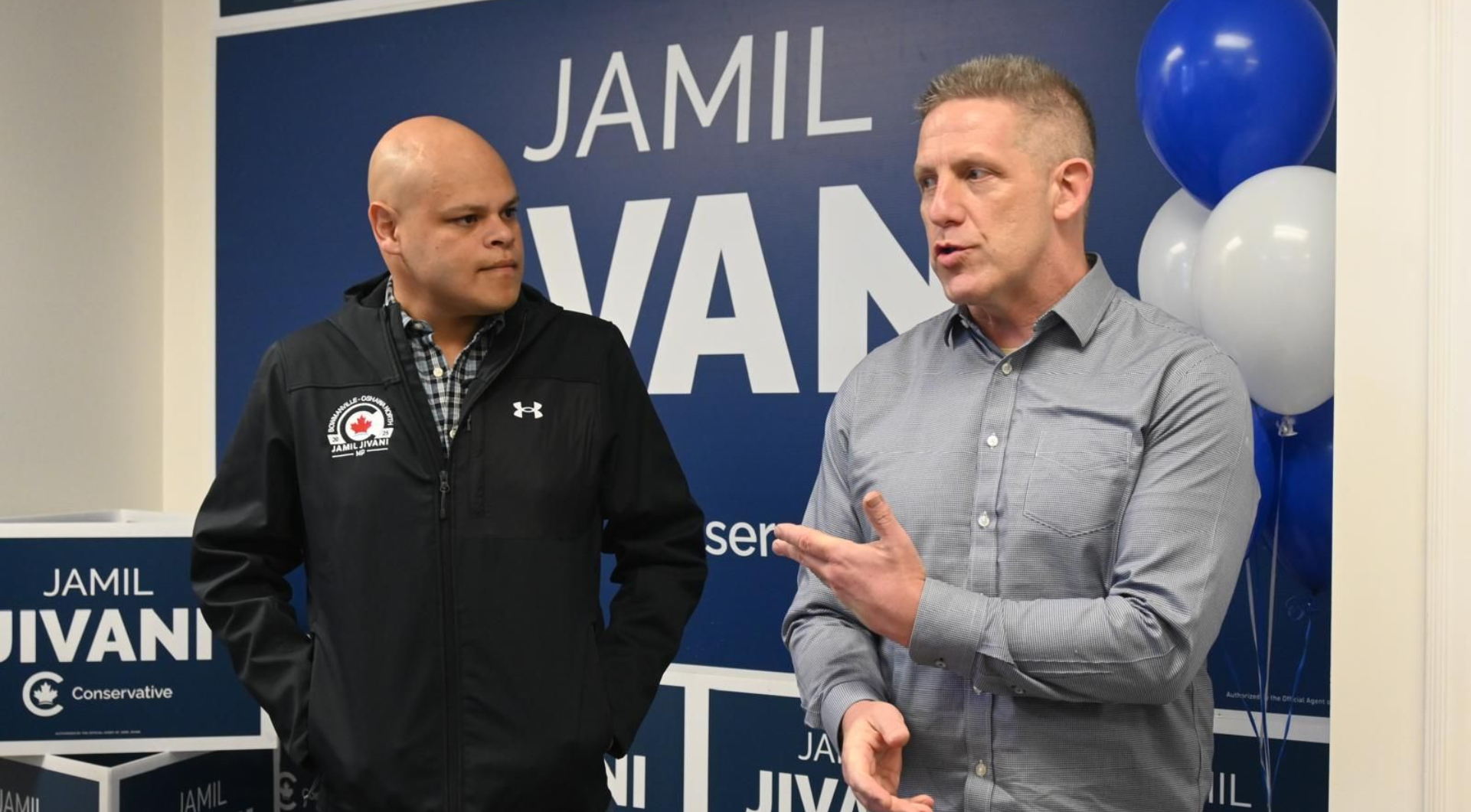
If Jivani were simply writing a partisan critique, that would be one thing. Partisanship is part of politics. But he wraps his argument in a moralistic warning that unless young men are embraced by the Conservative Party, they will fall prey to extremists.
This is the same framing used by every political movement trying to monopolize an emerging demographic: “We are your only safe home. Everyone else will abandon or mock you.”
The irony is that this rhetoric—and the divisive framing that accompanies it—creates the very conditions extremists exploit:
- A narrative of male victimhood centred on cultural resentment, not material solutions.
- An “us vs. them” worldview that redefines political disagreement as personal rejection.
- A stigmatizing view of young men as fragile creatures who must be rescued by one political party.
As a young man who cares deeply about these issues, I can tell you this plainly:
This framing does not help us. It stigmatizes us.
When public figures depict young men as one bad week away from falling into the arms of extremists, they don’t empower us — they pathologize us. They make us look unstable, irrational, constantly at risk of “radicalization,” and incapable of political agency unless guided by the “right” mentor. It reinforces every negative stereotype about young men being volatile and susceptible to manipulation.
As a young man, I find this theatre profoundly insulting.
Young Men Deserve Solutions, Not Slogans
If we want to improve the circumstances facing young men, we need:
- Affordable housing policy that recognizes young people are locked out of the market.
- Mental health infrastructure scaled to the realities of youth overdose, depression, and suicide.
- Education reform that addresses male underperformance long before university.
- Labour policy that acknowledges the collapse of stable, entry-level employment.
- Justice reform that corrects the unequal treatment of male victims, including in cases of sexual assault.
None of these solutions fit easily into the partisan morality tale Jivani is trying to tell. They require evidence, patience, and cooperation, not slogans about DEI or warnings about American influencers.
Young men need respect, not recruitment. Empowerment, not alarm bells. Policies, not political branding.
If Jamil Jivani wants to lead a serious national conversation about the challenges facing young men, then he should expand his vocabulary beyond “Liberal bad, DEI bad, Conservatives good.” Because the issues we face are real, and they deserve better than a narrative crafted for someone else’s campaign brochure.
Canada's young men are not props in a partisan morality play. We are not chess pieces to be moved to prevent internal fractures within the Conservative Party. And we are certainly more than the caricature of desperate, deradicalization-ready voters painted by those who claim to speak for us.
We deserve honesty—even when the truth is complicated. We deserve solutions—even when they challenge partisan comfort. And above all, we deserve political parties that sees us as citizens and as human beings, not as a demographic inconveniences to be managed or a crisis to be exploited.
Politics is at its worst when it replaces reality with narrative. Young men deserve the opposite. We deserve a politics grounded in the world we actually live in, not the one someone wants to campaign on.
This piece was written by an individual contributor and reflects the editorial position of The Provincial Times and Left Lane Media Group. Read our Content Policy here.Read our Content Policy here.Read our Content Policy here.