ADAMS: The Opposition Leader’s Excellent Adventure
It was, by any objective measure, a perfectly fine speech.
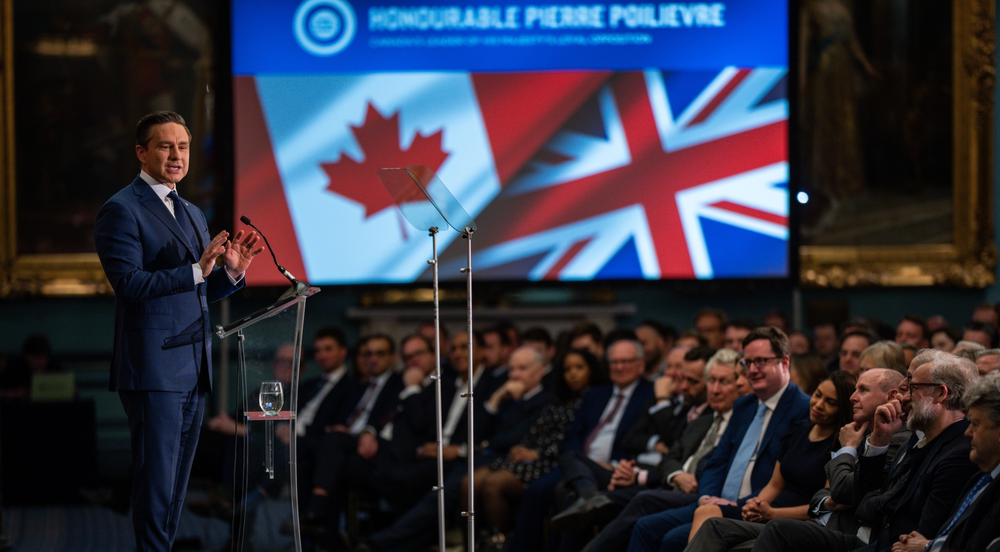
Pierre Poilievre stood before a London audience this week and delivered the kind of remarks opposition leaders have been delivering in friendly foreign capitals since the dawn of the Commonwealth. He spoke about the ties that bind Canada to the United Kingdom.
He invoked the shared heritage, the common law traditions, the familiar pieties about Crown and Parliament. He even floated the familiar nonpartisan dream of CANZUK: that elusive vision of unfettered mobility and trade between Canada, Australia, New Zealand, and the United Kingdom, albeit in a slightly altered form. It was, in its own way, entirely unobjectionable.
And it was also, in every meaningful sense, a complete waste of an overseas trip.
Pierre Poilievre did not go to London to move markets. He did not go to sign agreements. He did not go to unlock investment, finalize procurement deals, or pry open new export channels for Canadian producers. He could not have done any of those things, because that is not the role of an opposition leader. His job, constitutionally speaking, is to oppose. To critique. To offer an alternative vision. So instead, he gave a speech.
A speech that essentially repackaged ideas the current government has been pursuing, in concrete form, for months. Ideas about diversifying trade beyond the United States. Ideas about building new economic architecture with trusted democratic partners. Ideas that were outlined, with considerably more detail, in Mark Carney's Davos address earlier this year.
Poilievre's version came with better lighting. More photo opportunities. The appropriate number of handshakes with appropriately important-looking British figures. But speeches do not sell uranium. Photo ops do not reopen agricultural markets. Handshakes, however firm and well-photographed, do not translate into billions of dollars in new investment commitments.
For that, you need something else entirely. You need the slow, painstaking, deeply unglamorous work of actual economic diplomacy. And while Poilievre was busy performing the role of statesman-in-waiting in London, that work was happening elsewhere.
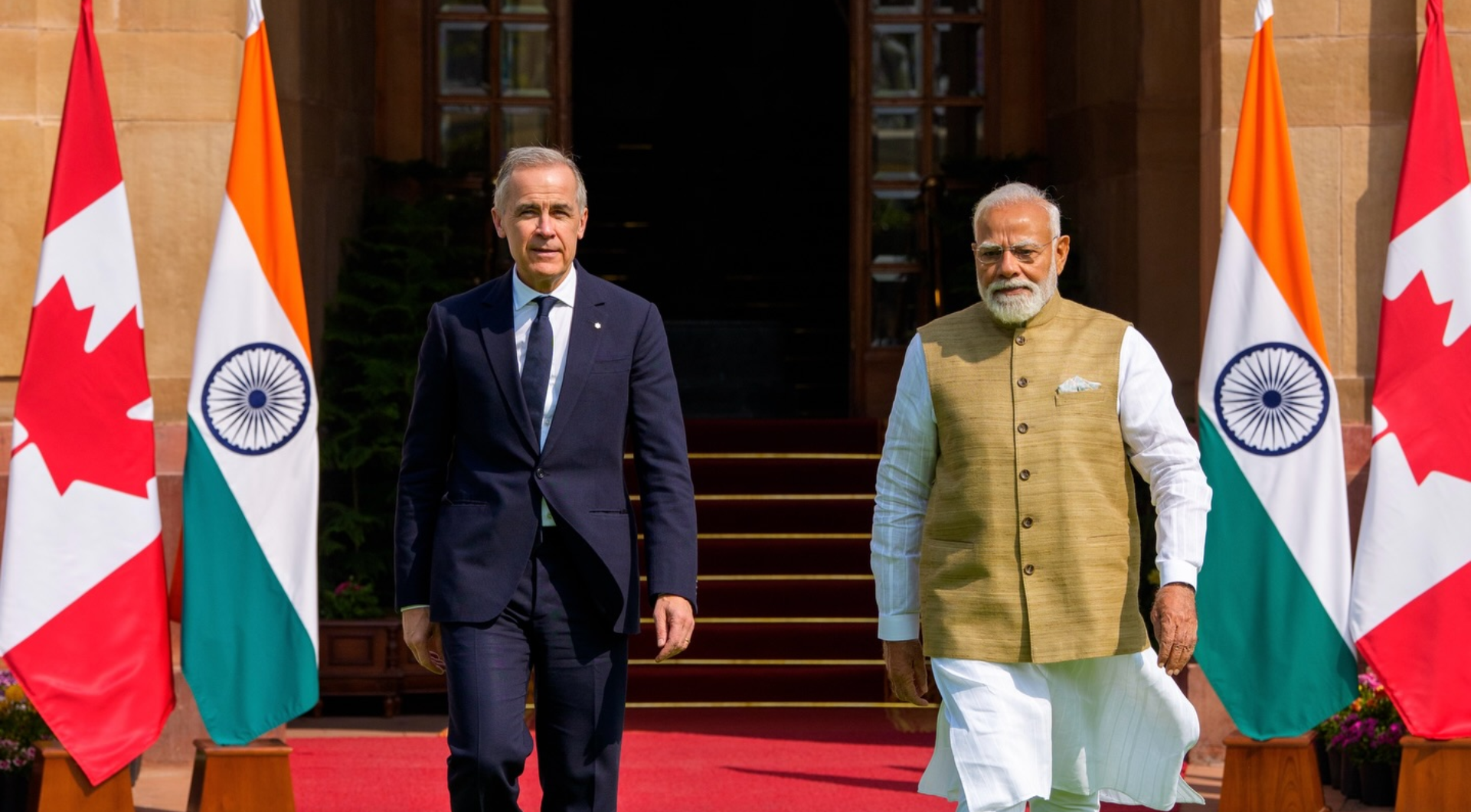
In India, where Canada just finalized a multibillion-dollar uranium supply agreement that will see Canadian resources fuelling one of the fastest-growing energy markets on earth. In Australia, where negotiations are advancing on critical minerals and supply chain cooperation. In the United Arab Emirates, where Canadian officials secured roughly $70 billion in new investment commitments last year aimed at infrastructure and domestic development.
These are binding agreements with dollar figures attached. They represent markets opened, industries strengthened, and economic relationships that will define the 21st century.
The contrast could not be more stark. On one side, you have the current government—flawed in a thousand ways, certainly, and open to endless policy debate—but nonetheless engaged in the actual mechanics of diversifying Canada's economic future. Tariff reductions with China reopening canola and seafood markets. Access to Europe's €150 billion defence procurement pool for Canadian companies. Renewed trade negotiations with India aimed at increasing bilateral commerce to $50 billion annually by the end of the decade.
On the other side, you have an opposition leader delivering a speech about ideas the government is already executing.
Now, to be clear: there is nothing wrong with opposition leaders travelling. It is healthy for democratic societies to have their alternative governments visible on the world stage. It is useful for potential future prime ministers to build relationships with their counterparts abroad.
But let's not pretend these two things are equivalent.
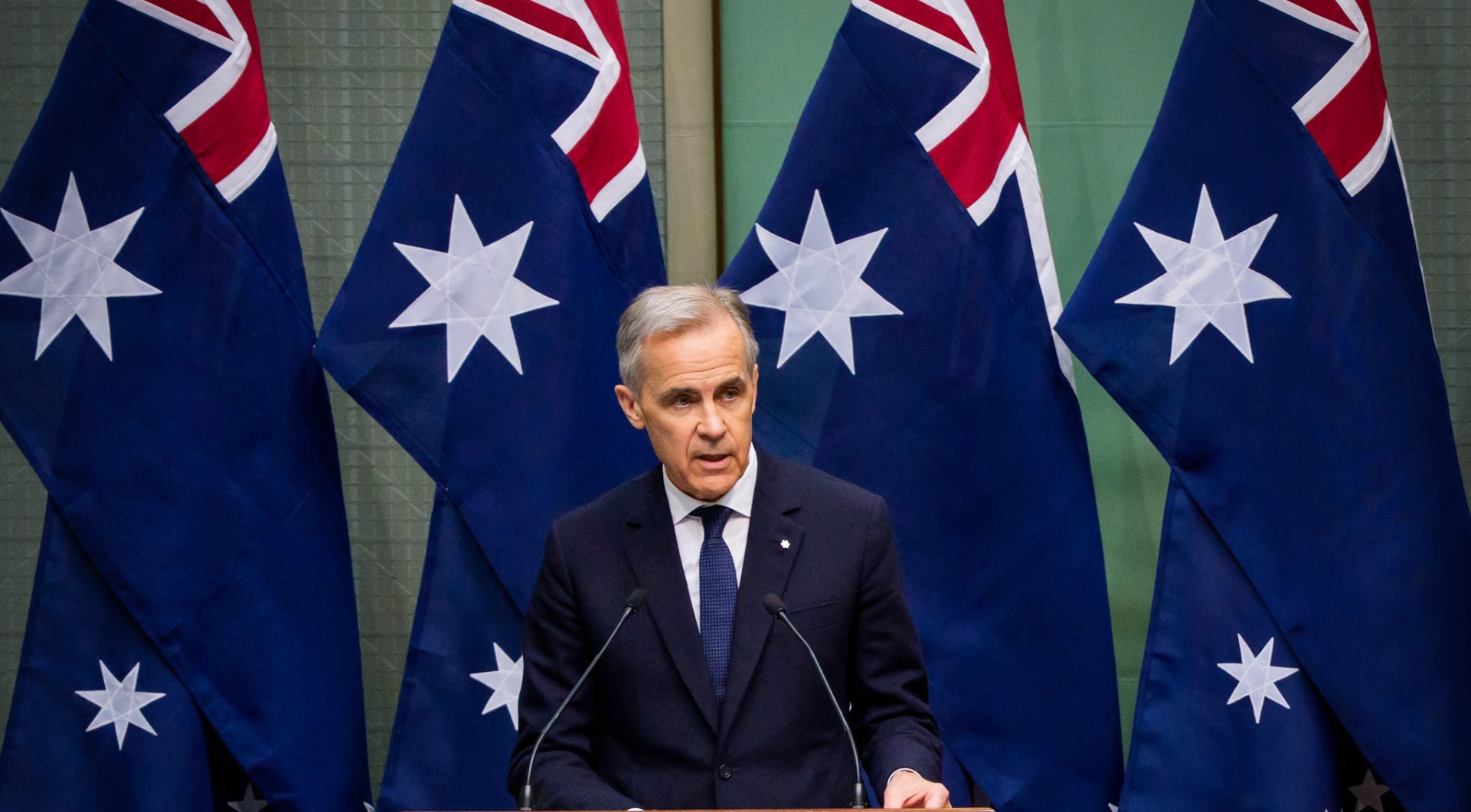
Pierre Poilievre gave a speech. Mark Carney, in his capacity as Prime Minister, and as a former special adviser and economic envoy, has been instrumental in securing billions in actual trade and investment. One activity generates press releases and social media content. The other generates economic growth and long-term national security.
The CANZUK idea Poilievre invoked so warmly in London is not a bad one. Closer cooperation with our Anglosphere partners makes intuitive sense. But the work of making that idea real does not happen in speeches. It happens in negotiating rooms. It happens in trade missions. It happens in the grinding, detail-oriented process of aligning regulations, removing barriers, and convincing foreign governments that Canada is a reliable partner worth betting on.
Canadians can debate the merits of the current government’s economic strategy until they are blue in the face. That is what oppositions are for. But the suggestion that nothing is happening—that the government is merely talking while Poilievre is acting—is simply not supported by the facts.
The facts show a country quietly but deliberately reducing its dependence on any single trading partner. The facts show billions in new investment commitments, new export channels, and new strategic partnerships across the Indo-Pacific, the Gulf, and Europe. And the facts show that while Pierre Poilievre was in London this week performing the role of prime minister, the actual work of governing continued elsewhere.
There is a difference between talking about economic partnerships and actually securing them.
It is a difference Canadians would do well to remember.