ADAMS: What Yves Engler's Recent Protest Tells Us About His Politics
There's a difference between dissent and entitlement. One challenges our institutions to be better. The other treats institutions as obstacles to be bullied, bypassed, or dirtied on the way through. On Saturday night, outside Toronto Metropolitan University, after the NDP leadership debate, that difference was made uncomfortably clear.
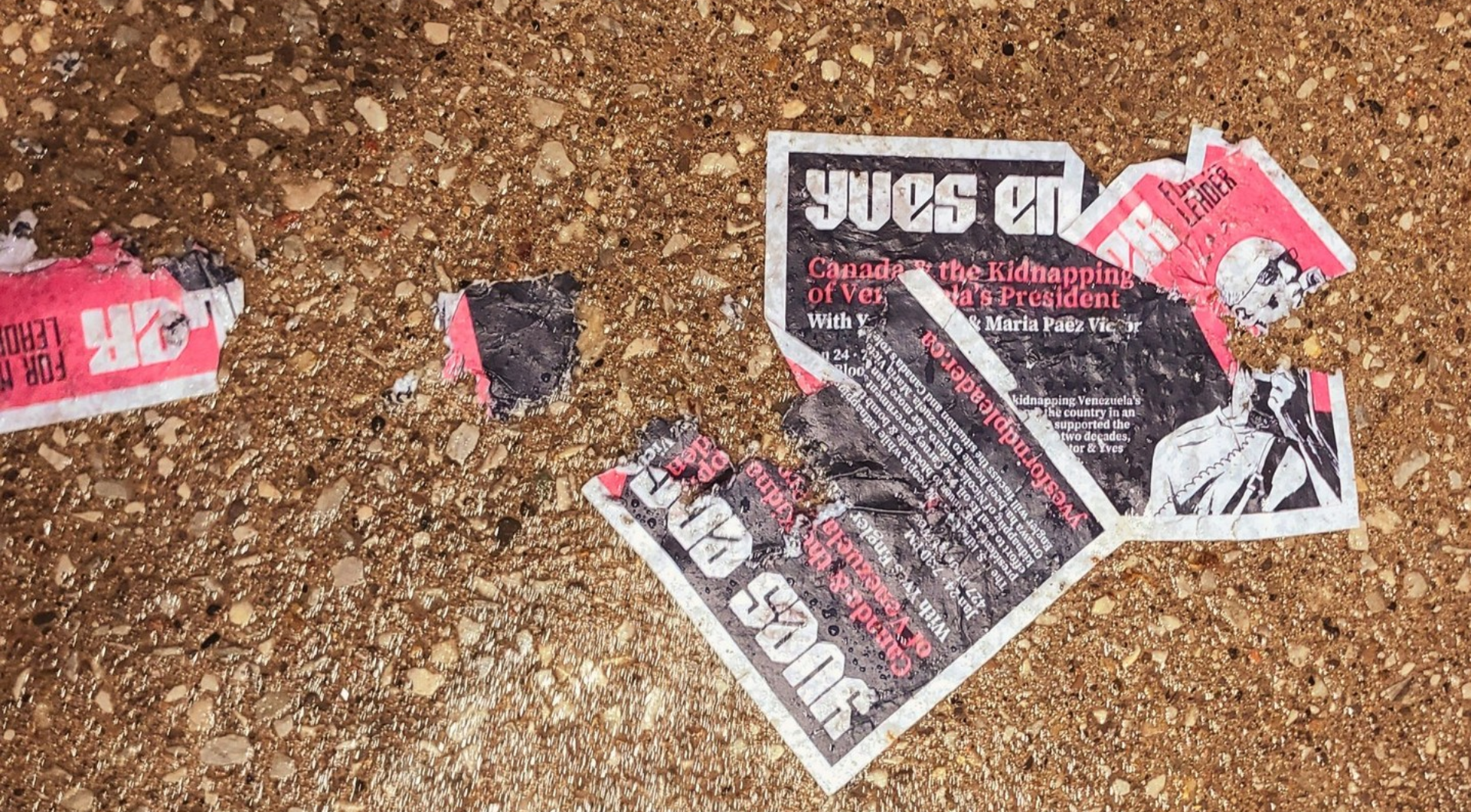
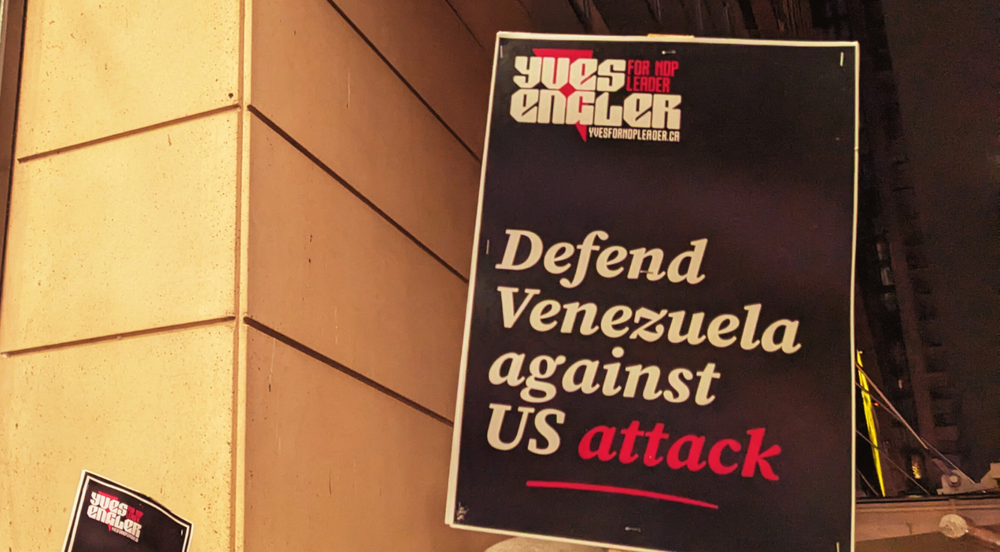
I took two photos. They show discarded flyers that were torn, soaked, and ground into the pavement. They don't show the full scale of it, but they're enough. The mess left behind by supporters of Yves Engler, who were protesting his exclusion from the leadership race, was extensive. This wasn't a stray pamphlet or two. It was garbage everywhere, dumped into shared public space and left for someone else to deal with.
That detail matters. Because someones character is not just what they say. It's how they behave when the rules don't go your way.
I've attended exactly one event hosted by Yves Engler. The supporters there were energized, no doubt. But they were also openly hostile to the NDP itself. Not critical. Hostile. Much of the crowd came from a familiar constellation of left-wing protest groups whose defining feature is not organizing, coalition-building, or governing, but disruption for its own sake. These are groups that don't exist to win power or improve institutions. They exist to cause problems and call it principle.
So when Engler announced on social media that he would stage a protest at the NDP debate, none of what followed came as a surprise.
The debate itself was an RSVP-controlled event. Volunteers were tasked with checking who had actually signed up at the door. When I arrived, there was confusion at the door, so much so that I had to explain to a volunteer that I had RSVP’d and where my name would be. That confusion wasn't accidental. Despite clear signals that Engler and his supporters were not welcome inside, they showed up anyway, handing out flyers and trying to push past boundaries that had been set for a reason.
Before the debate, I'd attended Tanille Johnston's event at the Bampot House. Among many questions, I asked her directly about Engler. Her answer was telling, and worth remembering. She said Yves Engler will do what he wants. That people should ignore him. That he should have followed the rules. And that, by refusing to do so, he was doing a disservice to his own supporters.
An Assessment That Aged Well In A Matter Of Hours.
Yves Engler walked the halls outside the NDP debate, loudly claiming he “was an NDP candidate” while pitching his so-called “internationalist platform.” Disruption, not dialogue, as attendees tried to enter the event. 📸 Jan 10, 2026
— Will Adams (@thisiswilladams.bsky.social) 2026-01-13T04:49:46.031Z
Inside TMU, as people were moving toward the debate area, Engler and his entourage somehow made it past the volunteer checkpoint. I don't know how. What I do know is what happened next. He raised his voice and began declaring that he was a “former NDP leadership candidate”—a claim never recognized by the party or by any official process—and launched into a speech about how it was anti-democratic that he wasn't allowed to run.
Right before he started speaking, a young volunteer nearby looked furious. She grabbed her walkie-talkie and said, “Is anybody going to stop this?” Nobody did. TMU security didn't intervene. There was no firm enforcement of the rules. Engler finished when he felt like it and left on his own terms. As he walked away, people snickered. Not because they were inspired, but because the moment felt unserious.
And then, after the debate, came the aftermath.
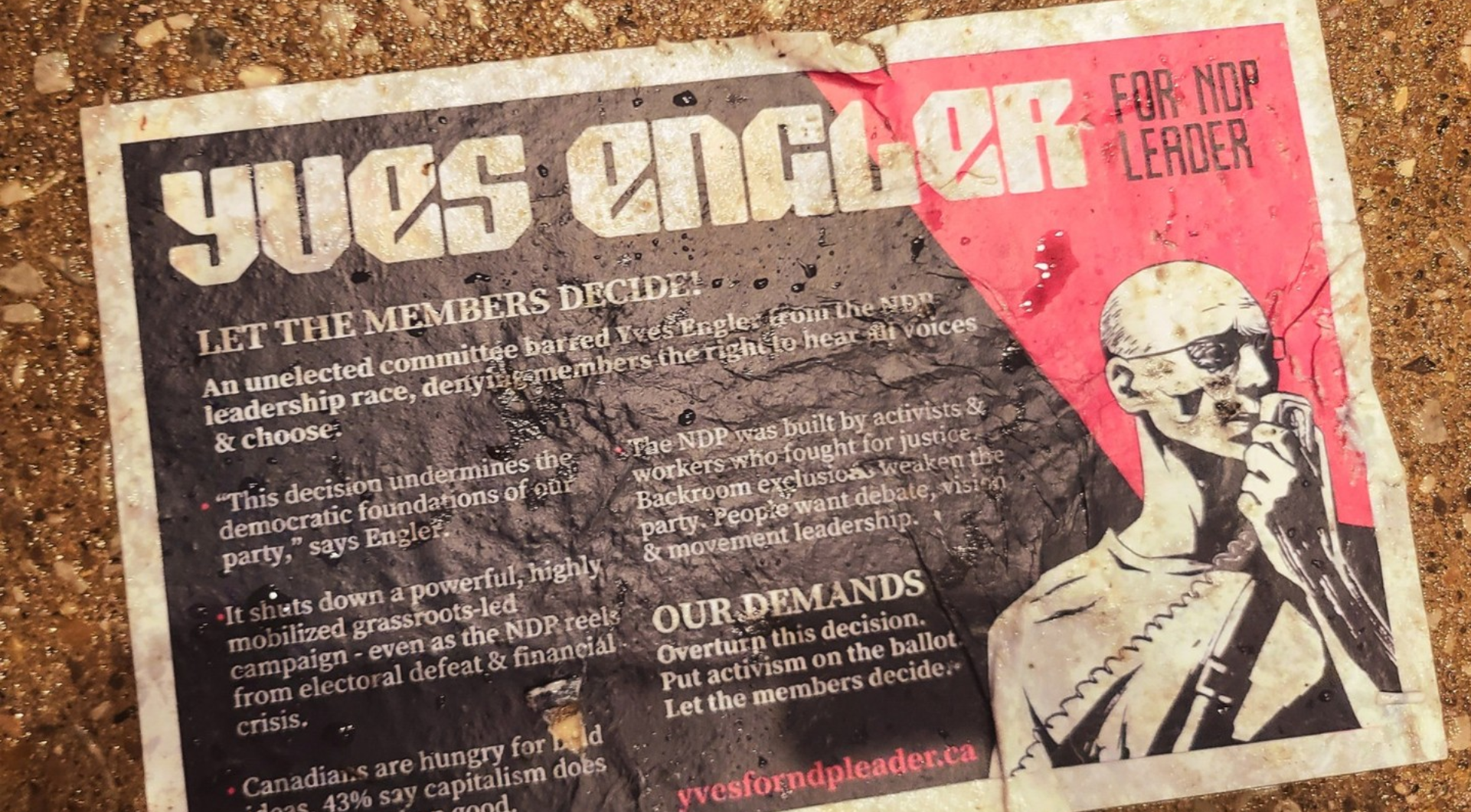
Outside, the flyers were everywhere. I was in a rush and only managed to take two photos, but they tell the story well enough. This is the practical expression of Engler's politics: show up uninvited, disrupt, declare victimhood, and leave the consequences for someone else to clean up.
Engler and his supporters are not allies of the NDP movement. They are openly hostile to it, yet they insist that he is entitled to run for its leadership—despite presenting himself as adversarial to the party, and despite previously withholding fundraising money he had collected simply because he “could.”
What makes this worse is the moral framing Engler uses. He describes himself as an eco-socialist. Fine. But that label carries expectations. Respect for shared space. Respect for collective responsibility. Respect for the labour of others. Leaving garbage behind after a protest is a perfect microcosm of a politics that demands purity while externalizing costs.
I'm going to judge Engler by the standards he claims for himself. By those standards, this fails.
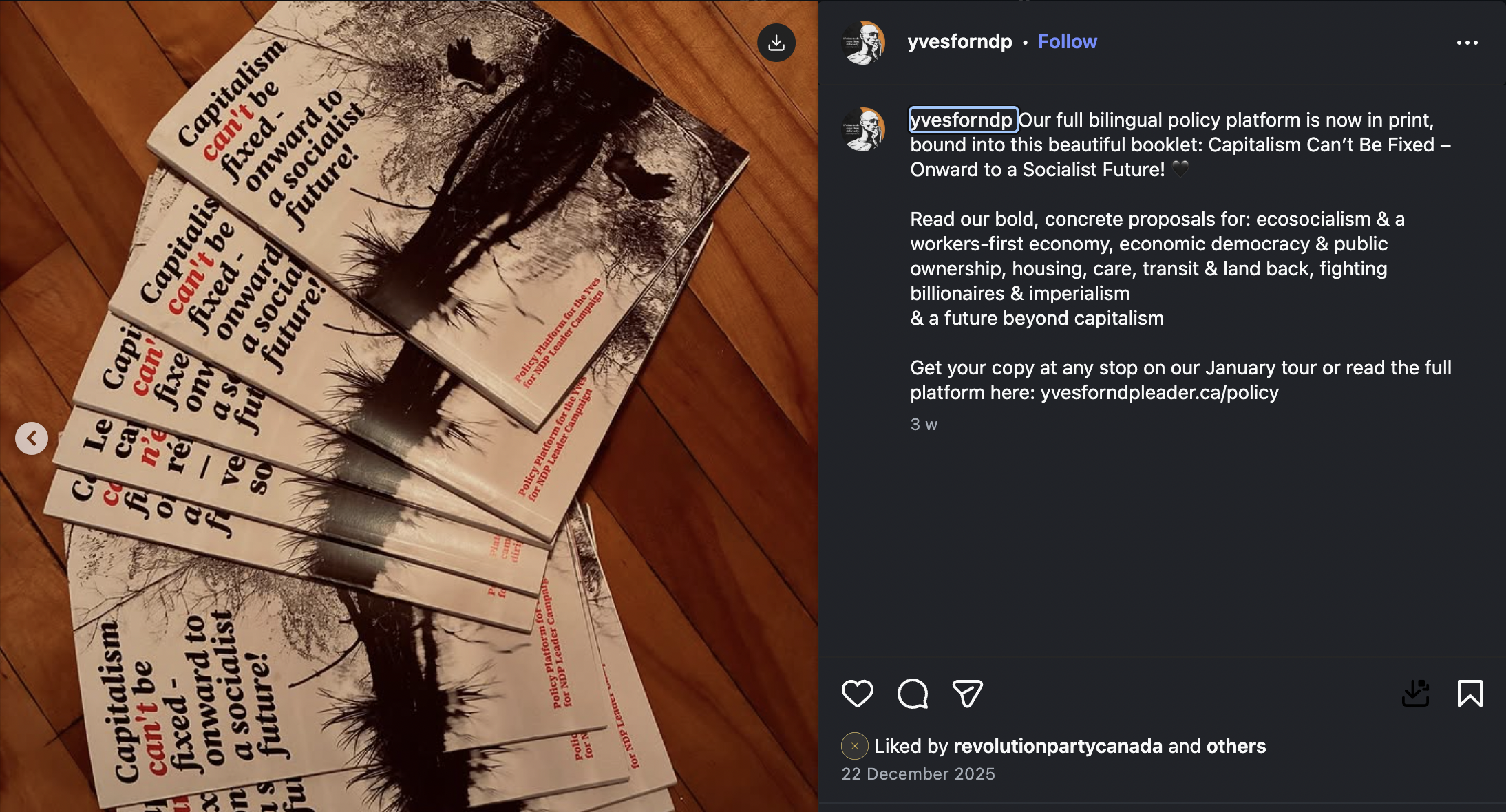
There's also a more serious issue that can't be brushed aside. Despite the fact that Engler's wife is now entering the leadership race, he continues to collect donations on his website, continues to use NDP2026.ca as a redirect to his website, and is also planning to sell his platform as a paid magazine. At a minimum, this creates confusion. At worst, it raises real questions about misrepresentation and compliance. Whether Engler is committing fraud or not isn't something to litigate here, but it is something Elections Canada should examine, sooner rather than later.
I've written about Yves Engler before. In hindsight, I was too charitable. I gave more benefit of the doubt than was warranted. That changes now.
Saturday night was a case study in why some movements never grow beyond protest. They mistake disruption for courage, entitlement for democracy, and mess for momentum. They don't build coalitions because coalitions require compromise, rules, and respect—for people, for institutions, and for the spaces we all share.
Dissent can strengthen democracy. Entitlement corrodes it.
On Saturday, outside TMU, we saw which one Yves Engler is practicing.
This piece was written by an individual contributor and reflects the editorial position of The Provincial Times and Left Lane Media Group. Read our Content Policy here.