ADAMS: Free Trade Requires Good Faith, CUSMA No Longer Has It
There is a difference between honouring an agreement and pretending it still serves the public interest. Too often in Canadian politics, we confuse the two—and then call dissent “irresponsible.”
Brian Lilley's recent column on dairy and CUSMA is more nuanced than his critics will give it credit for. He is careful, almost pedantic, in stating that he is not advocating the abolition of supply management. He is explicit that Washington is not, at least formally, demanding its end.
His argument is narrower: Canada signed a deal that allows a certain amount of American dairy into the country, and therefore, Canada should comply.
That position is coherent. It is also wrong.
Not because supply management is sacred—far from it—but because the premise that CUSMA still functions as a good-faith free-trade agreement no longer holds.
Agreements are not holy texts. They are tools. And when a tool no longer works, clinging to it out of habit is not principled. It's lazy.
Free Trade Requires Two Parties Acting in Good Faith
I am pro-free trade. Not reflexively, not ideologically, but because trade—done properly—raises living standards, supports domestic industry, and gives consumers real choice. But free trade is not unilateral disarmament. It requires reciprocity, predictability, and restraint.
The United States under Donald Trump offers none of these.
Trump has been explicit: he wants baseline tariffs on all countries, across all sectors, Canada included. Steel, aluminum, autos, lumber, energy—everything. This is not conjecture. It is not rhetoric taken out of context. It is his stated position.
Baseline tariffs violate the spirit and the letter of CUSMA. They are not “tough negotiating tactics.” They are an abandonment of free trade as a principle.
Lilley's column assumes a world where the United States is irritated but reasonable—where it wants market access, not domination. That assumption no longer matches reality. You cannot argue that Canada must honour every clause of a trade agreement while pretending the other party is not actively shredding it.
Free trade does not mean “we comply while you impose tariffs anyway.”
That is not trade. That is appeasement.
I Do Not Want American Dairy in Canada

Let's dispense with euphemisms. I do not want American dairy or beef in Canada. Not “as an option.” Not “within quota.” Not “to increase competition.”
I don't want it here at all.
American dairy and beef production standards are fundamentally incompatible with the food system Canadians have chosen. Growth hormones, chemical inputs, industrial practices that prioritize scale over quality—this is not a matter of taste, it's a matter of public health and consumer protection.
I do not want my country turned into a dumping ground for low-quality food produced under standards we deliberately rejected. And no, pointing this out is not protectionism in the pejorative sense. It is sovereignty. Countries are allowed to decide what they put on their shelves and on their plates.
If Canada chooses to import beef and dairy from the European Union or South America—jurisdictions with standards closer to our own—that is a different debate. But pretending American agribusiness is just another neutral trading partner is willful blindness.
The Deal Was Badly Negotiated—We Don't Have to Pretend Otherwise
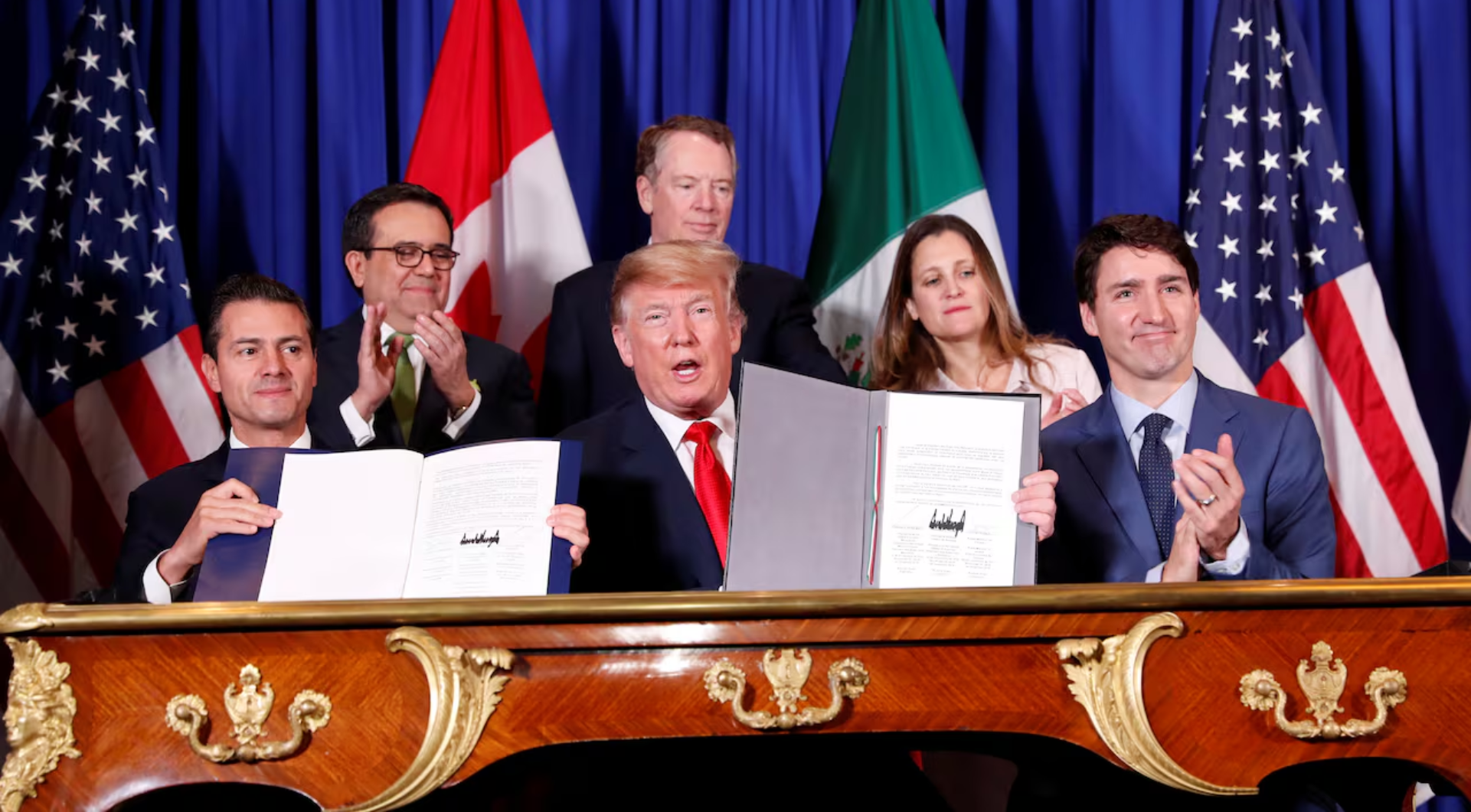
CUSMA was renegotiated under the Trudeau government in 2020 in a moment of panic. The priority was continuity, not leverage. The dairy concessions were not a triumph of liberal trade policy, they were a political trade-off made under threat.
We are allowed to say that now.
Defending a poorly negotiated clause simply because it exists is not serious; it's cowardice. Agreements are meant to be revisited when conditions change. And conditions have changed radically.
If the United States is no longer committed to free trade, Canada should stop acting as if it is.
This Isn't About Farmers, It's About Power
Lilley is right about one thing: the farming lobby wields outsized influence. But that cuts both ways.
Canadian politicians are not only afraid of dairy farmers. They are afraid of Washington. And too often, they respond to American pressure by telling Canadians to lower their expectations instead of telling Americans to respect the agreement they signed.
That reflex—bend first, explain later—is not pragmatism. It is an institutional weakness.
We do not strengthen the rules-based order by complying with agreements that the other party openly violates. We weaken it.
Appeasement Is Not Stability
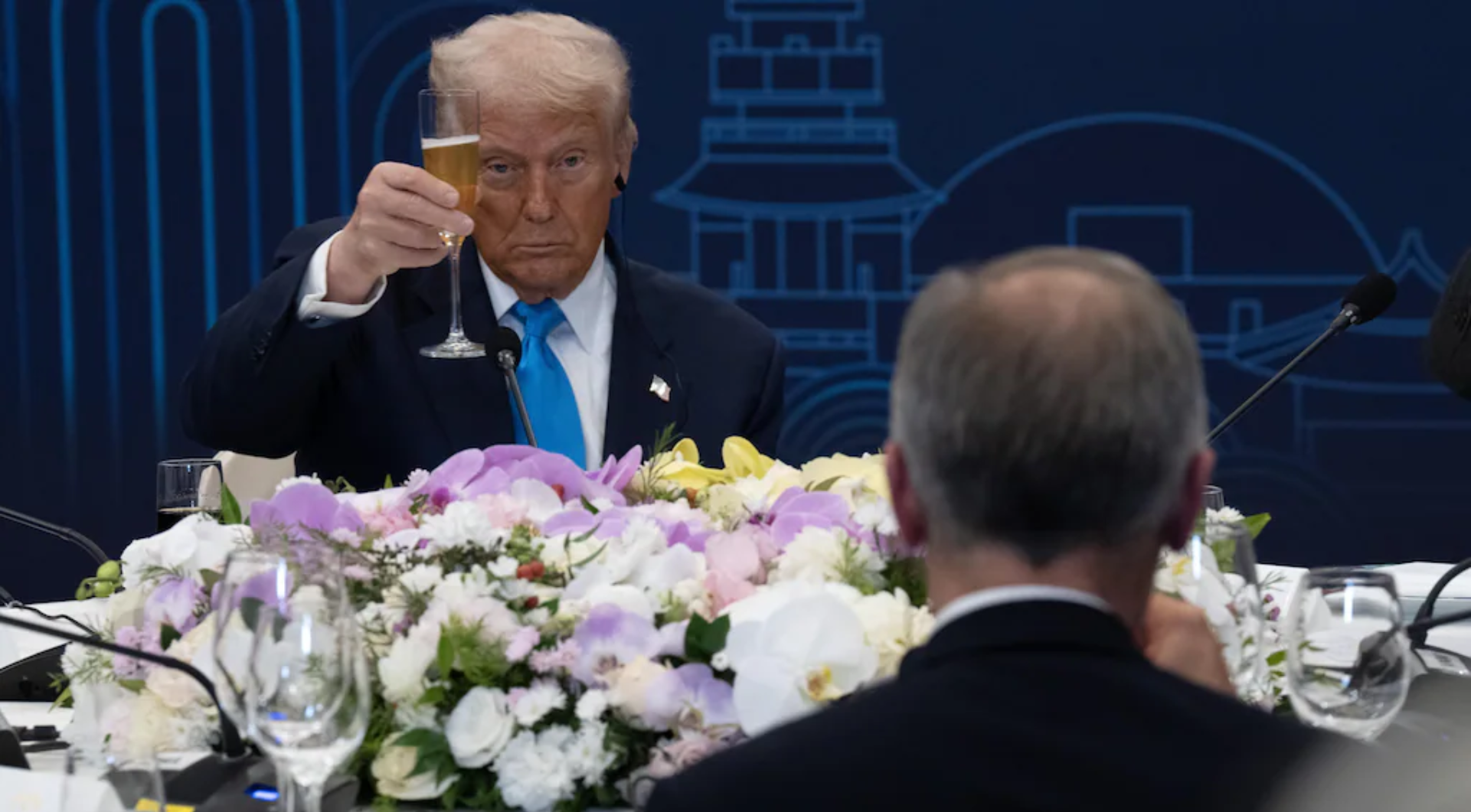
There is a comforting myth in Ottawa that if Canada just shows itself to be reasonable—if we comply, if we explain, if we avoid confrontation—the United States will reward us with stability.
History says otherwise.
Trump does not reward compliance. He exploits it.
If Canada gives ground on dairy today, it will be steel tomorrow, autos the day after, and energy next week. Not because Canada did anything wrong, but because Trump’s worldview is transactional and zero-sum. He wants the benefits of free trade without its constraints.
That is not a partner. That is a bully.
And bullies do not stop when you give them what they want.
If Tariffs Stay, CUSMA Should Go
Here is my position, stated plainly:
If the United States is unwilling to drop 100% of its tariffs on Canadian goods, Canada should walk away from CUSMA.
Not posture. Not threaten. Walk.
Trade agreements are not loyalty tests. They are instruments of mutual benefit. When that benefit disappears, so does the obligation to pretend otherwise.
Canada should be actively preparing alternatives: diversifying trade relationships, strengthening ties with partners who still believe in rules, and investing domestically so we are less exposed to American economic tantrums.
Clinging to a dead agreement because we are afraid of the alternative is not leadership. It is stagnation.
Stop Pretending This Is Working
Brian Lilley is right about one thing: we need honesty. But honesty cuts both ways.
It is dishonest to pretend that honouring CUSMA in full will protect Canada when the United States no longer honours it at all.
It is dishonest to frame this debate as “farmers versus free trade” when the real issue is sovereignty versus submission.
And it is dishonest to tell Canadians that appeasing Trump is the price of stability when history tells us the opposite.
Free trade only works when everyone plays by the rules. The moment one party stops, the agreement becomes a liability.
Canada should stop pretending otherwise.
This piece was written by an individual contributor and reflects the editorial position of The Provincial Times and Left Lane Media Group. Read our Content Policy here.Read our Content Policy here.