ADAMS: Lessons From a By-Election We’ve Already Forgotten
Three years ago, a federal by-election took place in the riding then known as Durham—now split into Bowmanville—Oshawa North and York—Durham. It flared briefly, generated the customary headlines, and then vanished into the political aether, as by-elections tend to do. Nobody talks about it anymore.
I was there. I knocked on doors, yet I have never written properly about that campaign until now. But with two years of reflection, I believe I finally understand what happened in that riding, and what it reveals about a political party that seems determined to learn nothing from its own failures.
The New Democratic Party ran a candidate named Chris Borgia. By all accounts, he was a good man—generous, approachable, the sort of person who buys a canvasser a donut not for a photo op, but simply because that is who he is. On paper, Borgia made sense for the riding.
He is a union man, rooted in labour politics. He is also a hunter who privately disagrees with his own party's position on the gun buyback program, viewing it as a punishment for lawful owners rather than a solution to crime. In a riding with a significant working-class, rural-adjacent electorate, he was about as credible a standard-bearer as the NDP could have hoped to field.
And yet the campaign was a disaster, not because of Chris himself, but because the party that drafted him seemed utterly incapable of letting him run as himself.
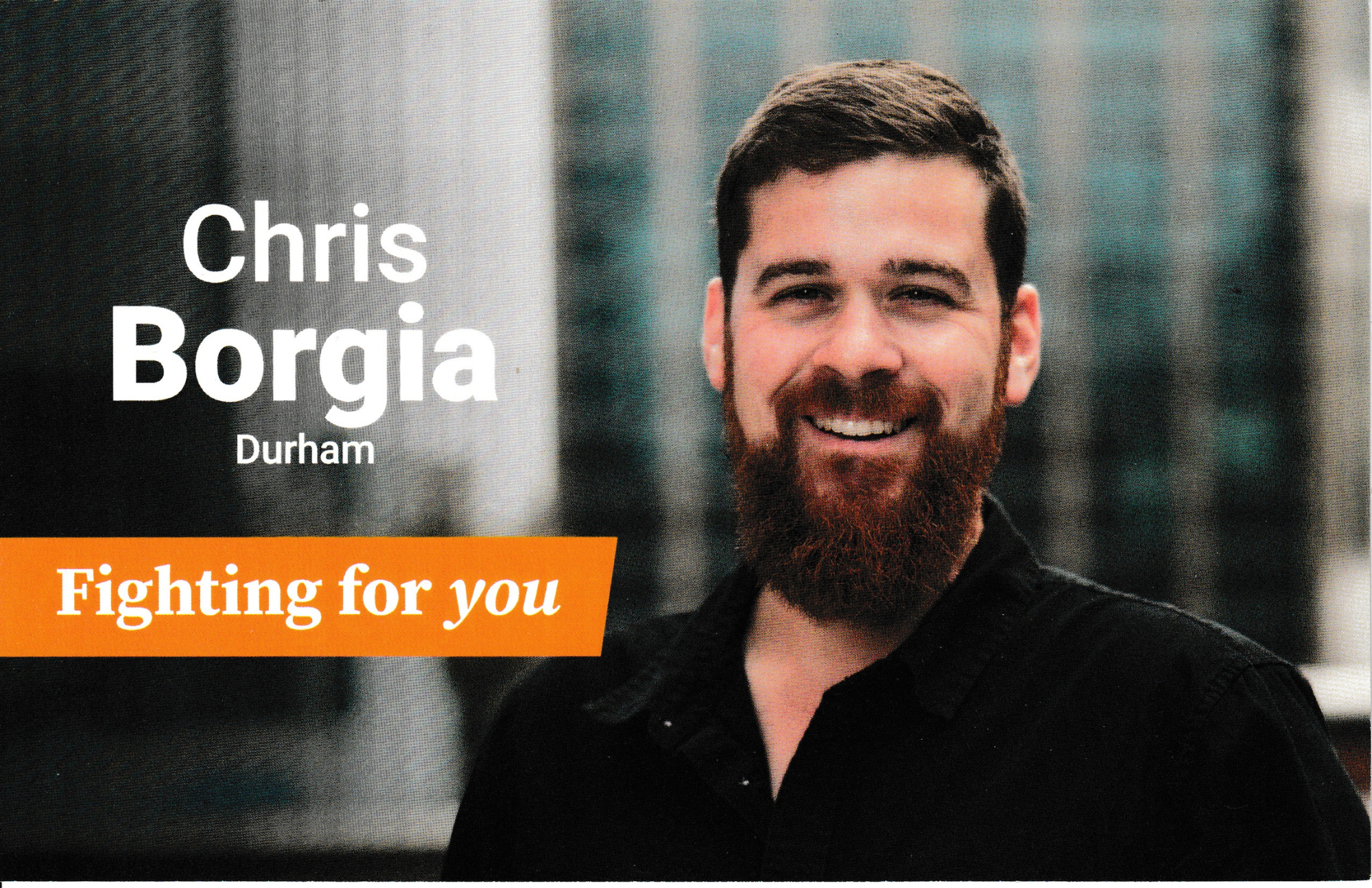
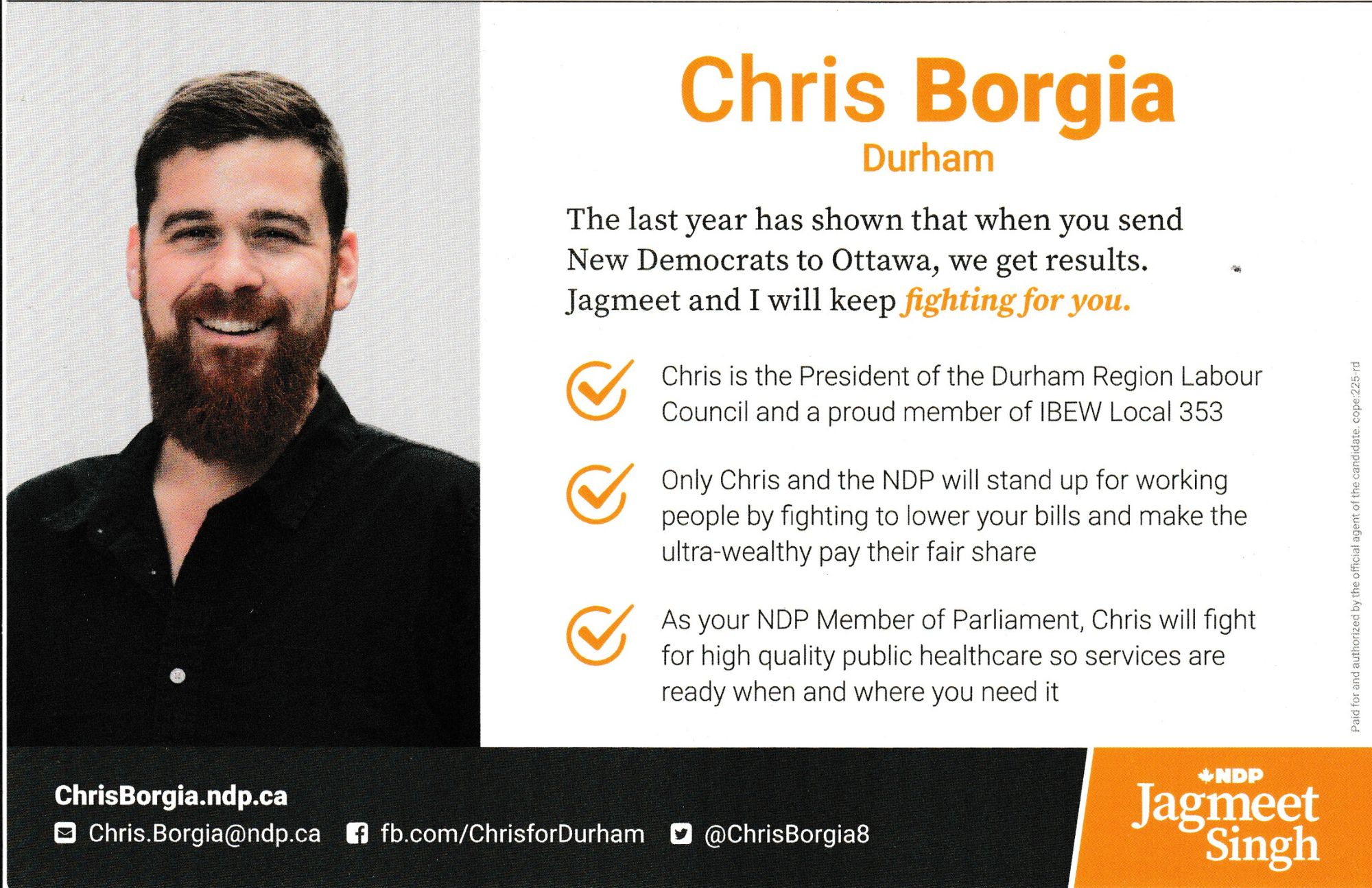
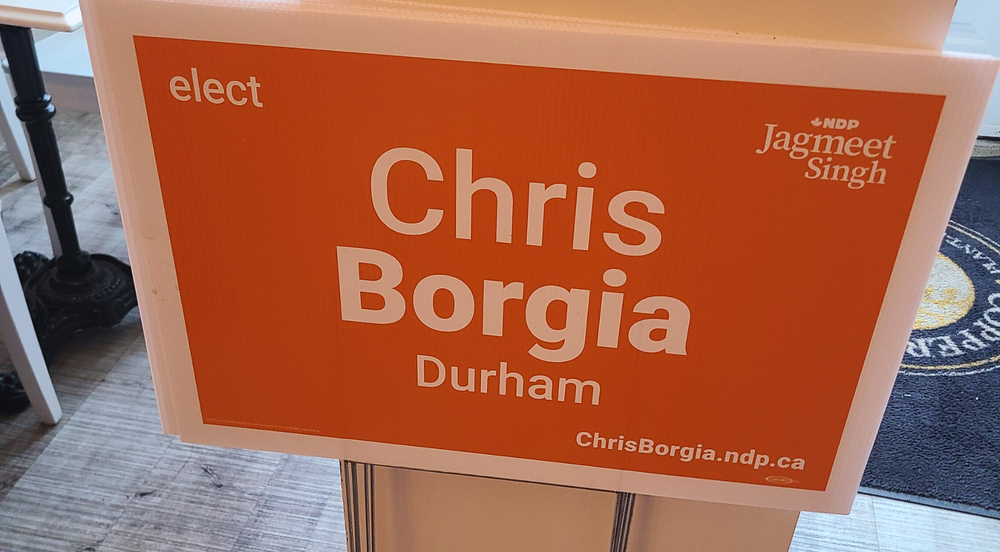
Consider the flyers. There were two kinds. The first, distributed early, focused entirely on Chris: his union ties, his local roots, his commitment to the riding. The only mention of Jagmeet Singh was his logo in the bottom corner. The second, deployed in the final stretch of the campaign, featured the leader prominently, with urgent messaging about defeating Pierre Poilievre's Conservatives. It was as though two different campaigns were being run simultaneously—one by a candidate who understood his electorate, another by a party headquarters that did not.
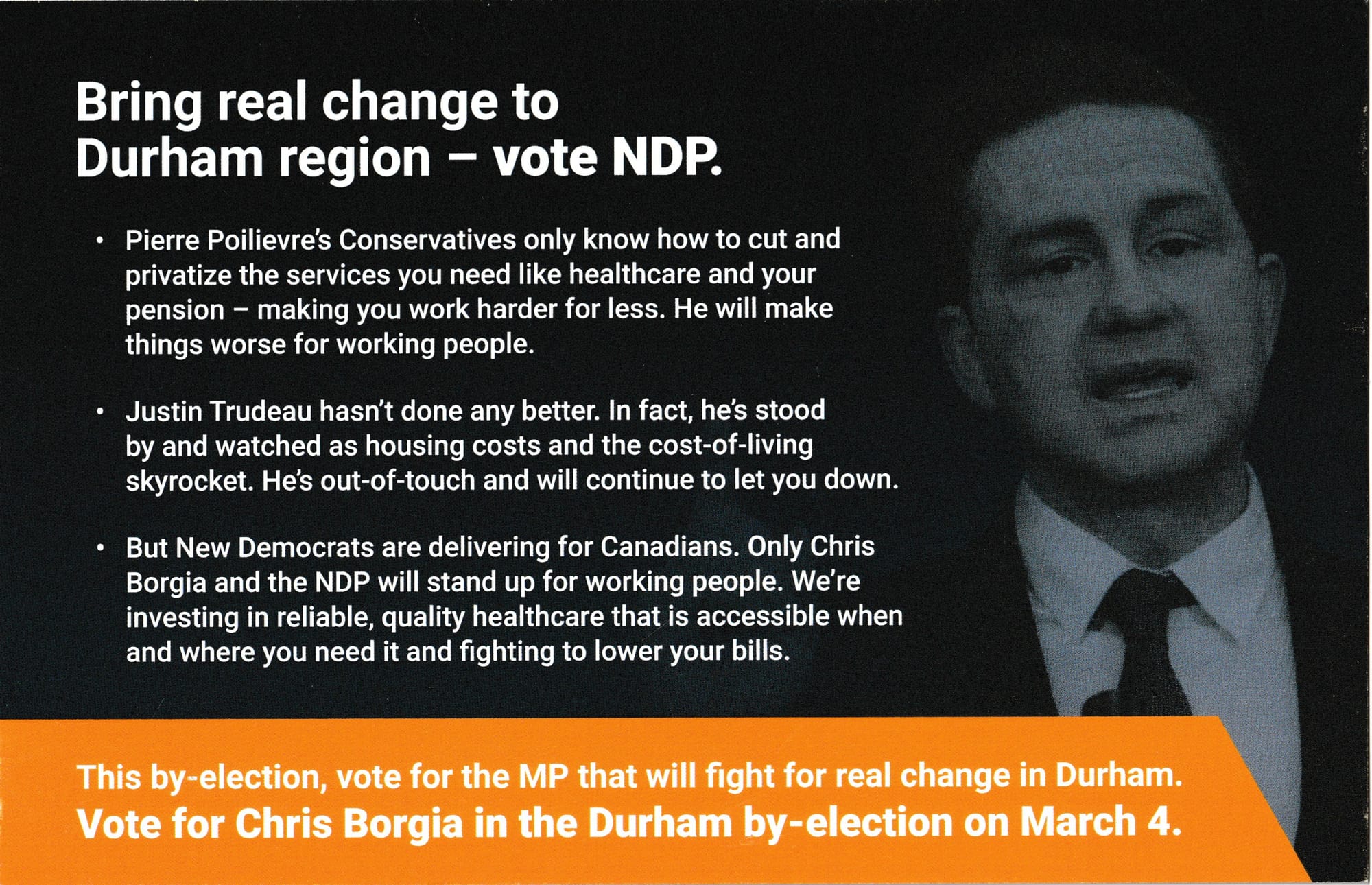
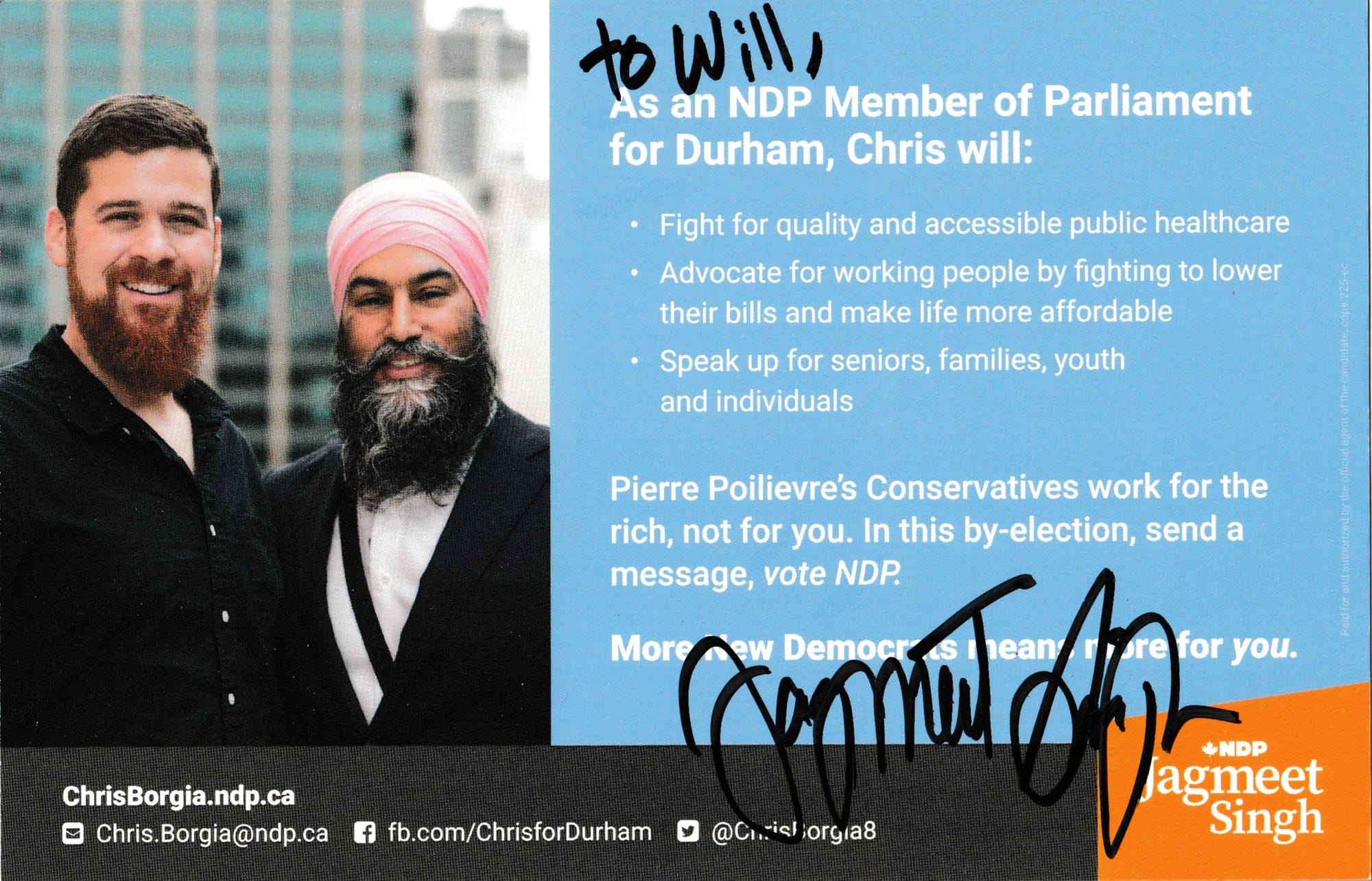
This played out on the doorsteps as well. I witnessed Chris, when confronted by voters angry about federal gun policies, explicitly distance himself from his own leader. “I'm not Jagmeet Singh,” he would say, noting his disagreements with the party's support for the gun buyback.
It was an honest answer from a man who clearly valued authenticity over talking points, but it was also a political death sentence. When your candidate's best strategy is to apologize for the logo on his pamphlets, the campaign is already over.
The contrast with the other parties was instructive. Jamil Jivani, the victorious Conservative, ran a campaign seamlessly integrated with Pierre Poilievre's “Common Sense Conservatives” brand. Robert Rock, the Liberal, wrapped himself in “Team Trudeau” imagery, for all the good it did him. Even the fringe candidates knew who they were running for.
Only the NDP seemed uncertain whether it wanted to be a national party with a national leader or a collection of strong local candidates. In trying to be both, it became neither. The NDP has a habit of treating by-elections as opportunities for moral witness rather than strategic contests. It sends sincere volunteers into difficult ridings, asks them to do emotionally demanding work, and provides little to no resources or media training to support them.
It then wonders why these campaigns so rarely succeed.
But the Durham by-election revealed something deeper than organizational incompetence. It revealed a party whose leader had become a liability in the very places it needed to grow. When a candidate of Chris Borgia's quality—union-connected, locally rooted, personally likeable—feels compelled to spend his campaign running away from his own leader, the problem is not the candidate. The problem is the leader.

Jagmeet Singh may have had virtues as a parliamentarian, but in working-class ridings like Durham, his brand was simply not an asset. The NDP's response to this reality was to pretend it did not exist, to continue running candidates who had to choose between loyalty to their party and honesty with their constituents.
By-elections test a party's ability to adapt quickly, localize its message, and compete under pressure. The Durham by-election offered clear lessons: voters respond to authenticity, local credibility matters more than national messaging, and a leader who cannot be sold in the places where your party most needs to win is a leader who is holding your party back.
Two years on, there is little evidence that those lessons have been absorbed. The federal NDP continues to treat by-elections as a low-stakes exercise, continues to under-resource its candidates, and continues to pretend that good intentions can substitute for strategic clarity.
Chris did his best in circumstances that were never designed to favour him. Volunteers showed up with integrity. Conversations were had. Democracy functioned, imperfectly but genuinely. But the party that sent them into the field has yet to ask itself the uncomfortable questions that Durham posed.
It would be wise to start. Because by-elections may vanish from political memory, but the patterns they reveal have a way of persisting until someone decides to break them.
The views expressed in this piece are those of the author and do not necessarily reflect the editorial position of The Provincial Times or Left Lane Media Group. Read our Content Policy here.