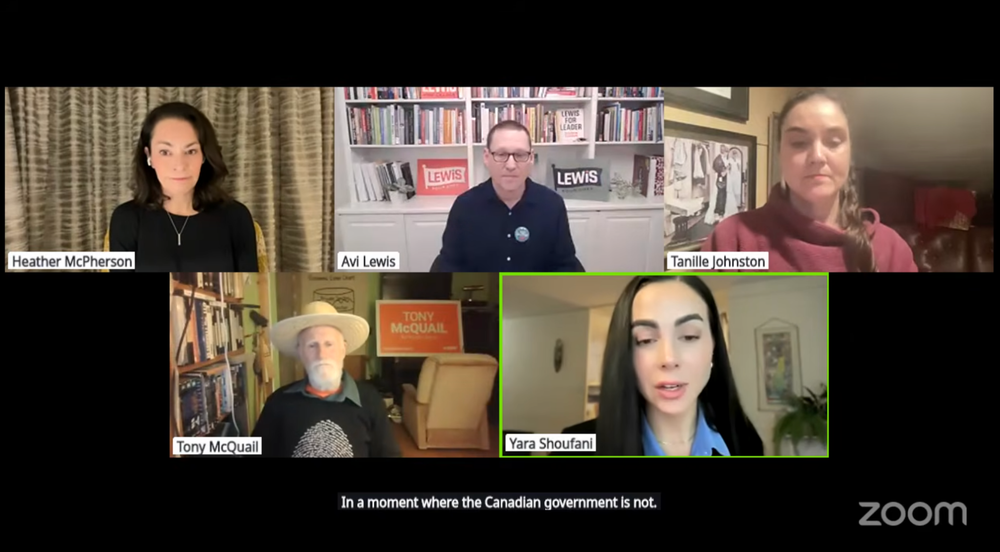
ADAMS: The CJPME NDP Debate and the Continued Problem of Performative Consensus
When it was announced that there would be an NDP leadership debate hosted by Canadians for Justice and Peace in the Middle East, my immediate reaction was skepticism, and that skepticism wasn't aimed at the CJPME. Their sincerity wasn't in question.
The problem was the candidates.
Up to this point, the NDP leadership debates have been an absolute disaster, extended rounds of “I agree,” delivered with slightly different tones. No friction. No strategy. No consequences. Just affirmation loops that can hardly be considered legitimate debate.
So when I saw this debate announced, I assumed the worst: performative outrage, carefully scripted rhetoric, and candidates trying to look good rather than be good, all while discussing the ethnic cleansing of an entire people. That kind of superficial engagement isn't ineffective and borders on disrespectful.
Still, I watched. And to the candidates' credit, this debate was better than the others. But “better” is not the same thing as good. And when the stakes are this high, “good intentions” don't cut it.
Let's get this out of the way early.
If everyone agrees on everything, and nobody explains how anything actually happens, you do not have a debate.
You have a press conference.
Throughout this entire event, every candidate:
- Agreed Israel is committing genocide
- Agreed the Canadian government is complicit
- Agreed arms exports must stop
- Agreed free trade with Israel should end
- Agreed civil liberties must be protected
And that's fine, morally.
But leadership is not about stating correct positions. Leadership is about turning those positions into enforceable outcomes. And that's where this debate repeatedly collapsed.
Heather McPherson: Experience Without Accountability
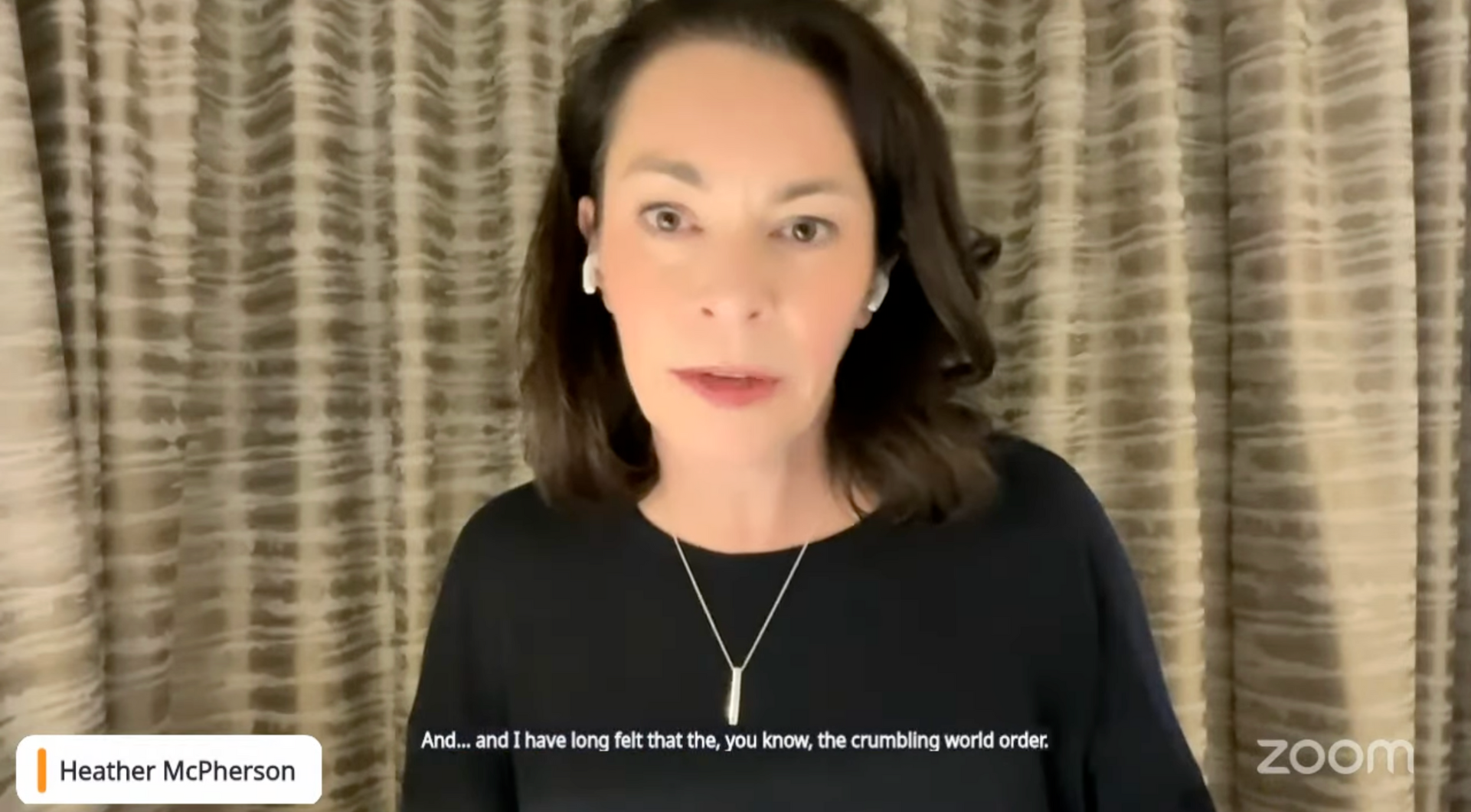
Heather McPherson positioned herself as the grown-up in the room; the international law expert, the Foreign Affairs critic, the person who knows how this works. On paper, that should have made her the strongest candidate on this topic.
Instead, it exposed her weakest contradictions.
She spoke about a “crumbling world order,” language that she very clearly borrowed from Mark Carney's Davos speech, something she later openly acknowledged. That alone isn't disqualifying, but it is revealing. It shows she's still operating within elite foreign-policy framing, even while criticizing its outcomes.
More importantly, Heather leaned heavily on what she has already done:
- Introducing motions
- Pressuring government
- Being “the first” to raise certain issues
Here's the problem:
Motions without leverage are symbolic. Symbolism does not stop genocide.
She herself admitted that recognition without action means nothing, and yet she defended a record built largely on symbolic action. The Singh-era NDP had leverage with the 2022 supply-and-confidence agreement. They chose not to make Palestine a confidence matter. That was a political decision, not a procedural limitation.
And when asked the most important question of the night—under what circumstances would an arms embargo be lifted—Heather dodged. Repeatedly.
She gestured toward international law as if the answer were self-evident. It isn't. A serious leader would have said:
- What benchmarks matter
- Who verifies them
- What happens if they are never met
Instead, we got a moral placeholder where a strategic answer should have been.
If you are the foreign policy candidate, you don't get to dodge the hardest foreign policy question.
Tony McQuail: Values Without Precision
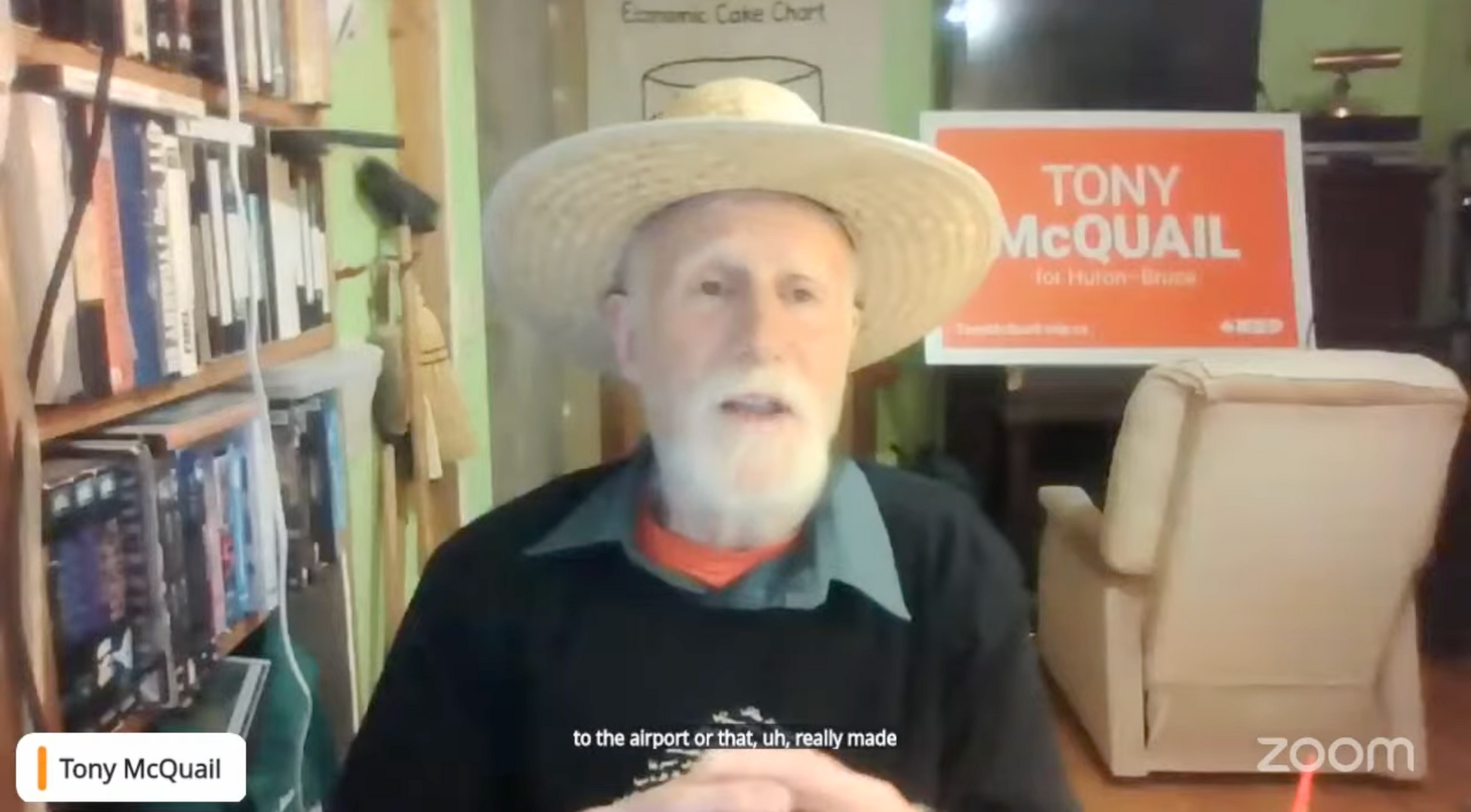
Tony McQuail's opening statement was long, personal, and earnest. His statement also said almost nothing actionable.
His Quaker background and lifelong activism clearly inform his worldview, but that worldview rarely translated into policy clarity. His arms embargo comments leaned heavily on historical analogy (Nazi Germany scrap metal, moral warnings about militarism) without grappling with modern geopolitical enforcement.
When others spoke, Tony frequently responded with some variation of “I agree,” adding philosophical reflections rather than distinct approaches.
Agreement is not contribution.
In a debate where everyone already agrees, the role of a candidate is to differentiate on means, not reinforce consensus on ends.
Tanille Johnston: Moral Clarity, Policy Gaps
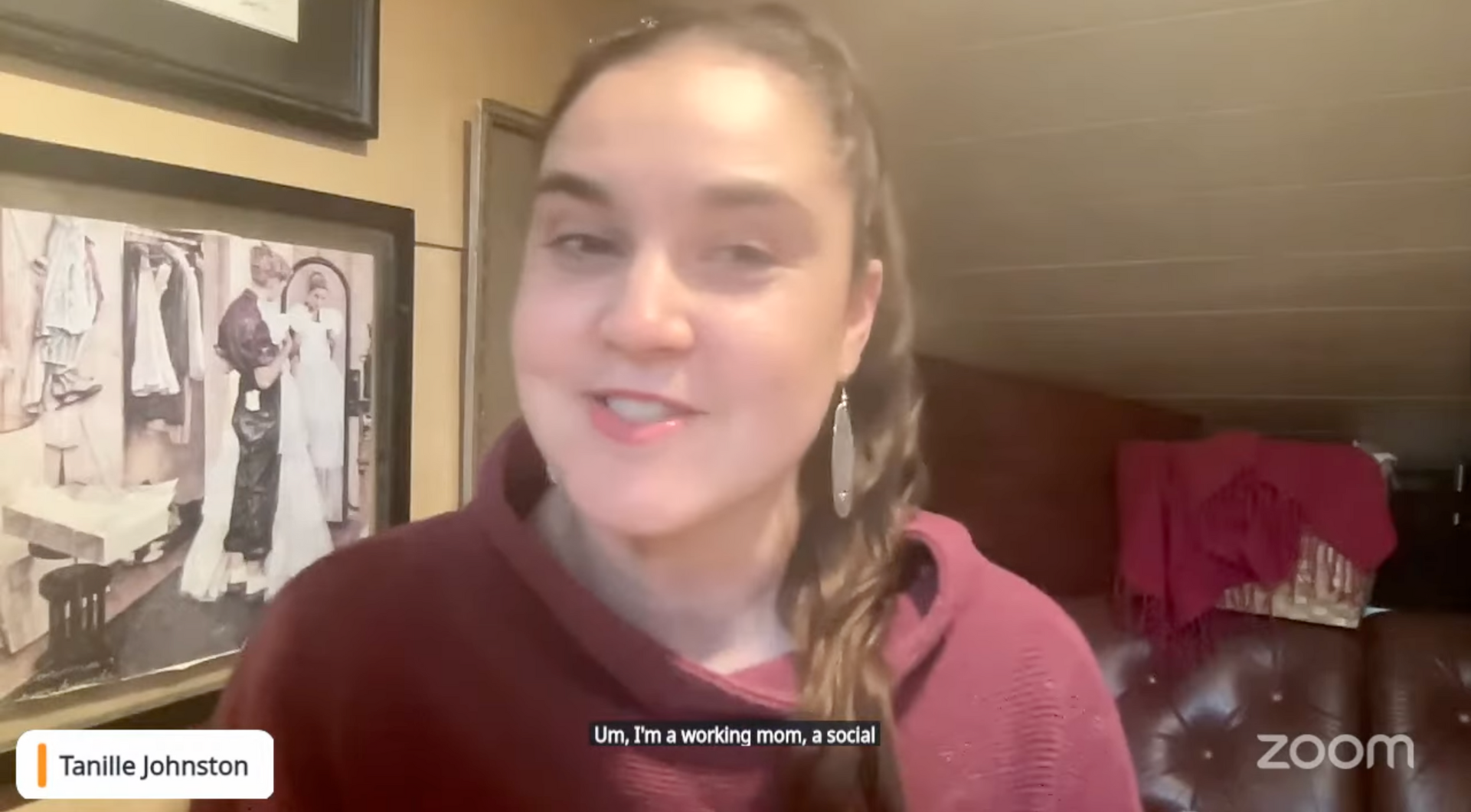
Tanille Johnston brought important perspectives—especially Indigenous frameworks of colonization and resistance—but often relied on analogy where specificity was needed.
Her comparison between Indigenous struggles in Canada and Palestine is not inherently wrong, but it is incomplete. Indigenous Canadians are not a political monolith, and Indigenous Canadian voices that are Zionist do exist. Without acknowledging those contradictions, the analogy risks flattening both struggles.
To her credit, Tanille clearly called for:
- Closing the U.S. arms loophole
- An economic boycott of Israel
- Rejecting the conflation of anti-Zionism with antisemitism
But repeatedly, she identified problems without explaining mechanisms. When pressed on enforcement, leverage, or sequencing, her answers became wordy, indirect, or incomplete, sometimes exacerbated by technical issues, but not caused by them.
Foreign policy may not be her background, but this was the foreign policy debate. Leadership candidates don't get partial credit for sincerity alone.
Avi Lewis: The Best Answer, Still Not Enough
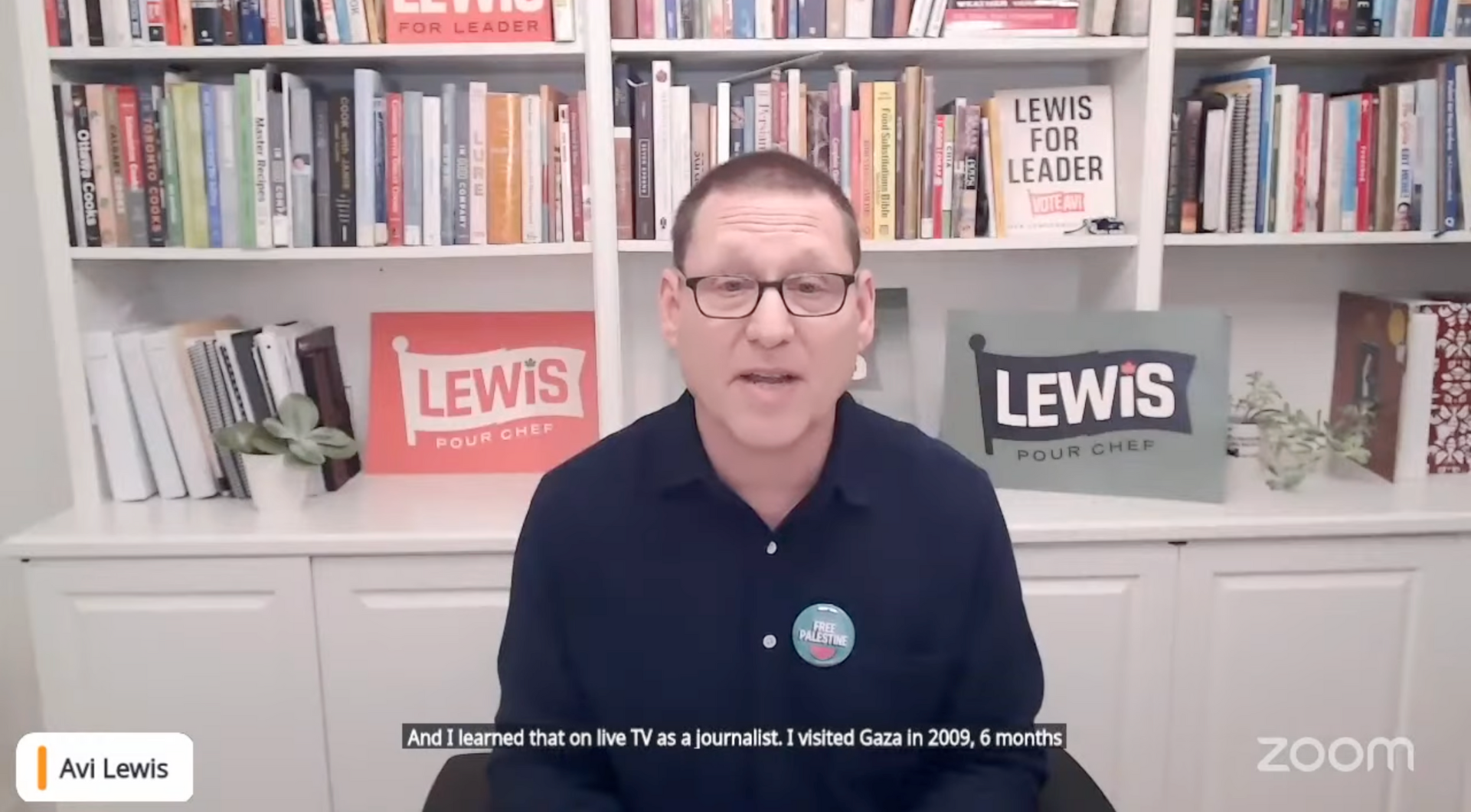
Avi Lewis delivered the strongest opening statement of the night, and it wasn't close.
He grounded his position in personal history, journalistic experience, and firsthand observation in Gaza. He acknowledged his own ideological evolution. He spoke directly about Canada's structural subordination to U.S. military integration; a reality most politicians avoid naming.
Crucially, Avi was the only candidate who actually engaged the arms embargo question head-on, stating that apartheid must be dismantled before any discussion of lifting restrictions could occur.
That was smarter. More honest. More strategic.
But even Avi stopped short of execution.
He described conditions without explaining process. He named constraints without laying out tactics. His analysis was sound, his roadmap incomplete.
That still puts him ahead of the field. But it doesn't absolve the broader failure.
Hamas and Bill C-9: A Series Of Collective Failures
The optional question on Hamas was the worst moment of the debate.
Every candidate answered the wrong question.
The moderator asked whether Palestinian statehood should be conditional on Hamas non-involvement. Instead of interrogating the structural reality—that Hamas functions as a strategic asset for Israeli repression—candidates defaulted to:
- Irish analogies
- Anti-terror framing critiques
- Diplomatic generalities
Here's the uncomfortable truth:
Hamas is not an external variable. It is a direct part of Israel's strategy of control.
Ignoring that doesn't make you principled. It makes you naïve.
By refusing to grapple with this reality, the candidates ceded ground to the very system they claim to oppose.
On Bill C-9, there was strong consensus, and rightly so. The bill's surveillance provisions and “bubble zones” represent a dangerous erosion of civil liberties.
But here's where I need to underline something in permanent marker:
Supporting Palestinian speech because it is popular is a problem.
Not a small problem. A fundamental one.
Civil liberties do not exist because they poll well. They exist precisely to protect unpopular, inconvenient, disruptive, but legal speech. Framing opposition to Bill C-9 around majority sentiment undermines the very principle being defended.
Heather, Avi, Tenille, and Tony all opposed the bill. Good.
But when Heather's justification slipped into “the majority of Canadians feel this way,” the argument collapses. Rights are not conditional on consensus. They are conditional on principle.
Anything else is fair-weather liberalism.
The Real Verdict
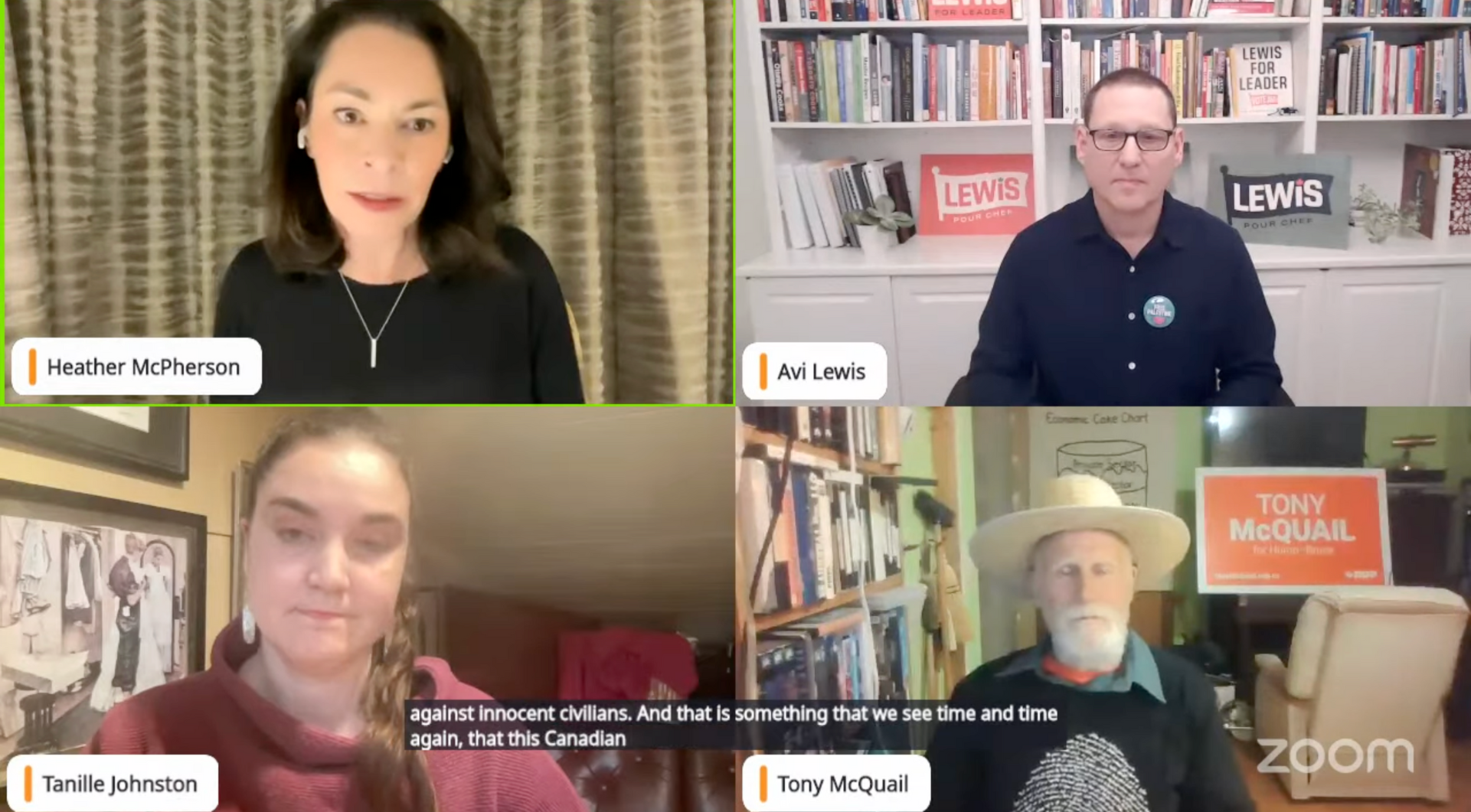
I’ve already talked, at length, about how the previous leadership debates kept collapsing into the same problem: candidates agreeing with each other and calling it leadership. So let me be clear: the issue here isn't that this debate repeated that pattern. The issue is that this was the one debate where doing that is actively dangerous.
When the topic is healthcare or housing, vague agreement is frustrating. When the topic is genocide, vague agreement is irresponsible.
Palestine is not a theoretical values exercise. Ending the involvement the Canadian government is materially involved with through arms exports, trade, diplomatic cover, and security cooperation requires leaders willing to force outcomes, accept consequences, and explain what happens when allies push back.
And that's what was missing.
Heather, Avi, Tanille, and Tony could all tell you what they oppose. Almost none of them could explain what they would actually do differently. No timelines. No thresholds. No escalation plans. No acknowledgment of the real-world pressure Canada would face if it stopped playing along.
Agreement replaced strategy, and moral language replaced power analysis.
That failure matters because the NDP already had leverage for the past half-decade and made a choice not to use it. None of the candidates seriously confronted that choice. None explained how their leadership would behave differently when faced with the same circumstances. Saying the right thing has never been the hard part. Doing the hard thing is.
This debate was better than the others. That's true. The candidates were sincere. That's also true. But sincerity is not leadership, and agreement is not governance.
The only question that actually matters is this: which of these candidates demonstrated they can turn moral clarity into confrontation with power?
Based on this debate, the answer is uncomfortable but obvious.
None of them did.
The views expressed in this piece are those of the author and do not necessarily reflect the editorial position of The Provincial Times or Left Lane Media Group. Read our Content Policy here.