ADAMS: The NDP Finally Had a REAL Debate. Here’s Who Won and Who Lost.
I've been around long enough to know the difference between a carefully managed exercise in mutual reassurance and an actual political debate. For months, I've watched this NDP leadership race stumble from one forgettable event to another, wondering if the New Democrats lost the ability to have a real argument about their future.
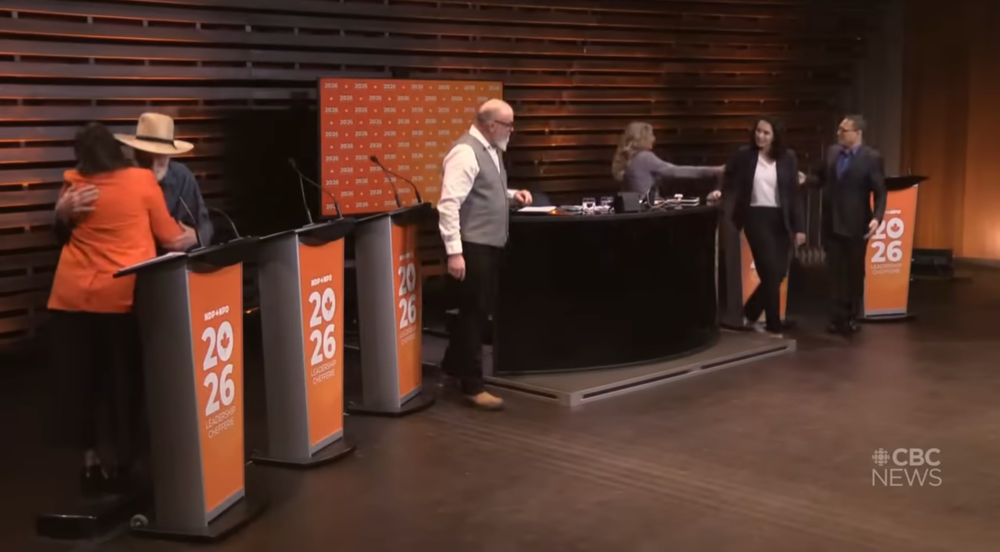
Then came February 19th.
For the first time in this campaign, we saw something that actually resembled a contest of ideas. The moderator deserves real credit for that, she asked tough questions, followed up when she got non-answers, and refused to let candidates hide behind platitudes.
It made all the difference.
After the French-language fiasco in Montreal and the painfully polite affairs that followed, we finally got a debate where the candidates seemed to understand that leadership is about showing Canadians you deserve to lead.
Here's how I saw the field, from worst to best.
Tony McQuail
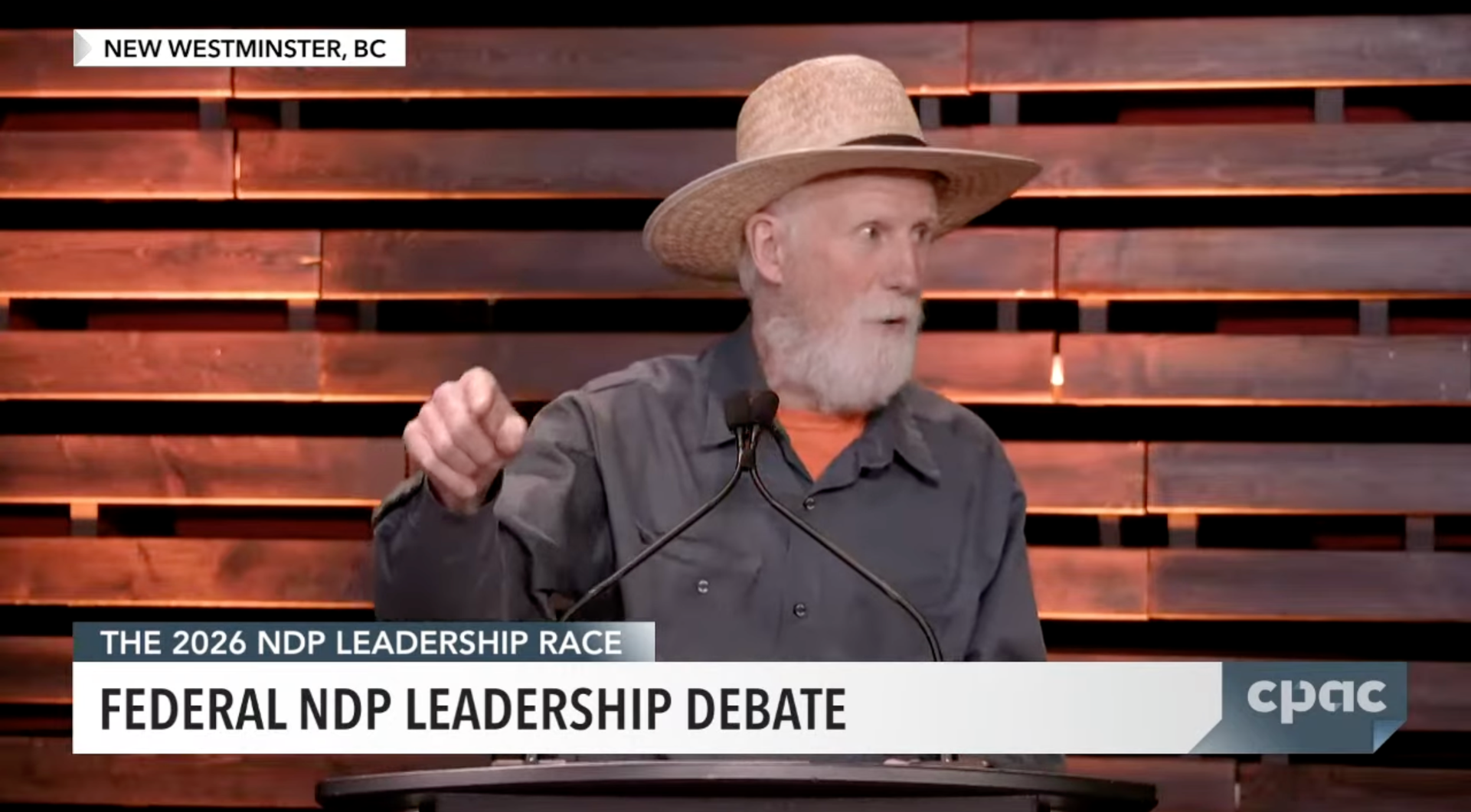
I want to be charitable. Tony McQuail has been a New Democrat for 46 years. He's a farmer, he's earnest, and he clearly cares. But at a certain point, sincerity stops being a substitute for seriousness. Ands his performance was a disaster.
His “four R's” sound nice in a brochure—Representation, Regeneration, Redistribution, Redesign—but they're slogans, not a platform. When pressed on any of them, the answers went sideways. McQuail often circled back to the idea that we should “relocalize” everything, that trade itself is suspect, that we need to ask whether "trade benefits" anyone at all.
For a trading nation where one in five jobs depends on exports; the drift toward economic isolationism makes McQuail sound economically illiterate. It cedes every argument about prosperity to the Conservatives, who at least understand that Canadians need to sell things to the world.
His honesty about French was refreshing: he's 74, he won't learn it fluently, and he'd rely on translators. I appreciate the candour, but this saying that was electoral suicide. A national party leader in Canada needs to speak the national languages. Then there was the "natives" comment. In 2026. On a stage with an Indigenous person to run for the leadership of a federal party. I don't need to explain why that's a problem.
His closing suggestion of a “leaders' table” rather than a single leader was telling. He knows he can't win and he's running to make a point, not to lead. That's fine for a gadfly. It's not fine for someone asking to be entrusted with the future of a national party.
Heather McPherson
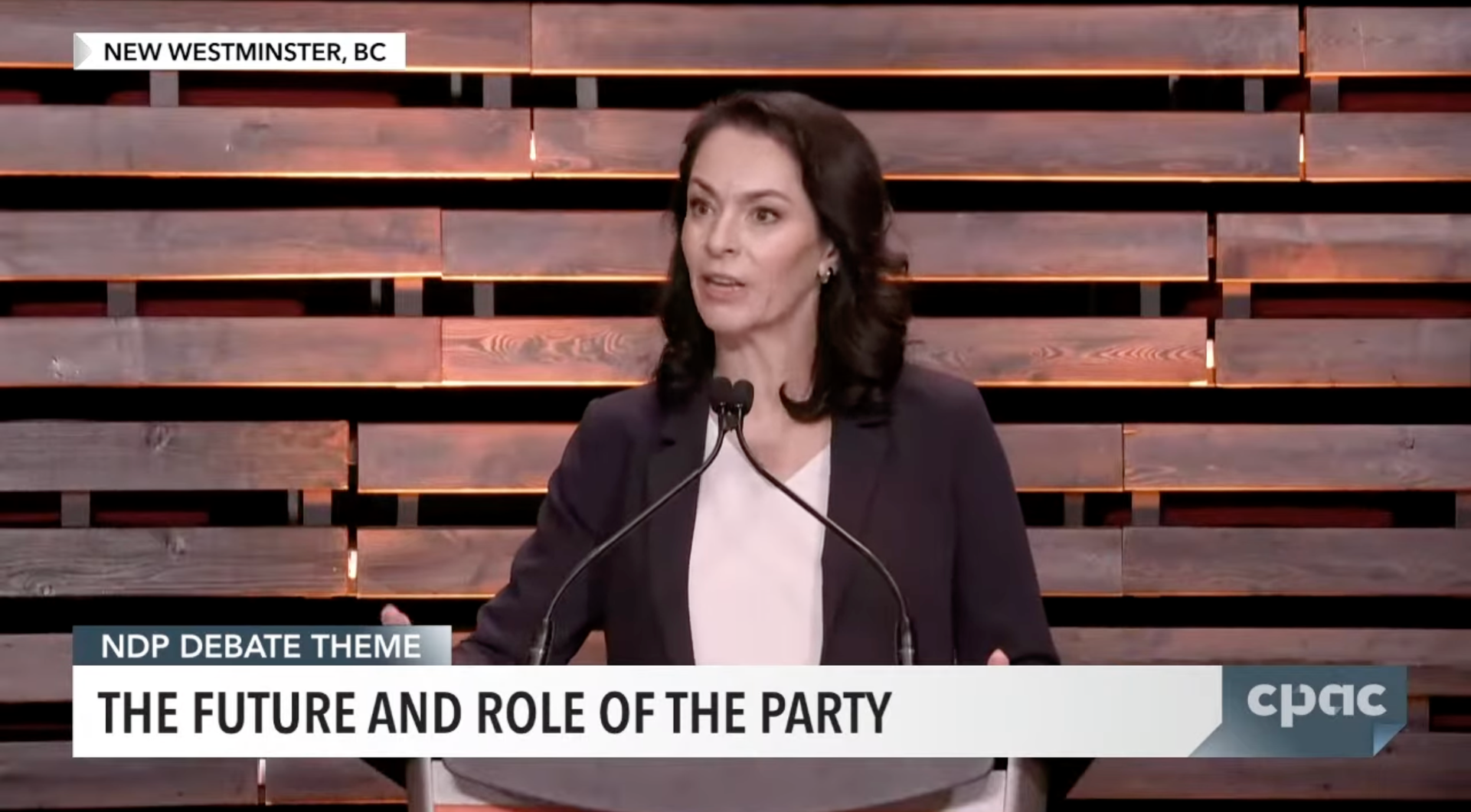
Heather McPherson has consistently had the most disappointing performances of any candidate in this race. As the only sitting MP on that stage, she should have made herself the gravitational centre of every conversation. Instead, she continues fading into the furniture.
Her opening on Thursday was strong, she set up the distinction between shared values and competing visions cleanly. But as the night wore on, she became background noise. When the Leap exchange between Lewis and Ashton happened, she was silent. When the conversation turned to the 2022 supply-and-confidence agreement—an agreement she helped manage as whip—her defence was tepid.
"We got wins" isn't a strategy. It's a talking point.
The moderator asked the right question: if voters punished the party for that agreement, how are you the candidate for change? McPherson's answer wandered back to electoral reform and never really landed.
I don't doubt McPherson's competence. She's a good MP and she works hard. But if she performed like this in a federal leaders' debate, Carney, Poilievre and Blanchet would eat her alive. She has been consistently unable to command the room, and these are rooms full of New Democrats.
If she can't command a room filled with allies, happens when the room is full of people who start out hostile?
Rob Ashton
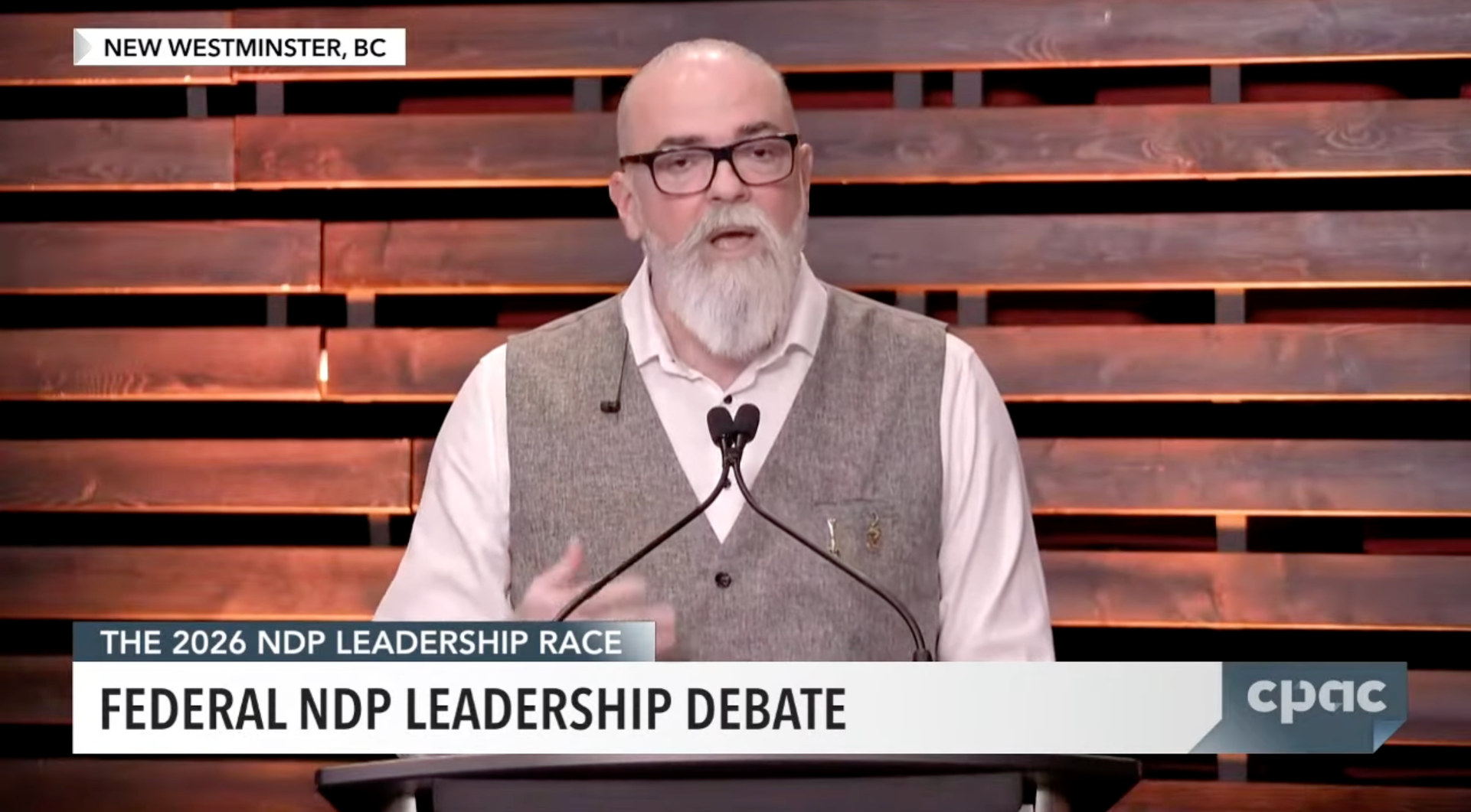
The ILWU president has a clear lane: he's the union guy, the workers' candidate, the person who will drag the NDP back to its labour roots. That's a legitimate pitch to make; the party has drifted from organized labour, and labour has found other homes. Ashton is right to want to bring them back.
He was much better on climate than I expected. His line about "climate is a class war because big polluters profit while the working class pays the ultimate price" was one of the night's best. He understands that environmental policy without a worker transition plan is unrealistic and can hurt working families.
The problem is that Ashton doesn't own anything beyond being the union guy. He's pro-union? Great. Everyone else on that stage says that too. What's his vision for the non-union worker, the precariously employed, the gig economy worker who wants a union but doesn't have one? He didn't answer that.
He also bit off more than he could chew in the Leap Manifesto exchange with Lewis. When Lewis said he was "glad to see he's grown" about Ashton's relationship with NDP premiers, Ashton had no comeback. You can't let someone frame you as the angry outsider who's learned to play nice. You have to push back.
Ashton moved the needle slightly. He didn't move it enough.
Tanille Johnston
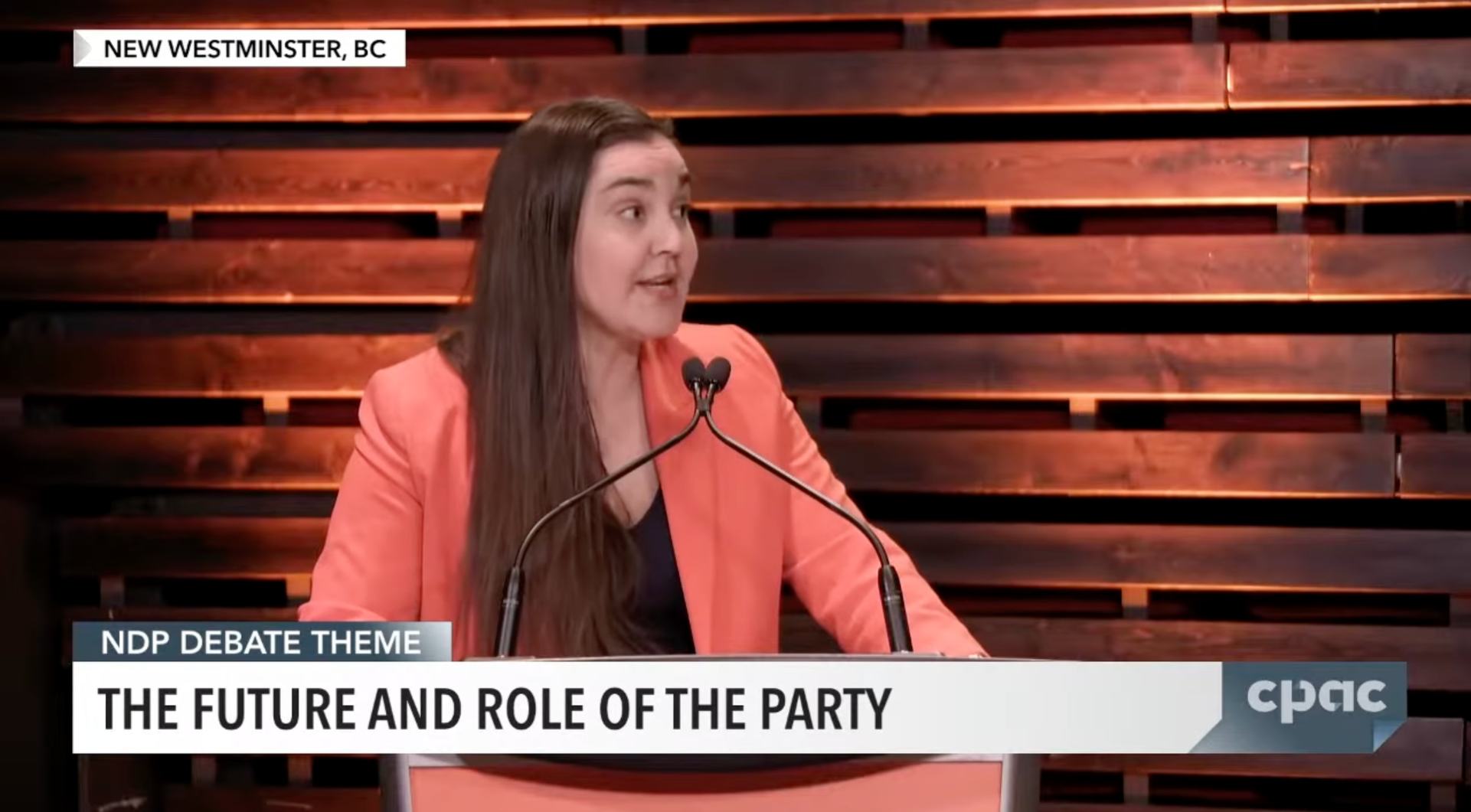
The most impressive performance of the night came from the candidate I had initially dismissed as a long shot.
Tanille Johnston started very poorly, speaking too fast, seeming almost panicked. But as the debate progressed, she settled into a rhythm that none of the others matched. She was, by far, the clearest communicator of policy specifics on that stage.
When the conversation turned to energy, she seamlessly pivoted from oil and gas to Indigenous economic participation to the $600 billion infrastructure gap to the need for free education to train renewable energy workers. She connected dots that other candidates left floating.
Her answer on French was politically sophisticated: rather than apologizing for her fluency, she reframed the issue around Indigenous language loss and Quebec's success in preserving francophone culture.
Her French remains terrible, and that is a genuine problem. But she demonstrated something the others did not: an ability to grow, to adapt, to learn in real time.
Avi Lewis
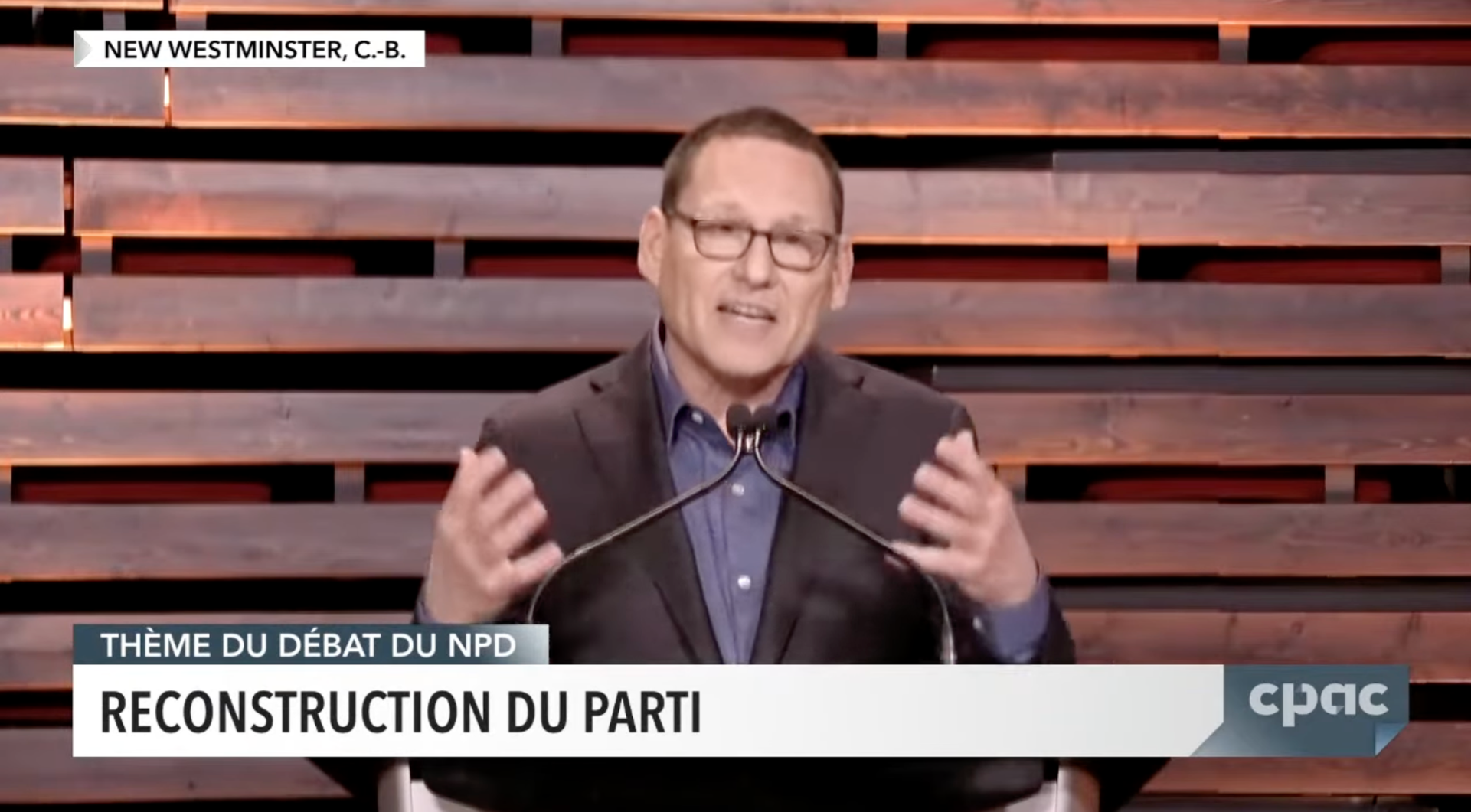
Avi Lewis is the best all-around communicator in this race, and it's not close. His French is head and shoulders above the other candidates. He continues to command the room and steer the conversation. His answers—on public ownership, on a Green New Deal, on proportional representation—were clear, bold, and memorable.
When he proposed that an NDP minority government should enter negotiations with "one demand" (proportional representation), it was the kind of strategic thinking this race has desperately lacked, and on that file, I 100% agree with him.
But.
Lewis cannot escape his Leap days, and this debate proved why. At times, his rhetoric remains overheated, self-marginalizing, and politically toxic. At one point, he went as far as to describe Canada under Mark Carney as a “militarized petro state” and a “junior arms dealer on the world stage.”
This is the language of the activist fringe, not of a party seeking to govern.
Meeting NATO's 2% defence commitment—a commitment popular with the overwhelming majority of Canadians frightened of Donald Trump—does not make Canada a petro state, and selling arms within established alliance frameworks does not make us junior arms dealers.
Lewis sounds like he is still speaking to the crowd that applauded the Leap Manifesto in 2016. That crowd is not large enough to win elections, and his inability to modulate his rhetoric suggests he does not understand—or does not care—that the rest of the country may hear him as unhinged.
The Bottom Line
After several debates that ranged from embarrassing to forgettable, New Democrats finally had a night where ideas clashed, records were challenged, and voters got something useful: a genuine look at who these people are and how they think.
Four debates in, the race finally has a shape. Johnston is the surprise, Lewis is the talent, Ashton is the labour anchor, McPherson is the establishment option, and McQuail is the protest candidate who won't be the leader.
But none of that matters if the party doesn't answer its fundamental questions; What is the NDP for? Who is it trying to reach? What does it actually want to build?
Those questions were asked more clearly in this debate than in the previous three combined. That's progress. But asking them isn't the same as answering them. The next leader will have to rebuild a party that just suffered its worst electoral result in decades.
They'll have to convince working-class voters that the NDP isn't out of touch and actually deserves their votes. They'll have to speak to Quebec in French and mean it. They'll have to discuss foreign policy without sounding like they've wandered in from a 1970s disarmament rally. They'll have to offer bold ideas that actually sound like they could happen, not just slogans that sound good in a leadership debate.
The race is finally interesting, but that doesn't mean the answers are clear, it just means the questions are finally being asked in a way that might actually lead somewhere
Now we wait to see who can answer them.
This piece was written by an individual contributor and reflects the editorial position of The Provincial Times and Left Lane Media Group. Read our Content Policy here.