Carney rallies Liberals with 'Canada Strong' vision, vows to decouple economy from U.S. dependence
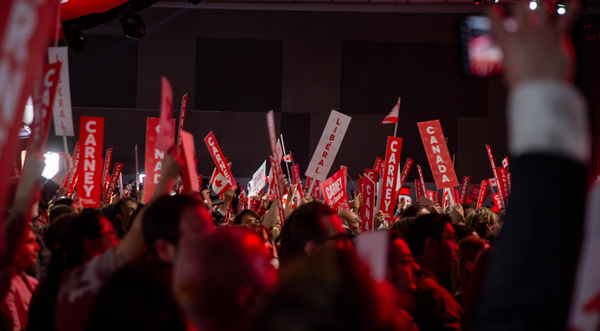
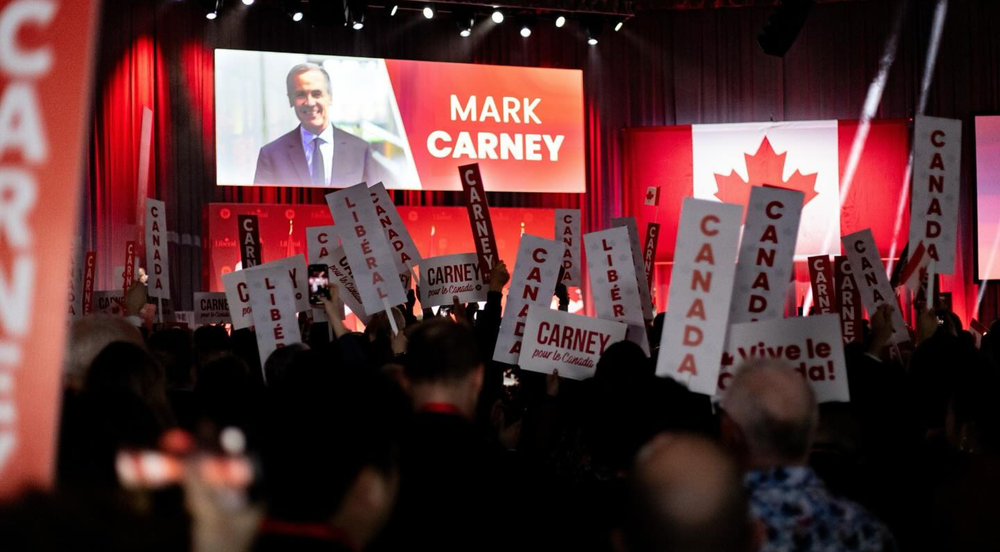
Prime Minister Mark Carney delivered a sweeping call for national renewal at the Liberal Party convention Saturday, casting Canada's current moment as a historic rupture that demands bold action, economic sovereignty, and a rejection of “nostalgia” for a past that will not return.
In his first convention address since assuming the Liberal leadership, Carney laid out an ambitious agenda to reshape Canada's trade relationships, supercharge domestic industry, and position the country as a master of its own destiny amid crumbling international norms.
“The world is changing, not gradually but suddenly,” Carney told a packed hall of delegates in Montréal. “Some are still in denial. Rather than starting this journey, they're waiting for the past to return. But hope isn't a plan, and nostalgia isn't a strategy.”
The speech, delivered in both French and English, marked Carney's most comprehensive articulation yet of the "Canada Strong" vision that has become his government's organizing principle. It was also an unmistakable pitch to a broader electorate watching beyond the convention hall walls ahead of three spring by-elections that may hand the Carney Liberals a majority government.
Central to Carney's message was a frank acknowledgment that Canada's deep economic integration with the United States has become a vulnerability. He announced a new federal procurement policy that will select Canadian suppliers by default, declaring that “the days of Canada's military sending 70 cents of every dollar to the United States are over.”
The government, he said, has already struck twenty new economic and security partnerships across four continents in the past year alone. The objective is to double non-U.S. exports over the next decade—representing $300 billion in new orders for Canadian resources, goods, and expertise.
“We are creating new trade corridors from the Mackenzie Valley to Contrecœur and Churchill to make Canada more connected, more independent, and more prosperous,” Carney said.
The Prime Minister also unveiled a new Defence Industrial Strategy that his government projects will catalyze half a trillion dollars in investment while creating more than 125,000 jobs in sectors ranging from aerospace to artificial intelligence. He noted that recruitment to the Canadian Armed Forces has climbed 13% since last June, following what he described as the largest pay increase for service members in a generation.
Yet Carney's address was as much about national psychology as it was about policy. He praised what he called the “quiet” movement of ordinary Canadians who have shifted their habits—choosing Okanagan wine over California vintages, vacationing on Prince Edward Island instead of Florida—as small but meaningful acts of sovereignty.
“Small acts of solidarity. Repeated millions of times,” he said. “Together, they make a statement: we are the masters of our destiny.”
The speech situated Carney firmly within the Liberal Party's governing tradition, invoking the legacies of Wilfrid Laurier, Mike Pearson, Pierre Trudeau, and Justin Trudeau. He credited his immediate predecessor with widening “the scope of our inclusive society” through child poverty reduction, reconciliation with Indigenous peoples, and intergenerational climate commitments.
Carney also addressed the affordability pressures facing Canadian households, pointing to $60 billion in identified government savings, a middle-class tax cut affecting 22 million Canadians, and measures to boost competition in telecom, banking, and grocery sectors.
On the defining technological question of the era, Carney promised an “AI for All” approach that would ensure artificial intelligence is governed by Canadian values and serves all citizens, not merely a privileged few.
“When we build physically, we are building inclusively, sustainably, and in solidarity,” he said. “These same values must hold as we build virtually.”
The Prime Minister closed with an appeal to the better angels of the Canadian character, recounting the story of Gander, Newfoundland, whose residents welcomed thousands of stranded passengers into their homes on September 11, 2001. He quoted a thank-you note from a young girl named Ellie, who wrote: “Your kindness motivates me to use my kindness.”
“Ellie's phrase captures what Canadians instinctively know: that virtue is like a muscle,” Carney said. “It grows with exercise. When we are kind, kindness grows. When we seek unity, unity grows. When we are Canadian, Canada grows.”
As delegates rose for a sustained ovation, the message was clear: the path forward would not be easy, but Canada would walk it together—or not at all.