Saskatchewan NDP joins Nenshi in distancing party from Avi Lewis
The historic birthplace of the New Democratic Party (NDP) has become the latest front in a widening civil war, as Saskatchewan NDP Leader Carla Beck issued a stinging rebuke of newly elected federal leader Avi Lewis, effectively barring him from the province unless he renounces his "ideological" opposition to natural resource development.
In a sharply worded open letter released Saturday before Lewis's decisive first-ballot victory in Winnipeg, Beck signaled that the "integrated" model of the NDP—where provincial and federal wings share a single membership—is nearing a point of total structural collapse.
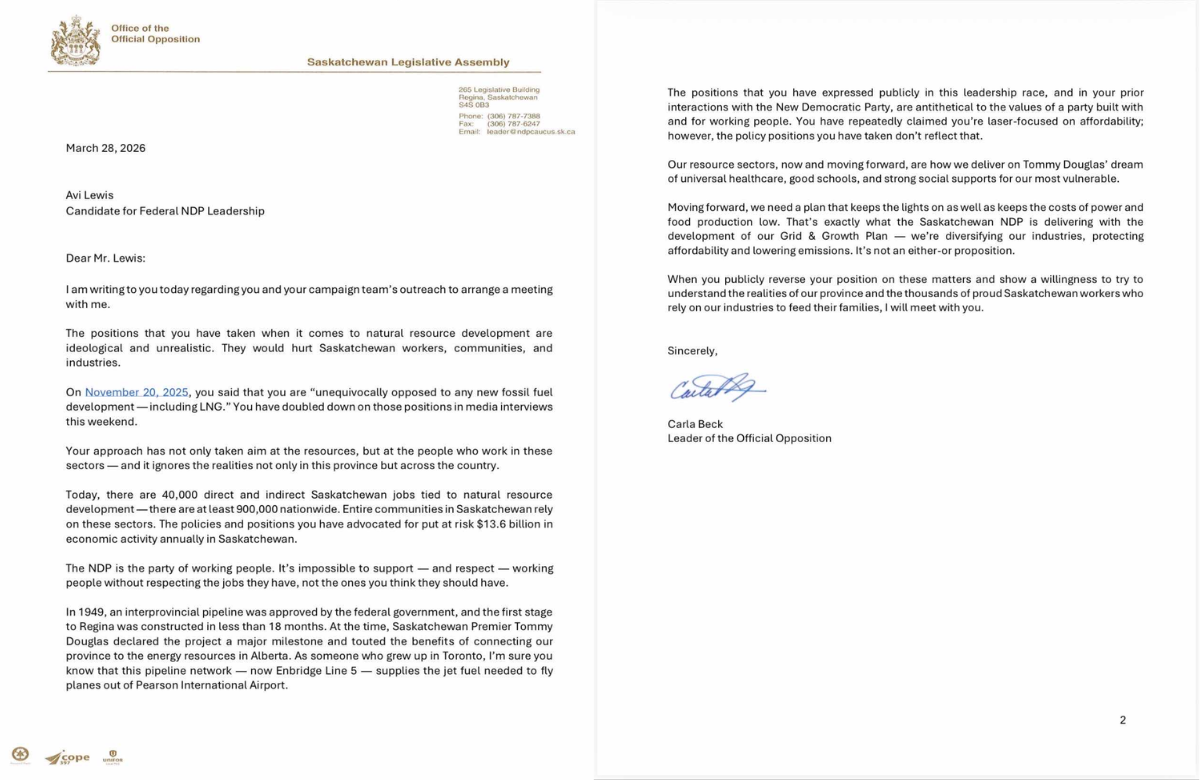
The letter, which pointedly invokes the legacy of party founder Tommy Douglas, characterizes Lewis's "Green New Deal" as an existential threat to the 40,000 Saskatchewan workers whose livelihoods depend on the energy sector.
“The positions you have taken are unrealistic,” Beck wrote. “They would hurt Saskatchewan workers, communities, and industries.”
A Battle for the Soul of the West
The move by Beck creates a formidable prairie firewall alongside Alberta NDP Leader Naheed Nenshi, who similarly denounced Lewis's leadership on Sunday. For the federal NDP, the rejection by its two most powerful Western branches—both of which currently serve as the Official Opposition in their respective legislatures—threatens to relegate the federal party to a regional rump centred in urban Ontario and British Columbia.
While Lewis, a Toronto-raised activist and filmmaker, campaigned on an anti-capitalist platform that includes an immediate halt to all new fossil-fuel infrastructure, Beck has spent the last year touring Saskatchewan oil patches to promote her "Grid and Growth" plan.
The political stakes for Beck are immediate. With a provincial election looming, the Saskatchewan NDP is desperate to shed the "anti-development" label that has historically hampered its chances in rural ridings. By publicly dunking on the federal leader, Beck is attempting to prove to voters that her party is a "Saskatchewan-first" entity, removed from the radicalism of the federal wing.
Perhaps most striking was Beck's use of Tommy Douglas to delegitimize the new leader. Saskatchewan New Democrats view themselves as the keepers of the party's "Common Sense" socialist flame, and Beck's letter pointedly reminded Lewis that Douglas himself championed developing the province's resources to fund the birth of universal healthcare.
“Our resource sectors, now and moving forward, are how we deliver on Tommy Douglas' dream of universal healthcare, good schools, and strong social supports for our most vulnerable,” the letter stated.
The Looming Divorce
The rebuke was both personal and professional. Beck specifically referenced a video on Lewis's LinkedIn account where he stated he was "unequivocally opposed" to any new fossil fuel development, including LNG. She countered that such a stance puts $13.6 billion in annual economic activity at risk in Saskatchewan alone.
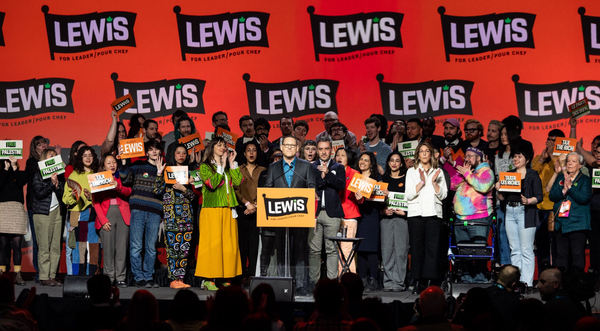
While Lewis attempted to strike a conciliatory tone in his victory speech, calling for a "big tent" that could hold differing opinions, the response from the West suggests the tent may already be torn.
With Beck refusing even to meet with the federal leader until he publicly reverses his stance, the federal NDP faces a crisis of identity not seen since the "Waffle" movement of the 1970s.
As the federal party drifts toward the far-left, its provincial cousins in the heartland are increasingly finding that the "NDP" brand is a weight they can no longer afford to carry.