ADAMS: Parents, not government, should decide what children do online
We are, once again, in the grip of a moral panic. These things come and go, like fads or flu seasons. Usually, they revolve around some new form of media that, according to concerned adults, is corrupting the youth, eroding the social fabric, and generally making the world a worse place. Comic books were going to turn children into delinquents. Rock music was going to promote "Satanism." Video games were going to train a generation of mass shooters.
None of this happened, of course. Society moved on, the children grew up, and the supposed crisis was quietly forgotten until the next one came along.
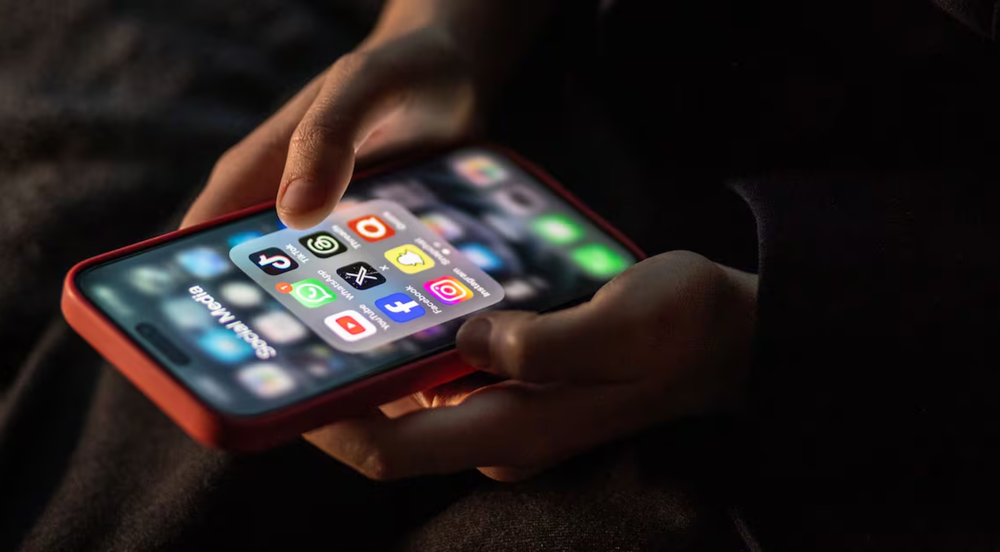
Now, the target is social media. And the proposed solution, at least here in Canada, is not simply to worry about it, but to impose a sweeping new system of online surveillance. At the ongoing convention in Montreal, the Liberal Party is considering a policy banning social media for children under the age of 16, which would likely require Canadians to present government-issued ID to access most online forums. The stated goal is to protect children. The actual effect would be to eliminate anonymity on the Canadian internet entirely.
There is, however, a much simpler solution. And it does not require legislation, parliamentary debate, or the creation of a vast new bureaucratic apparatus. It requires parents to do something that was once considered fairly standard: parent.
If this policy moves forward and becomes law, you likely will no longer be able to comment on a news article, engage in a community forum, or criticize a public figure without attaching your full legal name. Your online activity could be tied directly to your identity, accessible to anyone with the authority to request it. This is a fundamental restructuring of what the internet has been for the past 30 years—a space where people could speak without fear of reprisal, whether they were a dissident in an authoritarian country or simply someone who didn't want their boss reading their opinions on municipal zoning.
The argument for this is the same argument that has been used for every moral panic in living memory: think of the children. Social media, we are told, is dangerous. It exposes young people to harmful content, to bullying, to ideas their parents would rather they not encounter.
And because these dangers exist, the argument goes, the government must step in and regulate the entire online world for everyone. But this logic contains a rather obvious flaw. Children do not, as a rule, purchase their own smartphones. They do not pay for their own data plans. They are not independently wealthy enough to acquire these devices without adult assistance.
Which means that in the vast majority of cases, a child has a phone because a parent chose to give it to them.
If you do not want your child to have a phone, you can simply choose not to give them one. If you want them to have the phone but wish to limit how they use it, you can use the parental controls that already exist on every major operating system. If they misuse the device—if they are on it too much, or accessing things you disapprove of—you can take it away. This is not complicated. It is, in fact, one of the more straightforward aspects of raising a child.
I understand that modern parenting culture sometimes makes this sound unreasonable. There is a certain strain of thought that suggests parents are powerless against the forces of technology, that children today are simply ungovernable in ways previous generations were not. This is, I suspect, a convenient excuse. It is easier to demand that the government regulate the internet for everyone than it is to tell your teen that their phone privileges are being revoked.
There is also, I think, a deeper discomfort at play. Many of the same parents who worry about social media are also worried about what their children might encounter there that they themselves cannot control. It is one thing to limit screen time. It is another thing entirely to prevent your child from learning about ideas you would prefer they not be exposed to—whether about sexuality, politics, or the world beyond your own household.
And this, I suspect, is the real motivation behind many of these proposals. The stated goal is child safety. But the practical effect, in the United States as in Canada, is to create a framework in which uncomfortable but legal speech can be suppressed. The Kids Online Safety Act in the US has been criticized for potentially censoring information about LGBTQ issues. In Canada, the proposed age requirements would make it impossible for dissenting voices to speak without revealing their identity—a useful tool for anyone who would prefer that certain opinions simply not be aired.
Now, if a parent wants to raise their child in a carefully managed environment, that is their right. There is no law against being an overprotective parent, and in many ways, Canadian society is structured to permit it. But that parental preference should not become the basis for a nationwide surveillance system. The fact that some parents do not wish to supervise their children's internet use is not a compelling reason to eliminate anonymity for everyone else.
The internet, for all its flaws, remains one of the great achievements of modern society. It allows people to connect across borders, to find communities they would never encounter in their physical surroundings, and to speak freely without fear of local consequences. It is not perfect, and there are legitimate concerns about the way large platforms operate. But those concerns should be addressed directly, not used as an excuse to impose a system of digital identification that would fundamentally change the nature of online life.
If parents are worried about what their children are doing online, they have options. They always have. The answer is not to demand that the government police the internet for them. It is to do what parents have always done: take responsibility for their own children, and leave the rest of us alone.
This piece was written by an individual contributor and reflects the editorial position of The Provincial Times. Read our Content Policy here.