ADAMS: Pierre Poilievre's Figure Skating Panic
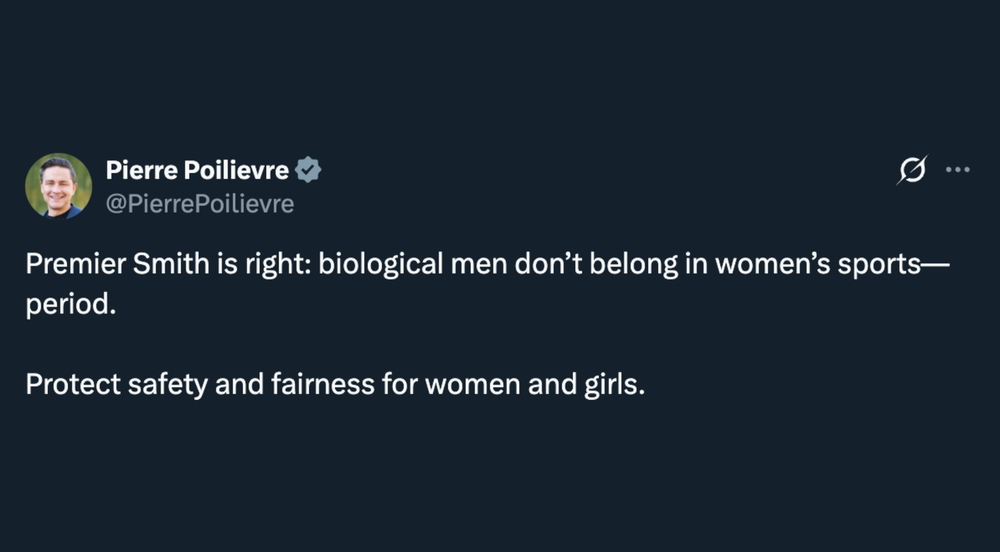
One of the stranger developments in modern Canadian conservatism is the tendency to treat niche administrative questions as if they were civilization-defining emergencies. Pierre Poilievre's recent declaration that “biological men don’t belong in women's sports—period,” offered in defence of Alberta Premier Danielle Smith's latest culture-war skirmish, is a textbook example.
To begin with the obvious: “biological man” is not a scientific category. It is a rhetorical invention, popularized not by endocrinologists or sports medicine experts but by political activists who find precision inconvenient. Sex and gender are distinct constructs. Competitive sport already recognizes this, which is why eligibility rules are written by sporting bodies, not MPs with X accounts.
But let us set aside terminology and ask a more practical question: what, exactly, is the problem being solved here?
In context, this debate is about Skate Canada. Not mixed martial arts. Not Olympic weightlifting. Figure skating; a sport judged on technique, balance, artistry, choreography, and execution. It is not a contest of brute strength. It never has been. Suggesting otherwise does not defend women's sport; it misunderstands it.
If the claim is that the inclusion of transgender athletes has compromised fairness, then evidence should be easy to produce. Which competitions were distorted? Which podiums were unjustly decided? Which athletes were displaced? To date, we are offered none of this. Instead, we are invited to imagine a vague and menacing unfairness, hovering perpetually just out of view.
This is not how serious policy debates are supposed to work.
Sports organizations have always regulated eligibility. They already do so using evolving scientific evidence—hormone thresholds, transition timelines, and sport-specific risk assessments. The idea that a one-size-fits-all political edict is superior to discipline-specific governance is not “common sense.” It is intellectual laziness.
This is not a pro-woman argument. It is a patronizing one.
There is also an irony in the way this rhetoric claims to protect women while subtly diminishing them. The implication underlying Poilievre's argument is that women's sport is uniquely fragile, so precarious that it requires state intervention to survive. That female athletes, particularly in sports like figure skating, cannot compete without politicians acting as referees.
The vast majority of cisgender athletes train for years to perfect skills that have little to do with raw physical power. To reduce their achievements to something that can be undone by the mere presence of a transgender competitor is to misunderstand both the sport and the athletes who compete in it.
Danielle Smith's willingness to escalate this issue using extraordinary political tools deserves scrutiny, but it is not the most interesting part of the story. The more revealing figure here is Poilievre himself.
This is not the first time he has leaned into this issue. In 2024, when he first adopted similar rhetoric, it was already clear what was happening: an attempt to appeal to a narrow slice of the electorate animated by cultural grievance rather than material policy concerns. That strategy has not improved with repetition.
All of This, While Ignoring the File That's Actually Working
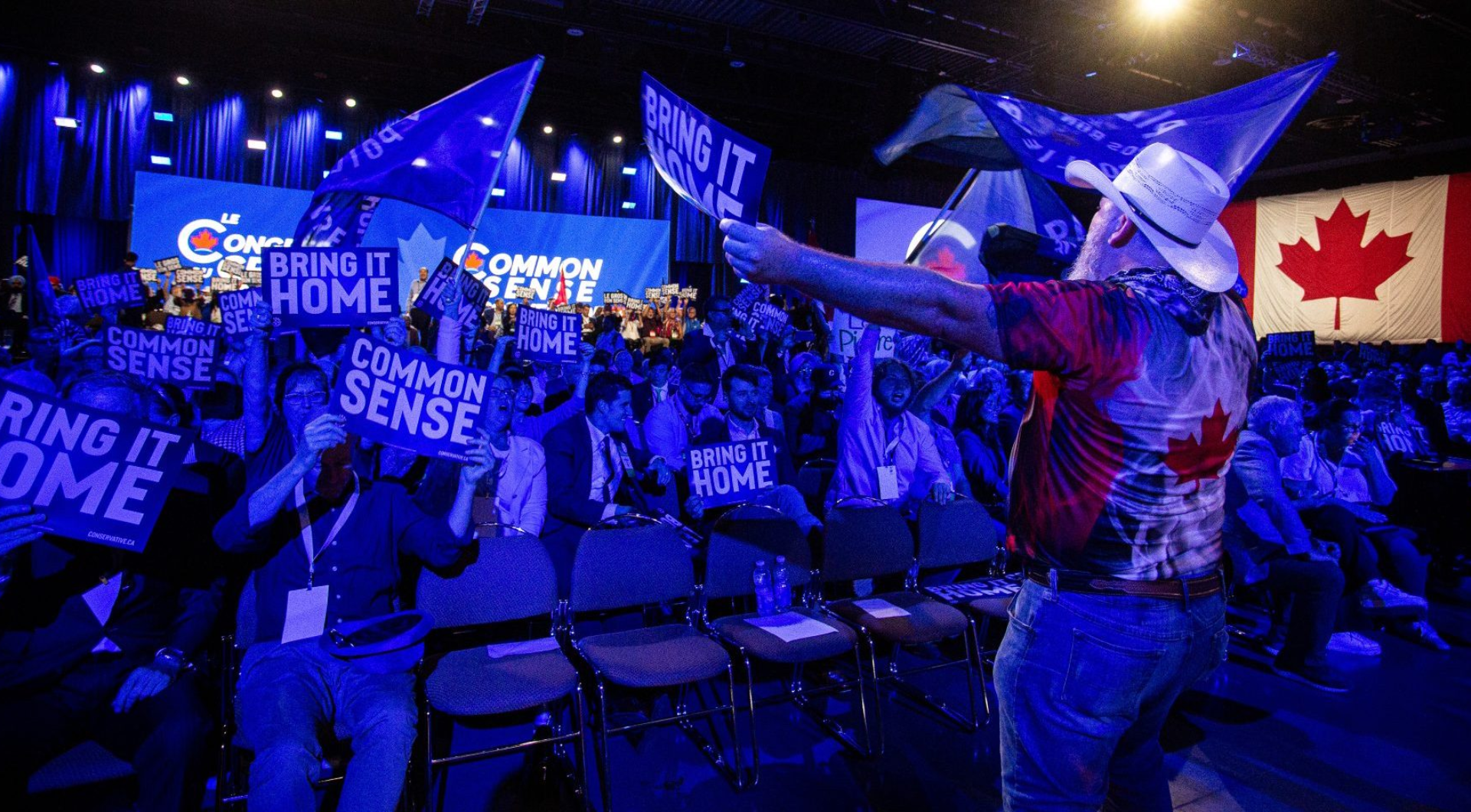
Canada is not the United States. The electorate is broadly supportive of LGBTQ rights, and deeply uncomfortable with politicians who appear obsessed with policing identity rather than governing a country. Erin O'Toole—hardly a progressive icon—understood this. His attempt to modernize the Conservative Party was not an act of ideological betrayal; it was electoral realism.
Poilievre chose a different path. He gave an inch to the People's Party flank, and in doing so signalled that he was willing to turn marginal issues into national litmus tests. The result is a party increasingly defined not by what it wants to build, but by who it wants to exclude.
This is especially odd given that the Conservative Party currently does, in fact, have winning issues. On immigration, housing, affordability, and government competence, Poilievre has continued to gain traction. These are topics that unite rather than fracture, and they reflect genuine public concern.
So why pivot to female figure skating?
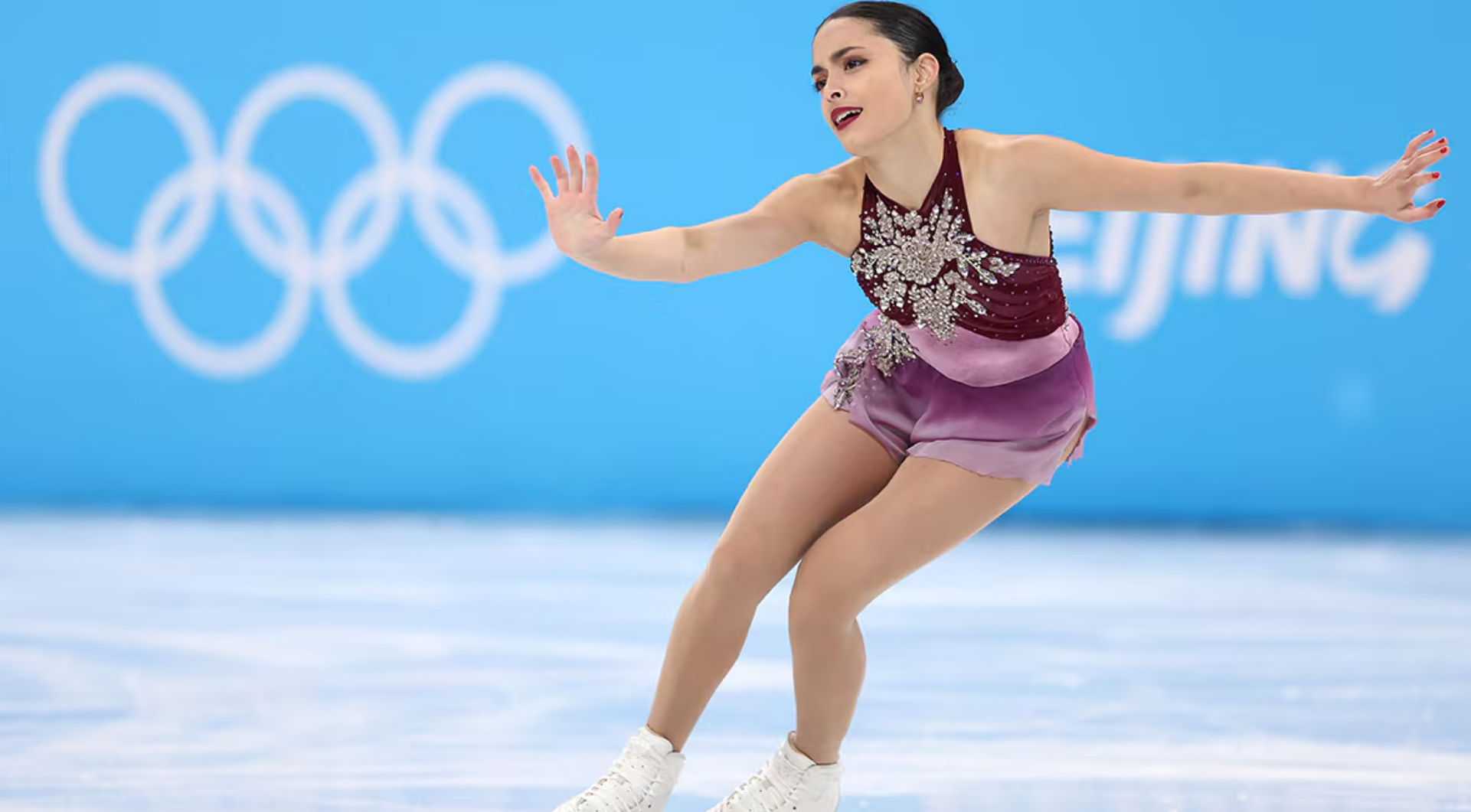
The answer, of course, is that wedge politics are tempting. They offer clarity without complexity, enemies without accountability, and applause without responsibility. It is easier to posture about hypothetical unfairness than to grapple with structural problems that resist simple slogans.
But there is a cost. Every time a national political leader chooses to make a handful of athletes the centre of a moral panic, they signal something about their priorities. Every time they substitute evidence with intuition, they reveal something about their seriousness.
Politics, at its best, is the art of choosing what matters. Poilievre has made his choice.
Canada does not need federal leaders refereeing figure skating competitions, nor does it need politicians redefining science to score points online. What it needs is a politics grounded in proportion, evidence, and restraint—the unglamorous virtues of a country that prefers competence to crusades.
A nation confident in it's culture does not measure its strength by how aggressively it targets its smallest minorities. And a party that aspires to govern cannot afford to confuse cultural grievance with leadership.
On this issue, Pierre Poilievre has chosen division over discipline, and spectacle over substance. Canadians should take him at his word, and draw their own conclusions.
This piece was written by an individual contributor and reflects the editorial position of The Provincial Times and Left Lane Media Group. Read our Content Policy here.Read our Content Policy here.Read our Content Policy here.