ADAMS: What Jamil Jivani’s Healthcare Roundtable Got Right
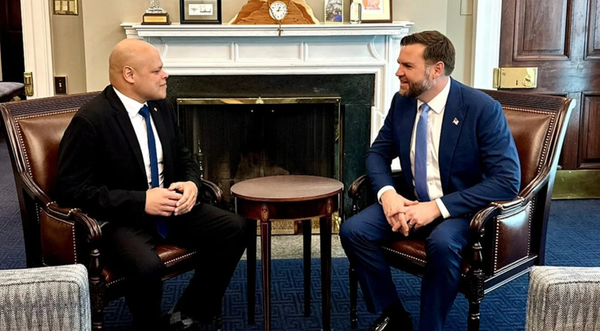
Political roundtables are often designed to look productive rather than be productive. That's what made Jamil Jivani's healthcare roundtable in North Oshawa in late January noteworthy: for long stretches, it actually was productive.
The format was simple. Jivani offered some high-level observations from Ottawa, particularly around federal transfers, regulatory frameworks, and the limits of federal jurisdiction, and then largely got out of the way. What followed was a long, sometimes uncomfortable, but mostly honest discussion driven by nurses, retirees, caregivers, and ordinary residents who have lived with the consequences of Ontario's healthcare deterioration.
Frontline workers described overcrowded hospital floors, patients placed in hallways, staff stretched past safe limits, and a system that has quietly normalized crisis conditions. Others spoke about administrative bloat, procurement failures, incompatible computer systems, and the maddening reality that hospitals often cannot share records with one another.
The picture that emerged was not of a system starved of money alone, but one riddled with inefficiency, misaligned incentives, and weak accountability. This is where the conversation was at its strongest: not ideological, not abstract, but rooted in experience.
That said, no Canadian political event is complete without moments where seriousness gives way to familiar nonsense. At a few points, the discussion veered into anti-vaccine rhetoric and open praise for Maxime Bernier, a diversion that had little to do with healthcare delivery and even less to do with solutions. These moments didn't dominate the event, but they were reminders of how easily legitimate grievances can be hijacked by hobbyhorses that offer catharsis instead of clarity.
To Jivani's credit, he did not indulge this. Nor did he allow another lapse in decorum to pass unchallenged: when side conversations broke out while I was laying out my views on healthcare in the riding—particularly the state of Bowmanville Hospital—Jivani directly called it out as rude and refocused the room. That may sound small, but in political settings, it rarely happens. It mattered.
When my turn came, I spoke plainly. Despite recent expansion announcements, Bowmanville Hospital remains underfunded, understaffed, and stripped of essential services. A larger building means very little if there are no workers to staff it, no diagnostics to modernize it, and no primary care system to prevent emergency rooms from becoming the default entry point into healthcare.
I also raised a point that tends to make Ottawa uncomfortable: accountability. Federal healthcare dollars cannot simply be transferred and forgotten. If money sent from Ottawa ends up wasted—whether through mismanagement, bureaucratic sprawl, or absurd misuse—MPs have a responsibility to ask hard questions. Taxpayer money is finite, and its misuse has consequences measured in wait times, burnout, and preventable suffering.
This led naturally to another issue I introduced: Ottawa's chronic inability to handle technology competently. Healthcare reform increasingly depends on digital tools—telemedicine, shared records, triage systems—yet federal governments of all stripes have repeatedly demonstrated that they are bad at implementing technology. ArriveCAN remains the most recent and obvious example. When the federal government asks Canadians to trust it with healthcare tech, skepticism is learned behaviour.
None of this is an argument against technology in healthcare. Quite the opposite. It is an argument for competence, humility, and partnership with people who actually use these systems, rather than top-down digital experiments that burn money and trust in equal measure.
Credit Where It's Due and the Test Ahead
Jamil deserves credit for hosting the roundtable in the first place for one reason: he listened more than he spoke. He allowed criticism of both provincial and federal governments. He did not shut down uncomfortable testimony. In today's political climate, that could put him ahead of the curve.
But listening is not the same as delivering.
The problems raised at this roundtable are not new. The solutions discussed were not radical. What is missing is action. Sustained, measurable action.
If this event becomes a one-off, then it will join the long Canadian tradition of well-meaning conversations that change nothing. If, however, Jamil uses what he heard to press Ottawa harder, demand accountability for transfers, and challenge the inertia that defines healthcare policy, then this roundtable will have been worth something.
Healthcare in Durham does not need more sympathy. It needs results. Jamil opened the door. Now we'll see whether he walks through it.
This piece was written by an individual contributor and reflects the editorial position of The Provincial Times and Left Lane Media Group. Read our Content Policy here.