Carney Government Rolls out New Grocery Benefit as Affordability Pressures Persist
The Carney Liberals say they are taking “direct action” to lower grocery prices, announcing a new package of benefits and subsidies today as Canadians continue to struggle with rising food costs, housing unaffordability, and broader economic uncertainty.
Prime Minister Mark Carney's office unveiled what it is calling the Canada Groceries and Essentials Benefit, a renamed and expanded version of the existing GST Credit. The government says the benefit will increase payments by 25 per cent for five years beginning in July 2026, along with a one-time payment this year equal to a 50 per cent increase.
According to government figures, a family of four could receive up to $1,890 this year and approximately $1,400 annually for the next four years, while single Canadians could receive up to $950 this year and about $700 annually thereafter. Ottawa says more than 12 million Canadians will qualify.
The announcement comes as food prices remain elevated and many Canadians report cutting back on essentials, despite years of federal spending aimed at affordability.
“Our government is focused on bringing down costs and making life more affordable,” Finance Minister François-Philippe Champagne said, framing the measures as immediate relief paired with longer-term economic reforms.
Billions in funds, unclear price impact
In addition to direct payments, the government is allocating $500 million from the Strategic Response Fund to help businesses manage supply chain disruptions, with the stated goal of preventing costs from being passed on to consumers.
Another $150 million Food Security Fund will be created to support small and medium-sized businesses through the Regional Tariff Response Initiative, while $20 million will be directed to food banks through the Local Food Infrastructure Fund.
Critics have long questioned whether such programs meaningfully reduce prices at the checkout, arguing that government subsidies and corporate support often fail to translate into lower consumer costs.
The government is also introducing immediate expensing for greenhouse buildings, allowing agricultural producers to write off qualifying greenhouses acquired after Nov. 4, 2025, and operational before 2030; a move Ottawa says will boost domestic food production over time.
Agriculture Minister Heath MacDonald said the measures are meant to address both short-term food insecurity and long-term supply challenges, though the government acknowledged that many of the structural benefits will not be felt immediately.
National food strategy promised
As part of the announcement, the government confirmed plans to develop a National Food Security Strategy, which it says will strengthen domestic food production and improve access to affordable, nutritious food.
The strategy is expected to include unit price labelling and increased enforcement by the Competition Bureau, particularly within food supply chains: an area that has faced growing scrutiny amid record profits reported by major grocery chains.
Industry Minister Mélanie Joly said the government intends to restore “real competition” in the sector, arguing that supply chain concentration has contributed to higher consumer pricing.
Part of a broader affordability agenda
Monday's announcement builds on a series of affordability measures introduced since Carney took office in April, including a cut to the lowest personal income tax rate, the removal of the GST for some first-time homebuyers, and the cancellation of the federal consumer carbon tax in April 2025.
The government says those measures have helped reduce inflationary pressures, including lower gas prices in many provinces. However, household costs for food and housing remain among Canadians' top concerns.
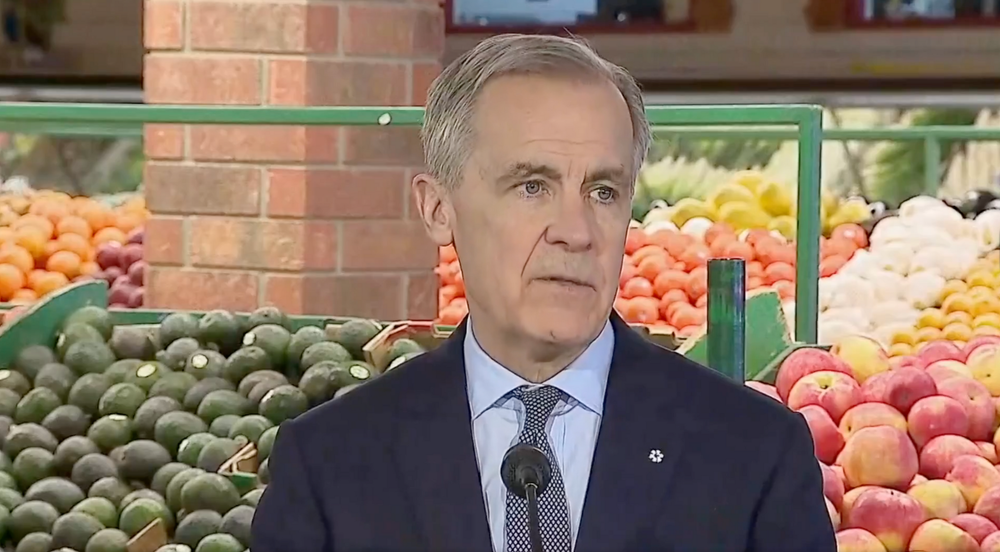
Speaking in the release, Carney defended his government's approach, saying Canada must move “from reliance to resilience” in an uncertain global economy.
Pierre Poilievre's Conservative Party has long argued that repeated subsidies fail to address the underlying drivers of unaffordability, including government spending, regulation, and market concentration.
For now, the government is betting that direct payments and industry supports will provide immediate relief, even as many Canadians remain unconvinced that grocery prices will meaningfully come down.