
Carney puts $25 billion on the table to make every Canadian an owner in the country’s future
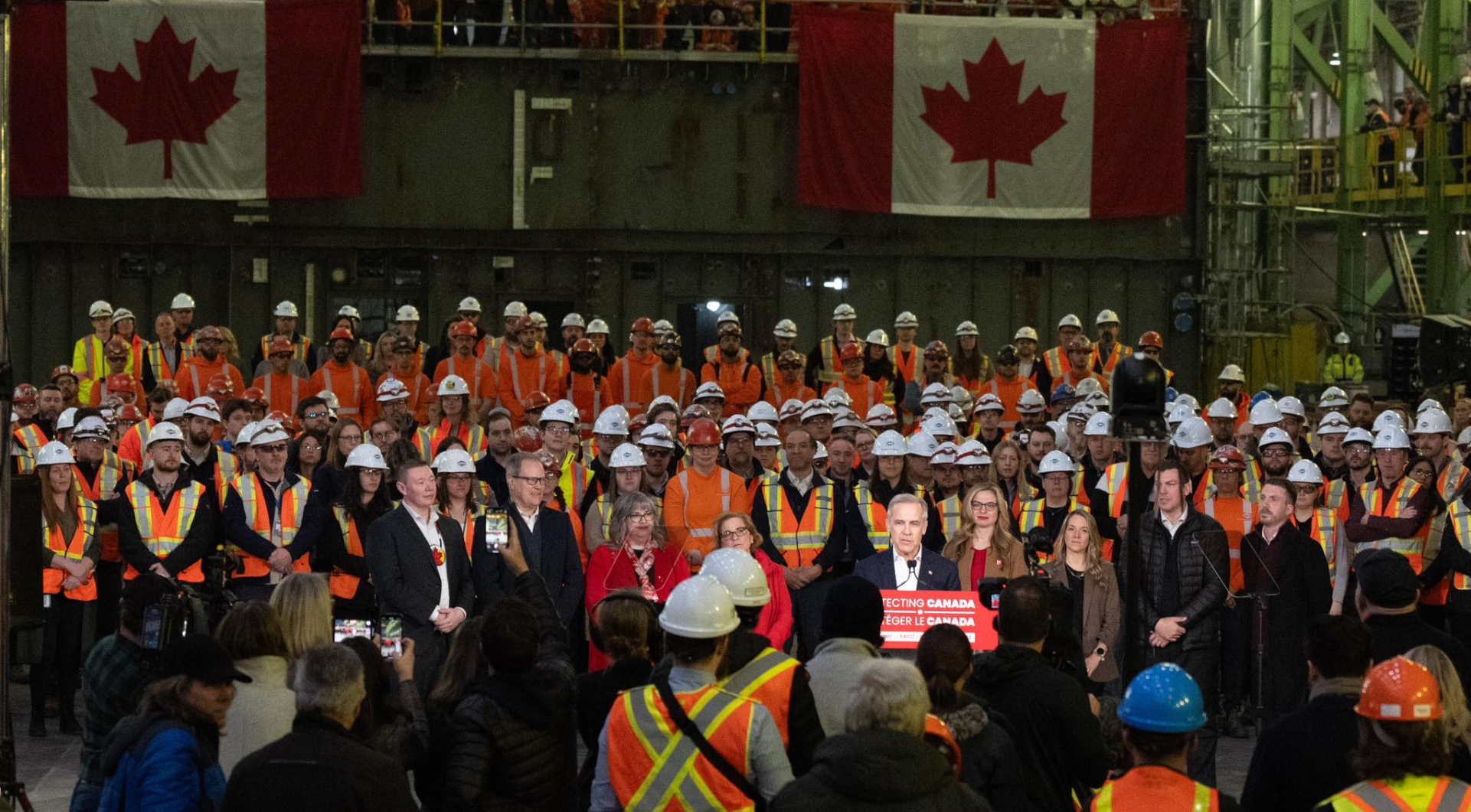
By the time Mark Carney stepped behind the podium for his press conference, what started as a one-minute-and-seven-second social-media video had become the centrepiece of a generational economic proposition: the Canada Strong Fund, the country's first national sovereign wealth fund.
“This is our country. It's your future, and we're building it together,” Carney said, reprising the line that anchored his initial social media announcement before unpacking the architecture of a fund designed to give every Canadian a direct stake in the nation-building boom his government is catalyzing.
The Prime Minister framed the moment in explicitly historical terms, invoking the construction of the Canadian Pacific Railway—the “iron spine from east to west” that bound a young, fragile Confederation together in the 1870s.
Like today, Canada faced an economic depression and sovereignty threats from its southern neighbour. The response then was to build. The response now, Carney argued, must be the same, but with three critical differences.
“The Canadian Pacific Railway transformed Canada, but it did so in a way that also left deep scars,” Carney said. “Indigenous peoples were displaced from their lands. Thousands of workers toiled in appalling conditions. And the wealth that was created accrued to the few, not the many. Three things are different this time.”
Those three things: Indigenous peoples as full partners with meaningful ownership stakes; workers protected through hundreds of thousands of high-paying union jobs; and, for the first time in Canadian history, every citizen holding a direct financial stake in what gets built.
How the fund works
At its core, the Canada Strong Fund is a national savings and investment account. The government will seed it with an initial endowment of $25 billion. Over time, the fund will grow through asset recycling and reinvestment, and it will invest alongside the private sector in nation-building projects—energy, trade corridors, critical minerals, transportation, data infrastructure—on a fully commercial basis.
Carney drew a sharp distinction between this new entity and the existing Canada Infrastructure Bank. The CIB lends money, gets paid back, and moves on. The Canada Strong Fund takes equity positions. “When you lend money, you hope to get it paid back,” he explained. “You don't get the returns that the underlying business or project gets, the equity returns, which are substantially higher than the returns for debt. That's what this does.”
Perhaps the most politically deft feature of the plan is its accessibility.
Carney confirmed that individual Canadians who “have a bit of extra money” will be able to invest directly in the fund, as something structured like a government bond with upside potential. “We're not talking big money,” he said. “It's something for everyday Canadians.”
The fund will be structured as an arm's-length, independent Crown corporation, professionally managed and reporting to Parliament with full transparency. Consultations on the specifics are forthcoming, but Carney was emphatic that the design principle is solidarity: whether a project is in Alberta, Quebec, or the Far North, all Canadians benefit.
The economic backdrop
The announcement did not come in a vacuum. Carney used the press conference to tee up his Finance Minister's spring update, promising "good news" on the fiscal front—spending under control, deficit targets met, and Canada attracting the strongest foreign-direct investment in the G7. He pointed to 21 nation-building initiatives already underway, representing over $125 billion in new investment, and a trajectory to double non-U.S. exports within a decade.
Specific projects rolled off his tongue in a paragraph that sounded like a cross-country infrastructure tour: Energy East, the Sunrise expansion, the Mackenzie Valley line, the Northwest Transmission Line, new Arctic ports, and the Contrecoeur port expansion in Montreal—a project the Infrastructure Bank has already lent more than a billion dollars into, and the kind of asset whose equity returns might now flow to Canadians rather than exclusively to private shareholders.
Sovereign wealth funds are the instruments of confident countries—Norway, Singapore, Australia—places that decided to stop simply exporting their good fortune and start banking it. Carney is betting that Canadians, amid U.S. tariff threats and a fracturing global trading system, are ready for that kind of ambition.
Critics will press on governance, political interference, and whether a country with Canada's persistent productivity gaps can execute such an ambitious vehicle. Those remain fair questions. But the press conference, like the video that preceded it, was an argument that Canada can stop apologizing for its resource wealth and start leveraging it, using state capacity not to crowd out markets but to partner with them, and ensuring the profits of the next century's infrastructure are broadly shared.
“It's our country. It’s your future,” Carney said. “We're building Canada strong for all.”
For a country long told it's too small, too cautious, too polite to play this kind of game, the Prime Minister just drew up new rules and invited everyone in.

Comments