
Carney’s 'Canada Strong' blueprint enters new phase as Prime Minister doubles down on economic self-reliance
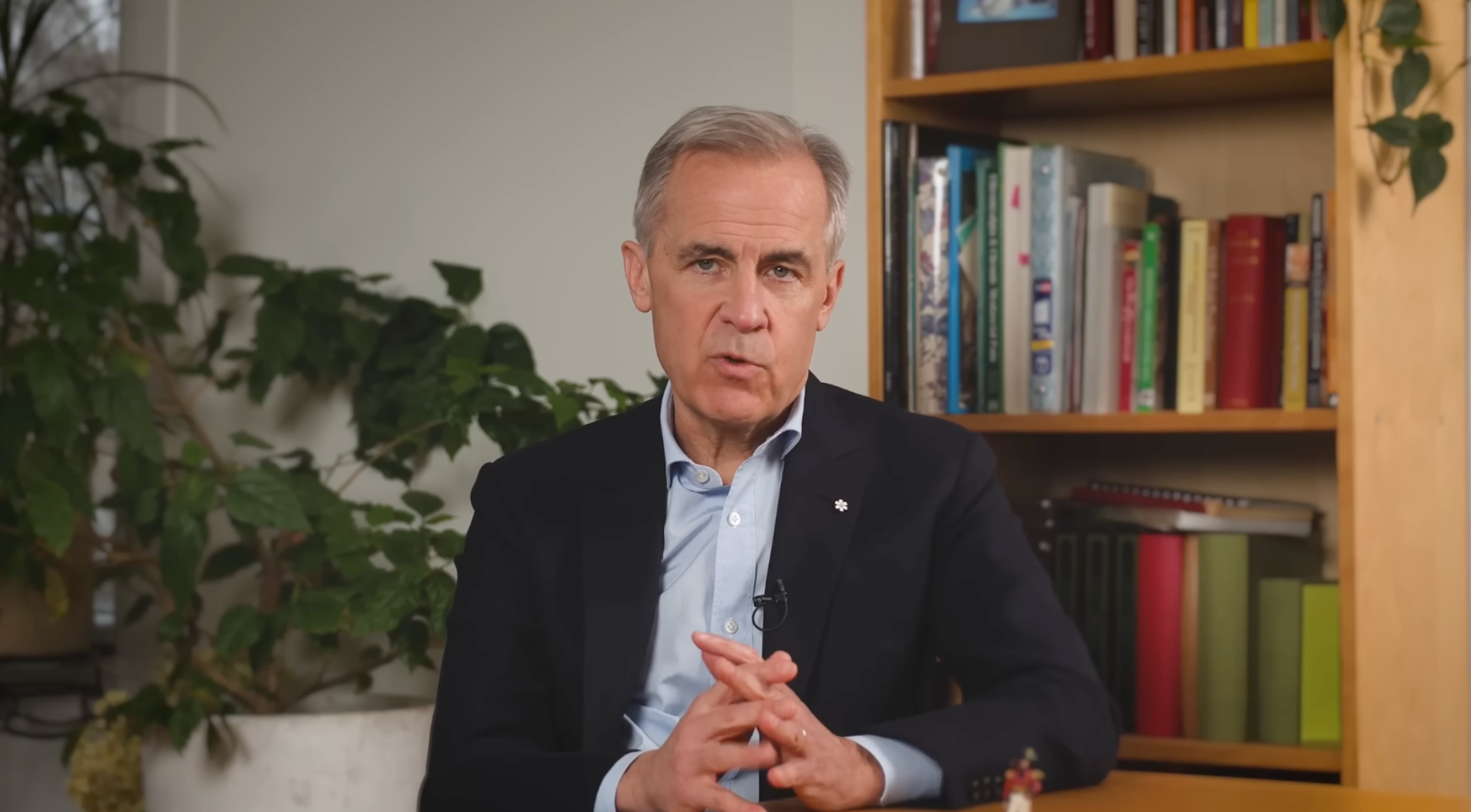
In a direct-to-camera address that echoed the steady, technocratic communication style he honed inside two of the world's most important central banks, Prime Minister Mark Carney delivered an unmistakable message to Canadians on Saturday: The old relationship with the United States is gone, and waiting for it to return is a fool's errand.
The nearly ten-minute video, released across Carney's social media accounts, represents the sharpest articulation yet of the economic nationalism Carney has been building toward since he first asked Canadians for their trust in the 2025 federal election and later cemented as Liberal Party doctrine at the 2026 national convention.
And there was no sugarcoating.
“The U.S. has fundamentally changed its approach to trade, raising its tariffs to levels last seen during the Great Depression,” Carney said flatly, staring into the camera from his office. “Many of our former strengths based on our close ties to America have become our weaknesses. Weaknesses that we must correct.”
It is a blunt admission from a Canadian leader, but one that lands differently coming from Carney. He is not a lifelong partisan warrior; he is the man who helped steer two G7 economies—the United Kingdom and Canada—through the panic of financial crisis. When he warns about "overwhelming outside forces," he speaks with the credibility of someone who has already stared them down and won.
The address was laced with the signature theme that carried him through the 2025 campaign and the unity-focussed 2026 Liberal convention in Montréal: forward guidance. It is a term borrowed from central banking, designed to provide certainty when markets and morale are shaky. Carney is applying it to the national psyche.
“I developed a practice called forward guidance,” he explained, referencing his days battling financial contagion. “It was designed to assure people that however difficult the situation seemed... we would continue to act with overwhelming force against our problems until they were solved. And that's the spirit I'm talking to you about today.”
From Election Promise to Governing Principle
The video statement is a direct continuation of the path Carney laid out 51 weeks ago. During the 2025 election, his opponents accused him of being overly pessimistic about the U.S. alliance, while other voices in Canadian politics still cling to a nostalgic hope that the days of seamless North American integration will return with a change of administration, Carney is pouring concrete over a new foundation.
“Hope isn't a plan and nostalgia is not a strategy,” he said, a line that has become a rallying cry for a Liberal caucus that is now fully aligned behind an industrial policy of self-reliance.
At the 2026 convention, delegates cheered as Carney framed the "Canada Strong" agenda not as isolationism, but as the ultimate act of building. Saturday's address put meat on those bones. He laid out a vision to catalyze a staggering $1 trillion in investment, to double clean energy capacity, and to finally tear down the absurd interprovincial trade barriers that make us thirteen economies instead of one.
Crucially, he reminded Canadians that we've done this kind of heavy lifting before. He gestured to a statue of General Isaac Brock on his desk—a gift from comedian Mike Myers—a hero of the War of 1812 who imagined a Canada before it legally existed. “Before the Americans had even left St. Louis,” Carney noted, Indigenous peoples and Voyageurs had mapped a continent and built trading networks that were the envy of the world.
A People, Not Just a Market
What sets this message apart from a dry economic white paper is Carney's insistence on reminding Canadians that we are a people first, and a country second.
“Most of all, we have each other,” he said. “Canadians are the hardest working, best educated people in the world. We care deeply about each other and about our country.”
This is the heart of the Carney project: a rejection of the notion that Canada is merely a resource appendage or a branch-plant economy waiting for instructions from headquarters down south. It is a call to lift each other—women and men, Indigenous and newcomer, East Coast fisher and West Coast tech worker—to build for a tomorrow that isn't at the mercy of a foreign capital.
The bridge to that tomorrow is already being built. He pointed to the immediate relief measures now fully embedded in Canadian life: the axing of the consumer carbon tax, the middle-class tax cut saving families $840 a year, and the permanence of the National School Food Program.
The world is more dangerous and divided, Carney conceded. But the response isn't panic; it's construction. It's the St. Lawrence Seaway spirit applied to the 21st century.
“We can't control the disruption coming from our neighbours,” Carney said. “We can't bet our future on the hope that it will suddenly stop. But we can control what happens here. ”
With those words, the Prime Minister made clear that the pivot he promised in 2025 is no longer a campaign slogan. It is the brick and mortar of a new Canadian reality.

Comments