
Durham police face questions on crime, bail, and school safety at town hall hosted by MP Jamil Jivani
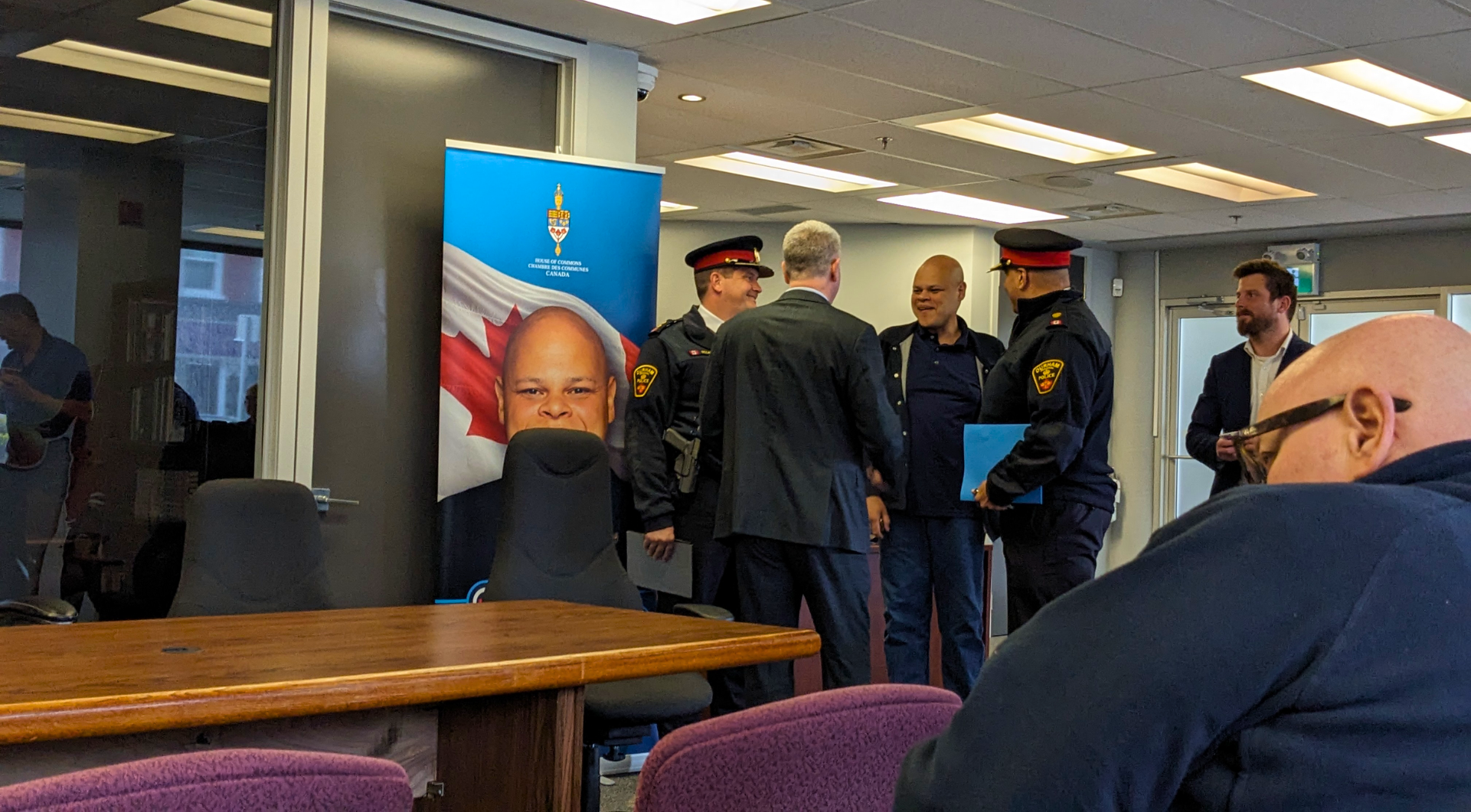
Residents of Clarington and North Oshawa packed into MP Jamil Jivani's constituency office in downtown Bowmanville this week for a public safety roundtable, voicing fears about unsolved shootings, school threats, and repeat offenders they say are cycling through the court system too quickly.
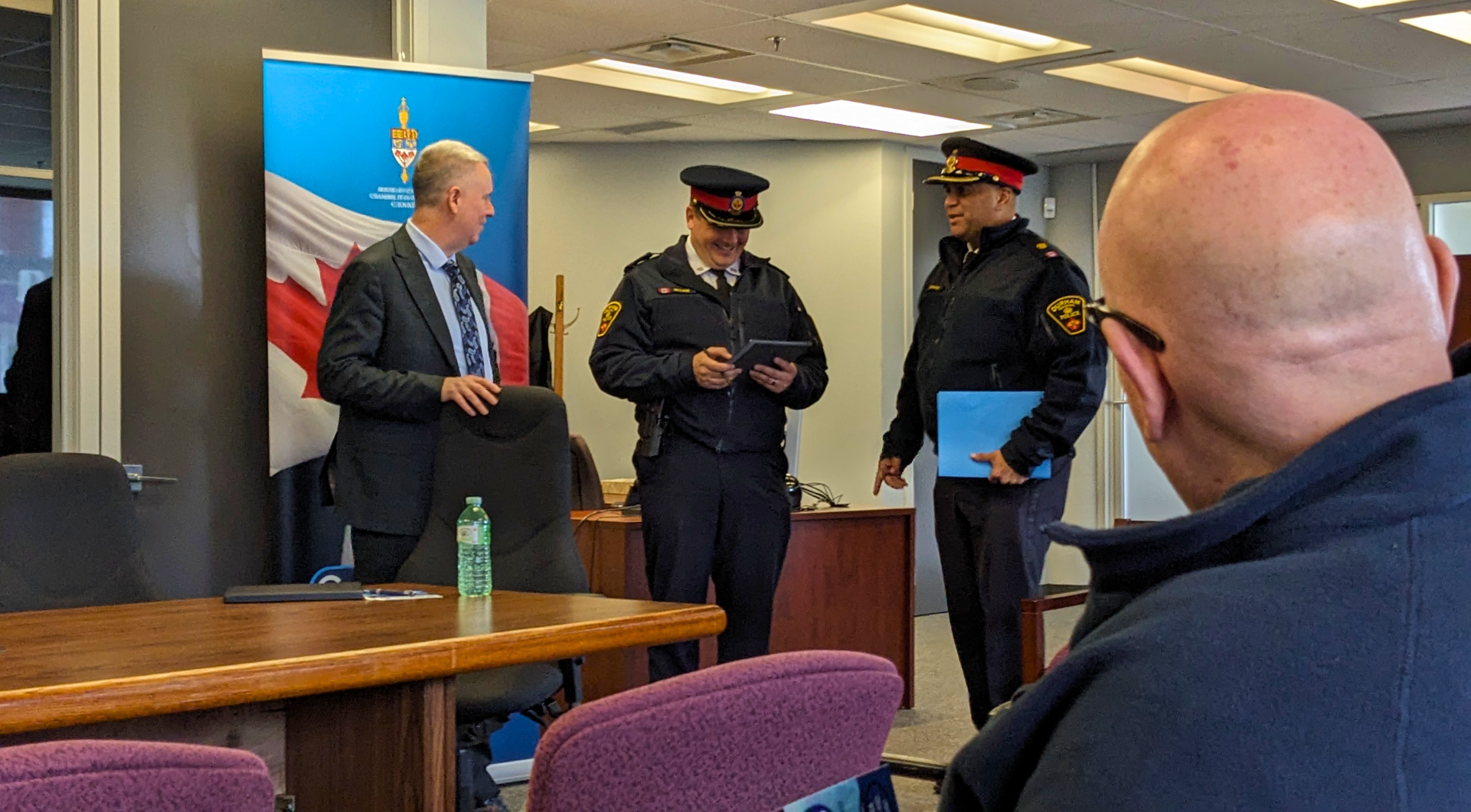
The event, which was not recorded at the request of one of Jivani's staffers, brought together three senior Durham Regional Police Service (DRPS) officers: Chris Bovi, director of regional relations; Superintendent Shawn Siddaram, who oversees the Northeast (16) Division station; and Inspector Craig MacKay, who previously managed violent offender units and now works in Clarington.
With municipal elections looming in Clarington and for Durham Regional Council, Jivani opened the evening by acknowledging the political backdrop but focused on what he called a "spike" in local crime coverage. “We want to make sure we're providing information and hearing directly from you,” he said.
Statistics show mixed picture
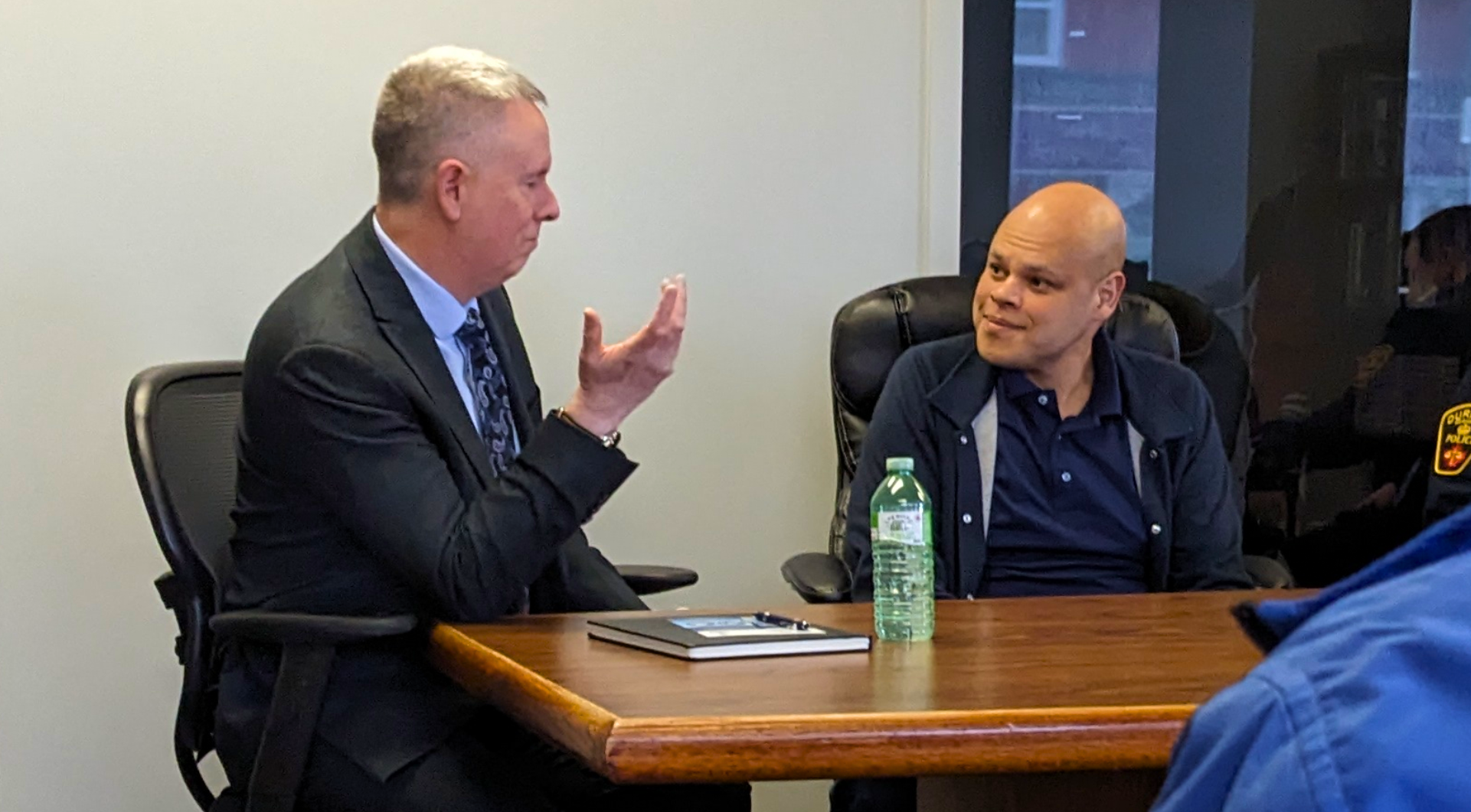
Superintendent Siddaram presented year‑to‑date figures for 2026. Overall calls for service are down 4% compared to the same period last year, and violent crimes have dropped 9%. Auto thefts have fallen sharply—down 55% on one measure and 26% on another. But other numbers raised eyebrows. Break‑and‑enters are up 47% (from 15 to 22 incidents), and some traffic enforcement figures spiked dramatically: distracted driving tickets are up 800%.
“We've been a great partnership with Durham police,” Jivani said, “but when stuff happens in our community it can create a bit of tunnel vision. We want to show the broader context.”
One resident, pointing to a recent shooting and a stabbing just blocks from Jivani's constituency office, said the numbers don't always match the fear. “The shooter hasn’' been caught,” she said. “There's a concern they may come back.”
Bovi acknowledged that perception is a challenge. “We used to keep most data to ourselves,” he said. “Now we've launched a public community safety data portal where anyone can see crime maps and dashboards. You can look at your neighbourhood and get the actual picture.”
‘The same people, in and out’ bail and court backlogs dominate discussion
Several residents pressed officers on why people charged with serious crimes are often back on the street within days.
“I read the other night that Ontario's jails are operating above capacity,” one man said. “People who have committed some of the most despicable crimes are often times out on the streets. Any opinions on why?”
Jivani jumped in, speaking not as an MP but as a former prosecutor‑adjacent figure. “The court backlogs are real, and COVID made it worse,” he said. “When you don't address bail breaches seriously, you get a ‘don't care’ attitude.”
Inspector MacKay agreed. “We see the same repeat offenders over and over—stealing cars, robberies, firearm offences,” he said. “They get out, breach their conditions, and we arrest them again.”
To fight this, police have ramped up compliance checks by 142% using a new 'bail dashboard" that maps offenders on release. “We can now see who hasn't been checked in a while and go knock on their door,” MacKay said. But he added that police have no control over parole board decisions or first‑appearance releases.
“It's frustrating for our officers,” Superintendent Siddaram said. “You arrest someone, and they're back on the street the next day.”
School safety: ‘Three officers for 55 schools’
A mother of two children at Clarington Central Secondary School (CCSS) recounted three high‑trauma incidents since 2022: a social media threat linked to Ottawa, a road rage incident involving a BB gun that moved onto school property, and a hoax "swatting" call about a weapon on campus.
“My daughter texted me that they were in lockdown,” she said. “All I could do was trust it was being handled. How do you balance tactics with the psychological trauma?”
Siddaram acknowledged the challenge, noting that many swatting calls originate from the United States, forcing DRPS to work with the Department of Homeland Security (DHS). “We treat every threat as real until proven otherwise,” he said. “We will have officers at the school the next morning even if we suspect it's a hoax.”
But he also revealed a stark resource gap. “We have only three school liaison officers for 55 schools in Clarington,” he said. “They also run after‑school programs—rugby, lacrosse—to build positive relationships. They're stretched.”
MacKay added that despite the shortage, DRPS has one of the highest school‑officer ratios in the region. “They're present, they're approachable, and kids see them on good days, not just bad days,” he said.
Graffiti, drones, and ‘broken windows’
One resident raised the issue of persistent graffiti, pointing to a newly built bridge that was quickly tagged. “I fully believe in the broken windows theory,” he said. “If it looks like nobody cares, it escalates.”
Inspector MacKay said police rarely receive graffiti reports. “We've had town halls where business owners complain, and when we ask if they reported it, they say no,” he said. “We need those calls.”
On the technology front, Superintendent Siddaram announced that DRPS has become the first service in Canada to receive non‑line‑of‑site certification from Transport Canada for drone‑as‑first‑responder (DFR) operations. “We can deploy a drone within 90 seconds” to a shooting or a missing person, he said. “It gives us eyes from above and protects officers going into danger.”
The drones are currently being piloted in the west division, but Siddaram said the goal is to expand. “Time is everything. A drone can mean the difference between finding someone or not.”
Infrastructure woes and the election
The evening also touched on crumbling police facilities. Bovi noted that Oshawa's division station has sewage backups and is “falling apart,” which forces Clarington officers to respond to parts of North Oshawa.
“Between 2010 and 2017, we had zero net new hires while population grew,” Bovi said. “We're playing catch‑up.” A new Oshawa station is their top capital priority, but he added: “It's an election year, and funding is political.”
With municipal elections approaching, Jivani did not make any direct endorsements but said he would continue to push for more resources. “Public safety was one of the top results when we asked our communities what matters most,” he said. “We take that seriously.”
As the hour wrapped up, Jivani thanked residents for their candour. “I know these incidents are traumatic. If you didn't have an adverse reaction, there would be a problem.”
He reminded everyone that his office remains in regular contact with DRPS. “If stuff comes up, we're happy to follow up.”
For many in the room, the immediate fear of unsolved shootings and school threats was not erased by statistics. But several said they felt heard, and that, for one evening, the tunnel vision had been widened just a little.
Comments