
‘I think about Canadians’: Carney rejects unrealistic U.S. trade demands and declares new era of sovereignty
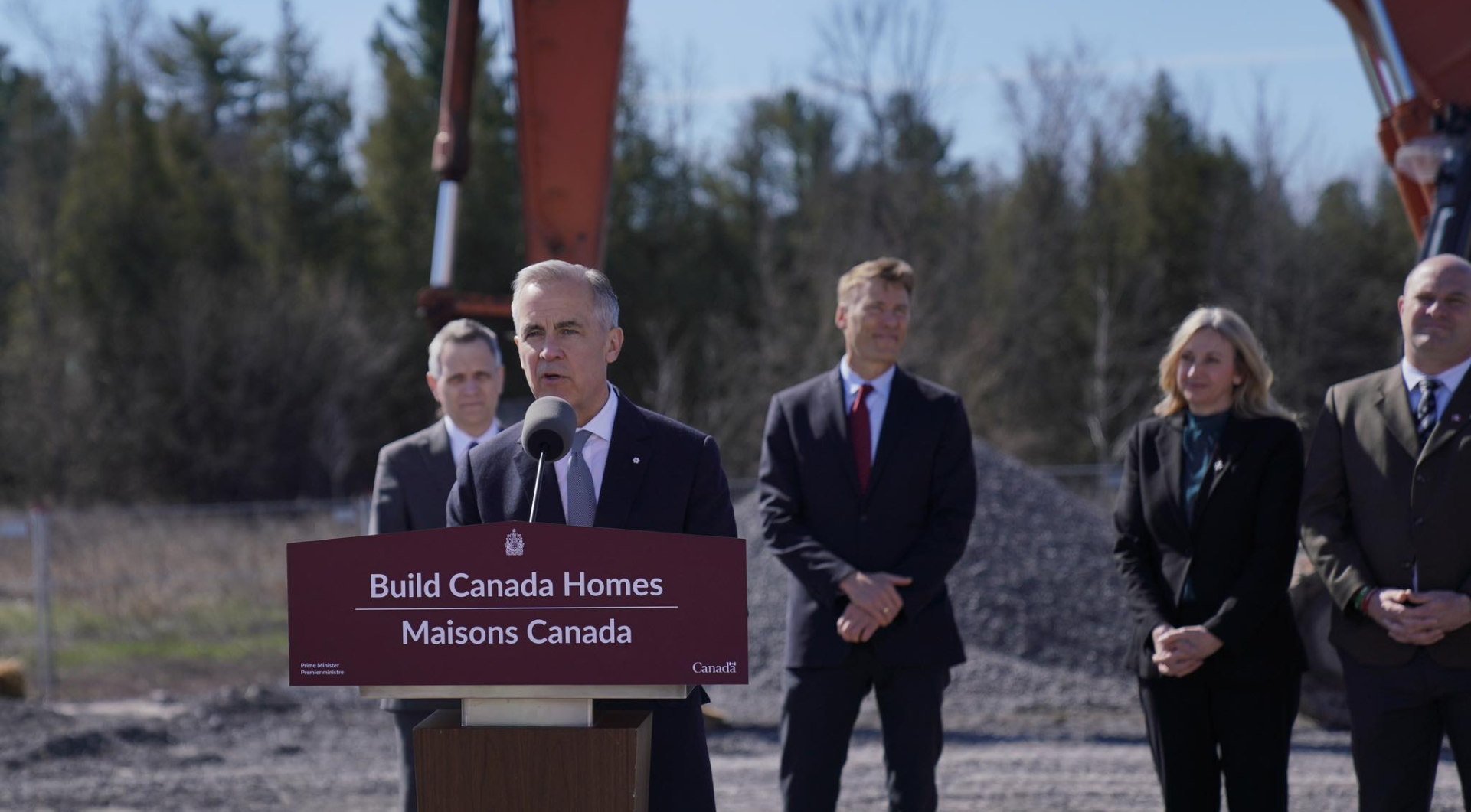
The prime minister was supposed to be talking about housing.
And for a while, standing on the future site of an affordable housing project in suburban Nepean, Mark Carney did just that. He announced more than 3,300 new rental homes across Ottawa. He thanked the mayor for moving fast. He talked about shovels in the ground.
But minutes later, when reporters pressed him on the surreal state of Canada-U.S. trade talks, Carney didn't pivot. He didn't paper over the absurdity. He delivered the kind of plain, undiplomatic truth that has become his political signature, and that, on Thursday, reached a new pitch of clarity.
“What do you think rupture means? Rupture means that things aren't normal,” Carney said, after a journalist suggested the negotiating dynamics felt bizarre. “Nostalgia is not a strategy. We're not going to go back to exactly the way things were.”
The line was unsparing. The implication even more so: the era of Canada chasing a Washington that keeps moving the goalposts is finished.
For months, the right-wing establishment media has demanded Carney show his cards; what concessions is he willing to make? What’s the grand strategy to bring the Americans back?
On Thursday, Carney made plain that the question itself is outdated.
“We're not sitting here taking notes, okay? And taking instruction from the United States,” he said, when a reporter suggested the Americans see the process as a list of demands, not a negotiation. “We understand their position. We understand where it's in Canada's interest to be stronger together. And this is a government that can do many things at one time.”
Since the trade crisis began, Carney has juggled tariff retaliation, income-tax cuts, housing acceleration, and a historic diversification push. But Thursday's tone was sharper, more frontal. It reflected a prime minister who appears to have stopped pretending the old relationship is salvageable—and who isn't interested in entertaining the fantasy that Canada can buy its way back into an agreement the U.S. has already shredded.
Washington's current list of demands includes forcing provinces to restock American liquor, dismantling supply management, and making other unrealistic concessions—all while U.S. tariffs on steel, aluminum, autos, and lumber remain in place, in direct violation of the very trade pact Donald Trump once hailed as “the best deal.”
Carney was asked about the "bourbon ban," a provincial decision to clear U.S. products from liquor store shelves. His answer was a masterclass in deflating false equivalence.
“You know what's an irritant? A 50% tariff on steel. A 50% tariff on aluminum. A 25% tariff on automobiles. All the tariffs on forest products,” he said firmly. “Those are more than irritants. Those are violations of our trade deal.”
And on the liquor? “Surprise, surprise, [Doug Ford] is influential with the LCBO. Okay? But he's the client. He's also the duly elected premier of Ontario. He's got a majority, and he's taking a view which, by most indications, is supported by the vast majority of the population.”
That message wasn't aimed only at the Americans. It was also directed at a domestic commentariat still trapped in the mindset that the only measure of Canadian success is whether the U.S. approves. Carney's bluntness cut through that fog.
“I don't get up first thing in the morning and think about the United States. Okay?” he said, near the end of the press conference. “I think about Canadians. That's the difference.”
Over the past several months, the Carney Liberals have eliminated the GST on first-time home purchases for up to $1 million, slashed development charges, cut the fuel excise tax, and prepared direct grocery-and-essentials payments to more than 12 million people. Thursday's housing deal in Ottawa, passed unanimously by city council the night before, will put shovels in the ground within months
Since early 2025, Carney has been managing the trade crisis. On Thursday, he stopped managing it and started calling it like it is: the Americans have abandoned the old framework, Canada is not going to respond with desperate concessions, and the work now is here—building homes, boosting paycheques, and securing new markets. The prime minister's actions back up his rhetoric: he is, quite genuinely, more focused on building Canada than on managing American feelings.
“Our destiny is first and foremost going to be determined by what we do here, how we build here,” Carney said. “Canadians get that. I'm not sure everyone south of the border understands that to the extent it is true.”
They're starting to. And so, finally, are the pundits who've spent months asking the wrong questions.

Comments