Ottawa and Queen’s Park strike $8.8-billion deal to cut development fees, boost transit as tariff threats loom
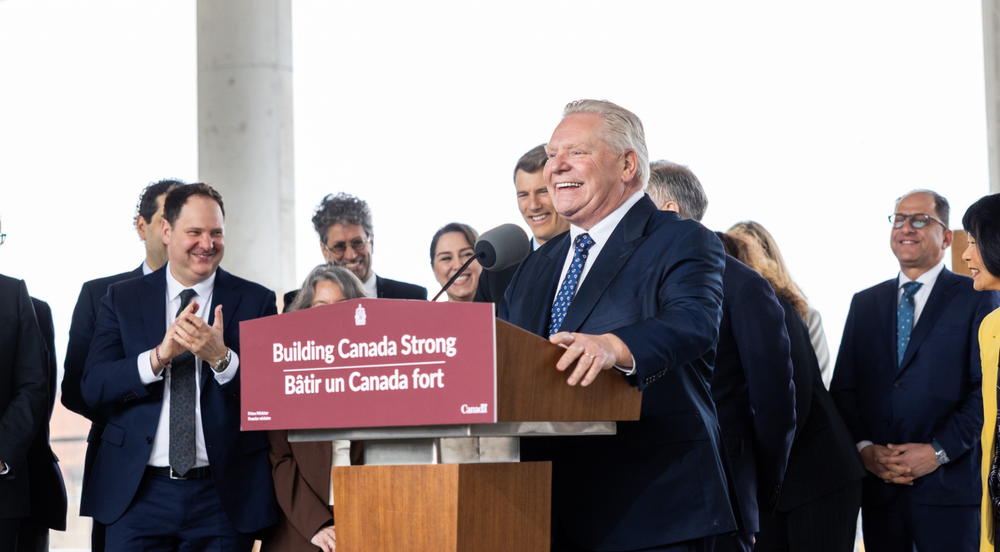
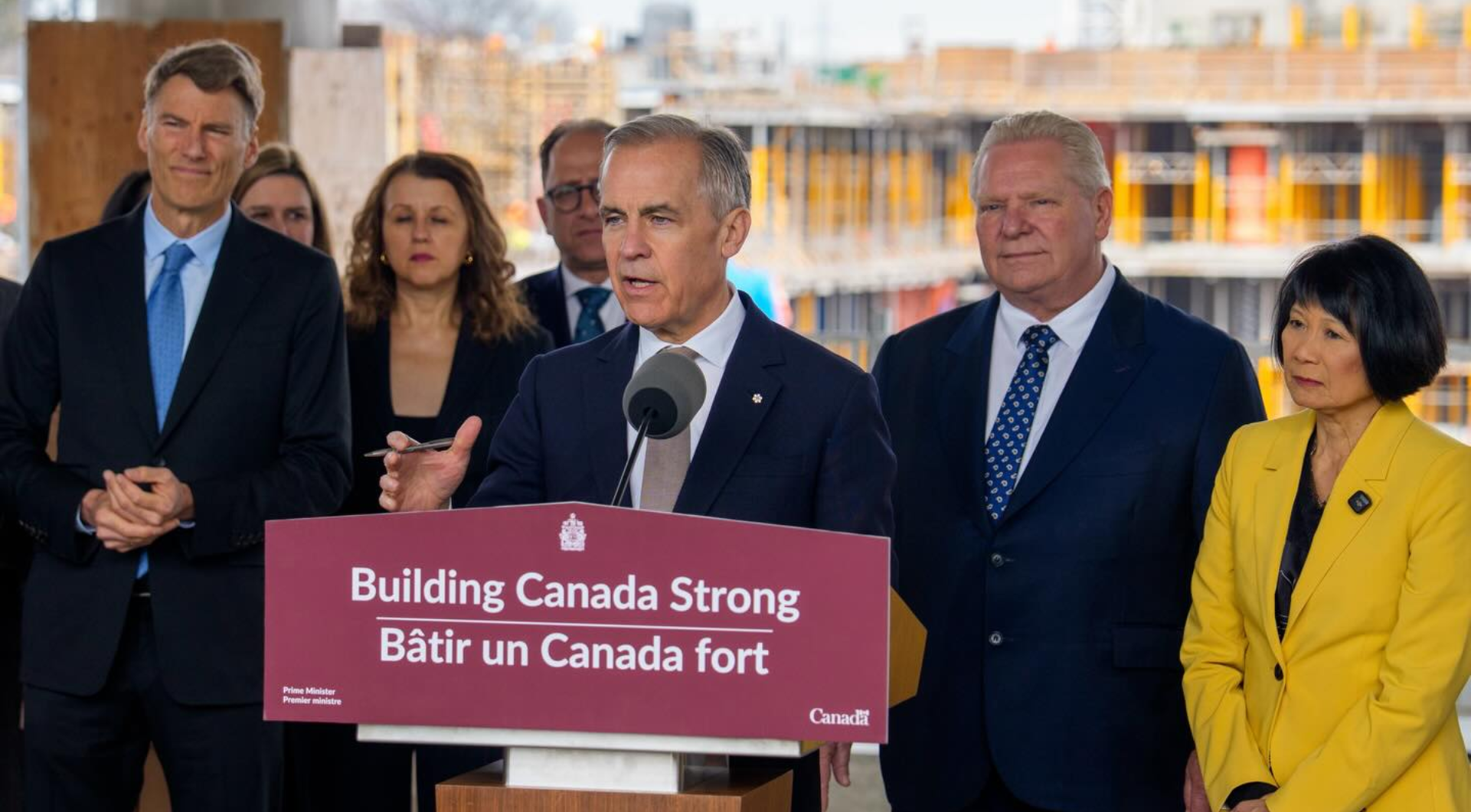
In a rare display of tri-level government co-operation, Prime Minister Mark Carney and Ontario Premier Doug Ford signed a sweeping agreement that commits nearly $9-billion in joint funding to speed up housing construction, slash municipal development charges, and advance a multibillion-dollar transit agenda across the Greater Toronto and Hamilton Area.
The Canada-Ontario Partnership to Build, announced at a downtown Toronto news conference Monday, seeks to break through the jurisdictional bottlenecks that have long plagued infrastructure development in the country's most populous province. It arrives as Ontario's construction sector braces for the economic uncertainty of U.S. tariffs and faces persistent political pressure to address a housing affordability crisis that has pushed homeownership out of reach for many.
“Today's agreement will be transformational for Ontario and Canada, delivering new homes, transit, and infrastructure and supporting hundreds of thousands of good-paying jobs,” Premier Ford said.
At the heart of the deal is an $8.8-billion, 10-year federal-provincial fund dedicated to housing-enabling infrastructure. The money will help municipalities offset revenue losses if they agree to reduce development charges by up to 50%, fees that can add hundreds of thousands of dollars to the price of a new home. In exchange for the senior-government funding, municipalities are expected to follow through on the cuts.
“We're tackling the housing crisis from every angle,” Prime Minister Carney said. “So we can build up housing supply and bring down costs for Canadians.”
The agreement also includes a revamp of the Harmonized Sales Tax on new homes. Ottawa and Ontario will remove the full 13% HST for eligible buyers of new homes valued up to $1-million, while extending a maximum rebate of $130,000 to homes valued between $1-million and $1.5-million. The federal government will contribute $875-million toward the rebate, subject to parliamentary approval. The total tax relief is expected to reach $2.2-billion.
On the transit front, the governments formalized their commitment to a series of major projects, including the Waterfront East Transit line in Toronto—to be funded through a three-way split with the city—as well as the Ontario Line, the Scarborough Subway Extension, the Yonge North Subway Extension, the Eglinton Crosstown West Extension and the Hamilton LRT. The partners also pledged to work together on the planning for the Alto high-speed rail project linking Toronto to Quebec City.
Toronto Mayor Olivia Chow, who appeared alongside the two leaders, called the announcement historic. “The City of Toronto has taken bold steps to cut development charges on new homes,” Mayor Chow said. “Today's historic announcement takes our work further and will deliver thousands more affordable homes and better transit, benefiting our city for generations.”
The deal explicitly ties infrastructure spending to domestic economic protection. Projects will be subject to the province's Buy Ontario policy, prioritizing local suppliers and materials.
“We're building Ontario strong and Canada strong,” Prime Minister Carney said.
While the agreement was hailed as a breakthrough in intergovernmental collaboration, its success will ultimately depend on the speed of implementation and the ability of all three levels of government to navigate inflationary pressures in the construction sector. Senior officials acknowledged that funding for the HST rebate still requires federal legislation, leaving one key element of the deal not yet finalized.
Still, for a province that has struggled to meet ambitious housing targets amid soaring development costs and infrastructure deficits, Monday's announcement marked a significant alignment of political will—and public money—against the twin challenges of affordability and economic uncertainty.