
Why Brussels’ farmer riots expose a broken system
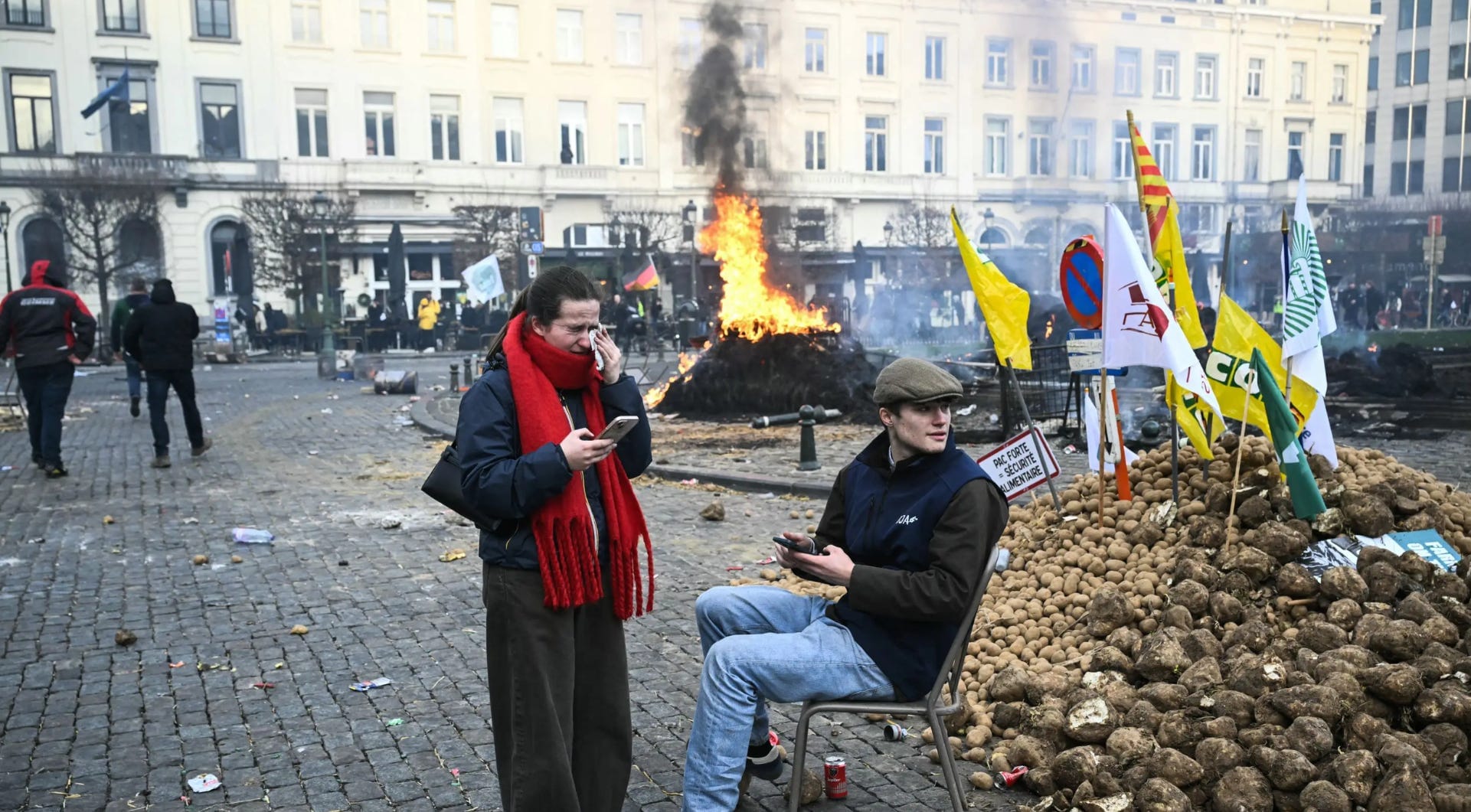
In December 2025, Europe once again witnessed a spectacle that would be unthinkable if carried out by almost any other group in society: tractors charging police lines, manure dumped in public spaces, city centres effectively held hostage—all in service of one demand. Not higher wages. Not safer working conditions. But higher food prices, enforced by political pressure.
And Europeans are supposed to pretend this is normal?
If there is one class in modern Europe that genuinely believes it sits above the law and above the public interest, it is the politically protected farming lobby. No other industry gets away with this behaviour. No other sector could ram a six-figure vehicle into a police cordon and be treated as a folk hero rather than a criminal.
If a trucker, dockworker, or retail worker tried this, the response would be swift and brutal. But a farmer? That's “democracy in action,” apparently.
Let's start with the part that rarely gets said plainly: European agriculture is not a free market. It hasn't been for decades.
Roughly one-third of the EU budget is consumed by the Common Agricultural Policy. Tens of billions of euros are funnelled into subsidies, price supports, and market protections for farmers yearly. This is not a struggling, neglected sector. It is one of the most heavily subsidized industries on the planet.
And yet, every time trade liberalization is proposed—every time cheaper beef, coffee, chocolate, or tropical produce might reach European consumers—the tractors come out.
What is being defended here is not “food security.” It is entitlement.
The irony is almost too rich. Farmers who claim to be victims of globalization are often the same ones whose overproduction—enabled by subsidies—has devastated small farmers in the Global South. European surplus crops are dumped abroad at artificially low prices, undercutting local agriculture in developing countries.
At home, those same farmers demand protection from competition and guaranteed prices, even as fertilizer runoff poisons waterways and industrial-scale farming degrades soil and ecosystems.
This is state-backed cartel behaviour.
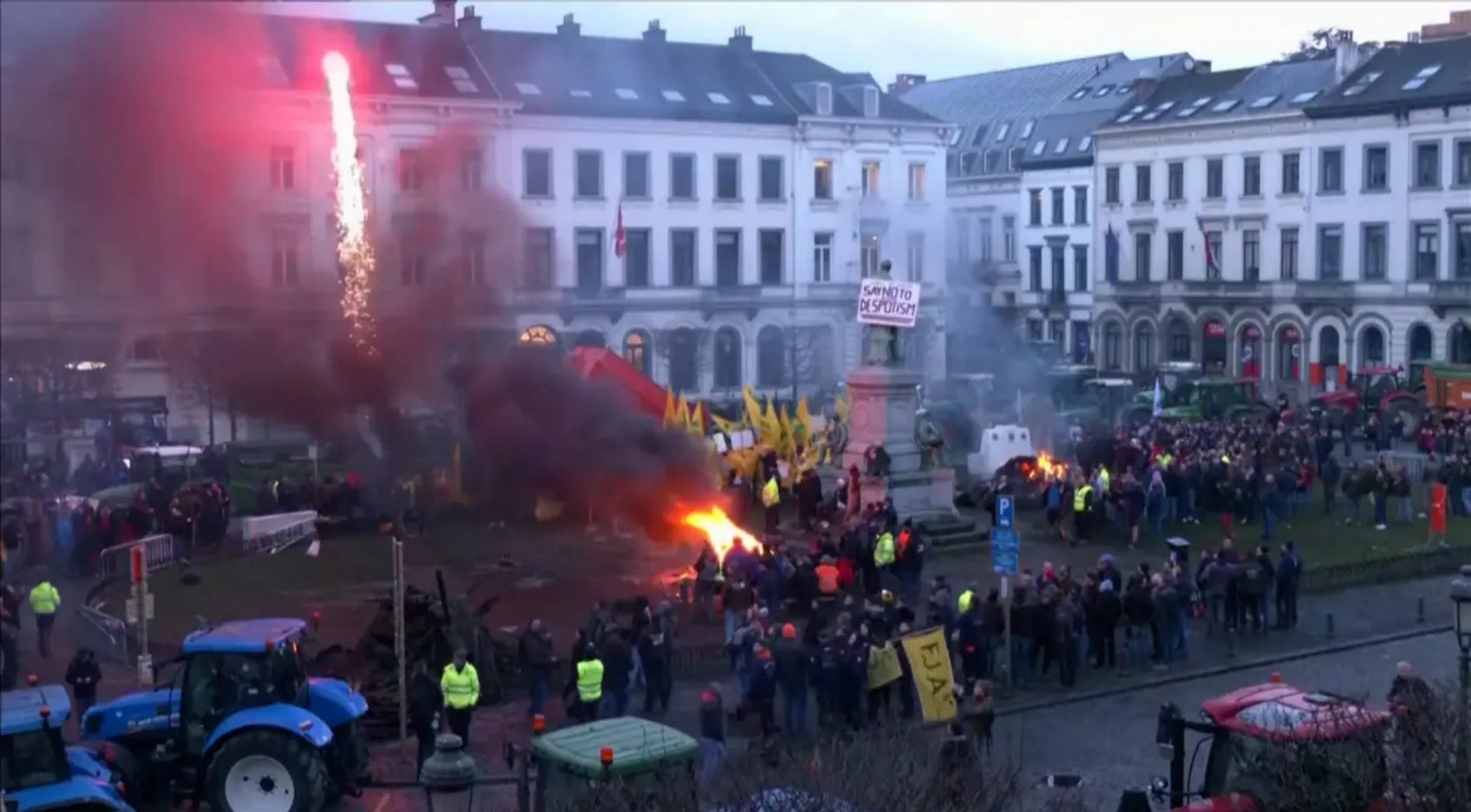
The Brussels protests are about refusing to compete. About blocking trade deals because cheaper imports might force efficiency, innovation, or—god forbid—lower margins. The message to European consumers could not be clearer: you will pay more, or we will shut your city down.
And it exposes a deeper rot in European politics: the myth that some interest groups are inherently virtuous, no matter what they do. Farmers are wrapped in a sentimental narrative of tradition and national identity, which grants them moral immunity. When they riot, it's framed as passion. When others do it, it's framed as disorder.
We're also told—often by the same people—that Europe lacks free speech. That it is a bureaucratic dystopia where dissent is crushed. Really? Then explain why a man in a tractor can charge a police line in the heart of Brussels without being neutralized on sight. If that's not freedom of expression in practice, it's hard to imagine what is.
What these protests actually reveal is selective tolerance. Speech is free if you belong to the right class, wield the right symbolism, and threaten the right people.
The defenders of these riots want you to believe this is about protecting “local food.” But if that were true, they would welcome competition that rewards quality and sustainability rather than volume. They would accept reforms that shift subsidies toward small, environmentally responsible producers. Instead, they fight tooth and nail to preserve a system that favours large landholders, capital-intensive operations, and political leverage.
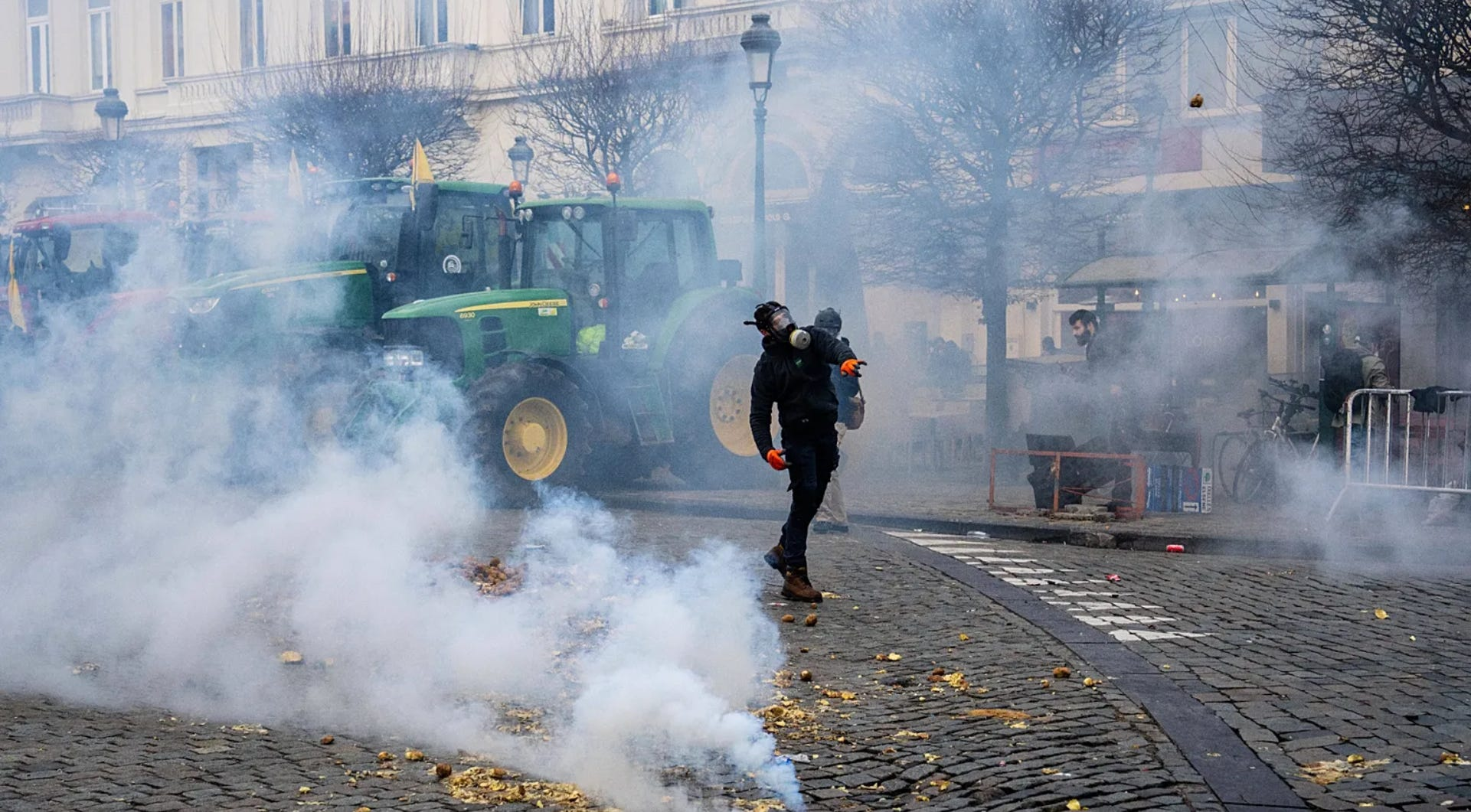
European farmers are not friends of competition. They have had too much government support for too long, and now they're afraid of a world where that support is questioned. And here's the uncomfortable truth: if the only way your business survives is by threatening public order and demanding permanent protection from competition, then your business model is broken and deserves to fail.
Trade deals that lower food prices are not an attack on ordinary people. They are a lifeline for consumers already crushed by inflation. Every blocked agreement keeps groceries artificially expensive, disproportionately hurting working families while shielding a privileged sector from market reality.
So let's stop pretending this is noble.
If you like affordable beef, coffee, chocolate, and fruit, these protests are aimed directly at you. The tractors are not blocking Brussels for justice; they're blocking it to keep prices high.
At some point, governments need the courage to say no.
No more blank-cheque subsidies. No more romantic exemptions from the rule of law. No more treating one industry as untouchable while everyone else is told to “adapt.”
If farmers want to be respected as businesses, they should be prepared to act like them. And if they want to riot like petulant children, perhaps it's time to see how long they last without the taxpayer propping them up.
The sacred cow of European politics needs to be slaughtered—not by force, but by reality.
This piece is an archival work of the author, originally published elsewhere, and is presented here for historical record. The views expressed are solely those of the author and do not necessarily reflect the editorial position of the Provincial Times. Read our Content Policy here.

Comments