ADAMS: Inside the Restore the North Event at University of Calgary
Let me tell you something about political movements.
You don't understand them by reading their manifestos. You understand them by attending their rallies twice in a row and then watching what happens when they take the show on the road to friendly territory. Last month, I walked you through two Jamil Jivani “Restore the North” events: one a sterile, stage-managed snoozefest at Toronto Metropolitan University, the next an unhinged conspiracy buffet at Canada Christian College, where Jivani stood mute as a woman disrespectfully raved about UN tanks at a Remembrance Day ceremony.
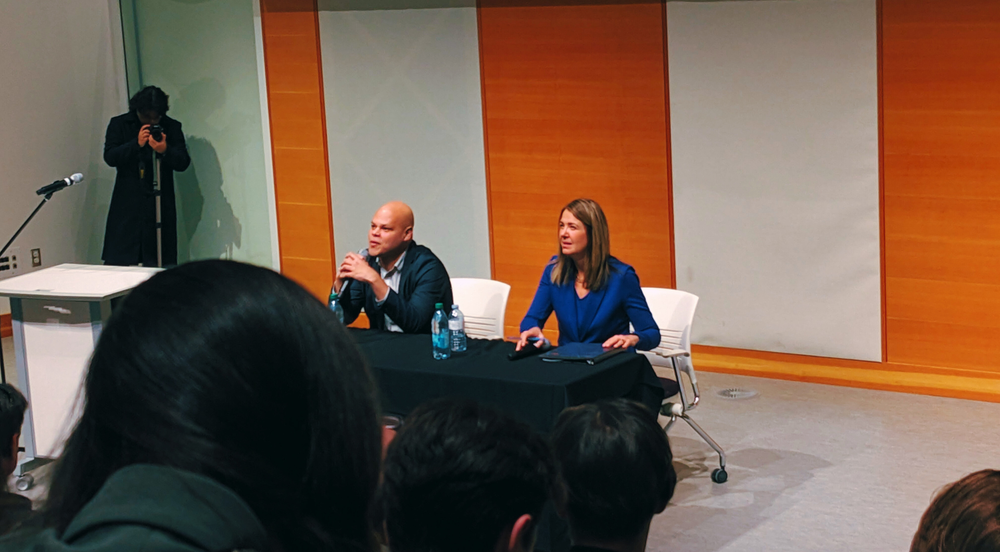
This week, I followed the tour to its first Western stop at the University of Calgary. I expected a spectacle. What I got was something far more revealing: a masterclass in the polite, efficient machinery of modern political coalition-building, where radical ideas are ushered in through the side door while the man on stage mops up the messes that threaten the photo-op.
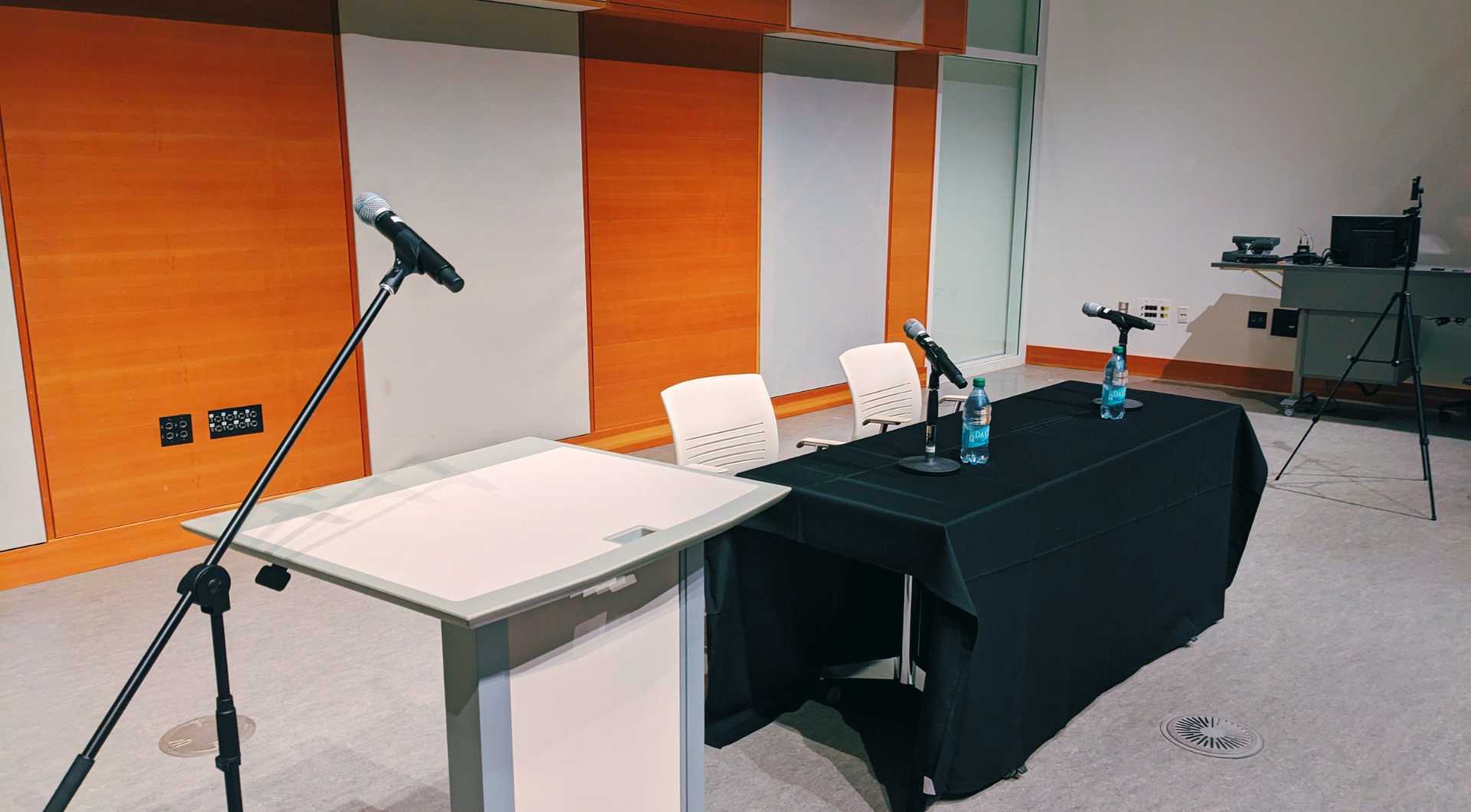
The difference was palpable before a word was spoken. This wasn't a sparsely attended campus talk. This was a campaign rally. The room was packed, buzzing with the energy of the politically converted. Flanking Jivani on stage weren't just more rookie MPs and a cadre of federal and provincial Conservative figures, but Premier Danielle Smith herself. The student hosts proudly declared this the largest partisan campus club in the country.
The message was clear: This is our house.
Jamil and Danielle's opening pitches were polished, partisan, and perfectly synchronized for the Alberta audience. They spoke of federal overreach, of “elite capture,” of a justice system “targeting Grandpa's hunting rifle” instead of criminals.
Danielle painted a picture of a virtuous Alberta fending off an “overbearing Ottawa,” her language tinged with separatist-adjacent language about “constitutional battles” and reclaiming provincial authority.
It was the standard trinity: Ottawa is the enemy, the elite hates you, and only we can fix it.
Then came the Q&A. And here, the carefully managed facade of the rally began to show its deliberate cracks. The questions were a fascinating cross-section of the political right's ID; A young woman, with genuine anxiety, asked how he could express conservative beliefs in his socialist-taught classes without tanking his medical school dreams.
A nurse, herself a victim of a violent assault at work, gave a heartbreaking account of a healthcare system where the staff are sacrificial lambs. Several attendees challenged the supposed hypocrisy of Diversity, Equity, and Inclusion initiatives that, in their view, excluded people like them.
And then, there were the others.
The Managed Fringe and The Lines That Are Drawn
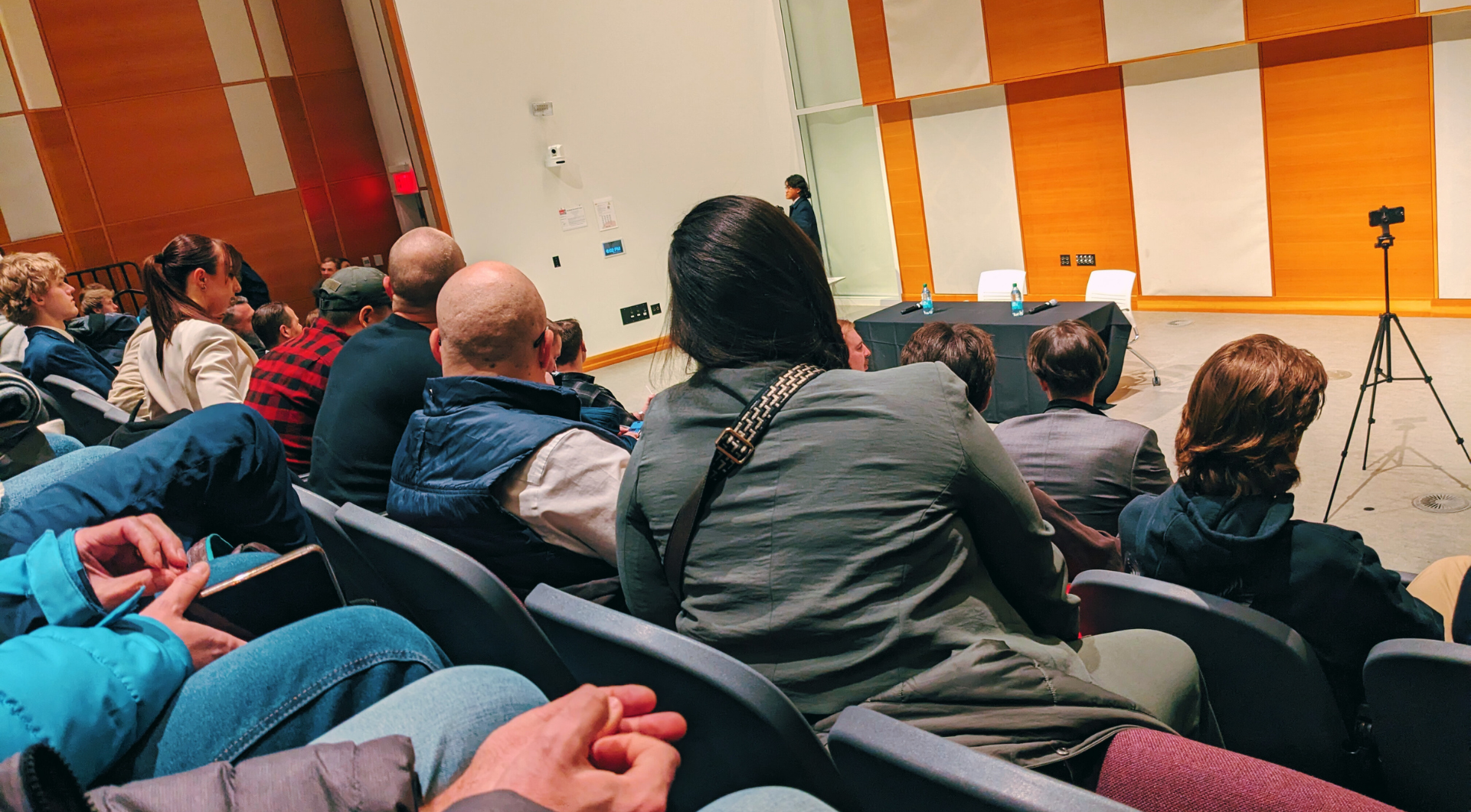
The very first question was a man advocating for “remigration.”
For those unfamiliar with this sanitized term, it's a cornerstone of the so-called “Great Replacement” conspiracy theory, implying the solution to the problem being the forced removal of non-white immigrants.
Jamil's response was instructive. He didn't endorse it. Instead, he asked the man to clarify, which the man refused to do. Then Jamil stated he was against deportation based on ethnicity. It was a deflection; a soft, intellectual sidestep that refused to name the toxic ideology in the room but also refused to fully embrace its conclusion.
The man's idea was entertained, debated on a surface level, and gently set aside. The radical premise was platformed; only its most politically toxic conclusion was disavowed.
This pattern repeated. A young communist gave a fiery, if ridiculous, critique of capitalist exploitation. He was debated earnestly (but somewhat sarcastically) on economic theory. A woman fretted about Agenda 2030 and globalist plots. Her concerns were validated as part of a legitimate conversation about sovereignty. These economic and governance-based fringe ideas were treated as debatable points within the big tent.
But a line was drawn. And it was drawn with startling public aggression.
A man approached the mic and tested Jamil's patience. First, he equated Jamil's advocacy for the distribution of nicotine pouches to cigarette addicts as being morally equivalent to handing out meth or fentanyl, a comparison so absurd it momentarily broke Jamil's polished demeanour.
“Is that the same thing? Yes or no?” Jamil fired back, visibly annoyed by the bad-faith equivalency, also citing that caffeine and Diet Coke are also addictive
The man retreated, then launched into a standard anti-abortion diatribe, calling it “murder” and demanding criminalization. Jamil gave his standard, politically safe rebuttal: criminalization would “tear the country apart.”
But when the protester asked why, going as far as calling him a coward, the mask of the calm interlocutor vanished. Jamil decried his “weirdo energy,” demanded he go sit down, then gave his opinion on whether or not he believes abortion should be banned or not.
“If you are concerned about the issue and would like to see our country reach some consensus and move together in either direction, then go talk to your friends and neighbours and figure out how to persuade people to your point of view,” Jamil asserted, his voice sharp with contempt. “But if you are of the view that this is an issue where you're willing to risk tearing the country apart, I simply don't share that view. And that's just me being perfectly real. Not interested.”
The room fell silent, then erupted in applause.
It was a shocking but satisfying moment of public shaming. But it wasn't random. This protester wasn't offering a debatable policy like immigration policy or the economy. He was issuing moral purity tests. He was demanding the movement take a stand so culturally polarizing it would shatter the very coalition in the room. That could not be allowed, the “weirdo energy” had to be expelled—publicly and forcefully—to protect the project.
This two-tiered response was the night's core strategy: Economic and political radicalism can be discussed. Moral and disruptive absolutism that fractures the coalition will be mocked and ejected.
And then, there was my moment in this strange political play.
My Nuclear Question & The Art of Managed Dissent
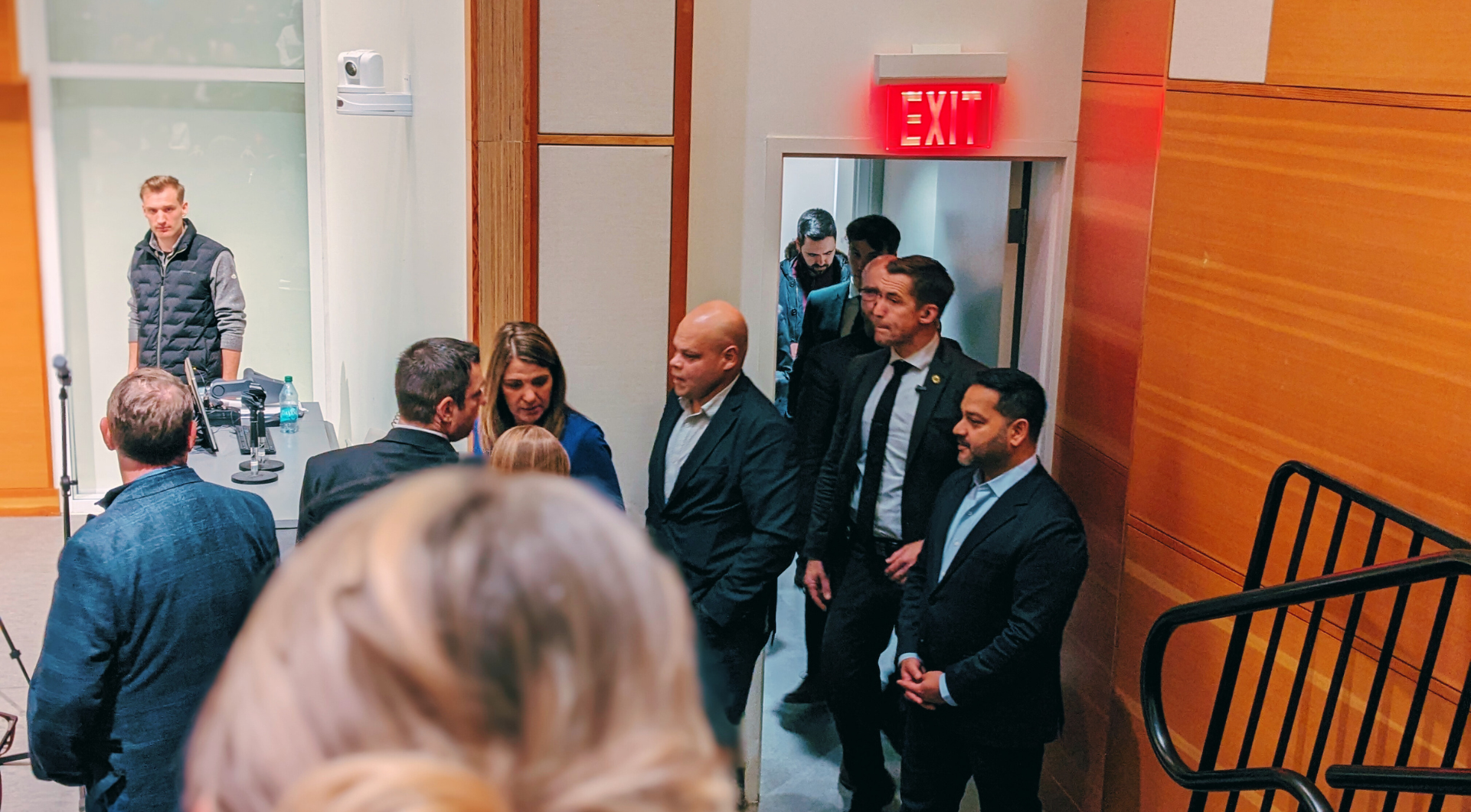
When I took the mic, I began with a joke about the “expansion” of Jamil's riding of Bowmanville—Oshawa North. He almost laughed, caught himself, and then did something telling. He turned to the crowd and said, “This is Will, everyone. He's a constituent of mine. Welcome him to Calgary please.”
The friendly, partisan crowd applauded. I was no longer a critic; I was a known entity, a welcome guest from the home team, even if I was on the opposing side. It was a brilliant piece of political stagecraft. In that moment, Jamil accomplished three things: he demonstrated his personal confidence, he showcased the “civility” of his movement, and he neatly disarmed any potential hostility before I could even ask my question. It was a brilliant, subtle piece of political jiu-jitsu.
Jamil's answer was a masterclass in rebranding data-mining as grassroots connection. He admitted, with stunning candour, that as a low-ranking MP (200+ in line), he feels a Private Member's Bill was pointless.
Instead, his email solicitation was for “building a relationship” and creating a “multi-year battle” to shift culture. He was honest about feeling he has a lack of power, framing list-building not as cynicism, but as superior, direct democracy.
Danielle Smith's answer was pure political hedging: yes to nuclear in principle, lots of “consultations” and “assessments,” a focus on impossibly expensive small modular reactors, and a deflection to the economics of natural gas.
It was a “concept of a plan,” dressed up as serious policy. Both hosts, however, seemed thrilled I'd brought up nuclear; Jivani specifically higlighting that my hometown is powered by it, using my question to validate his “local issues first” mantra.
A Coalition of Resentments
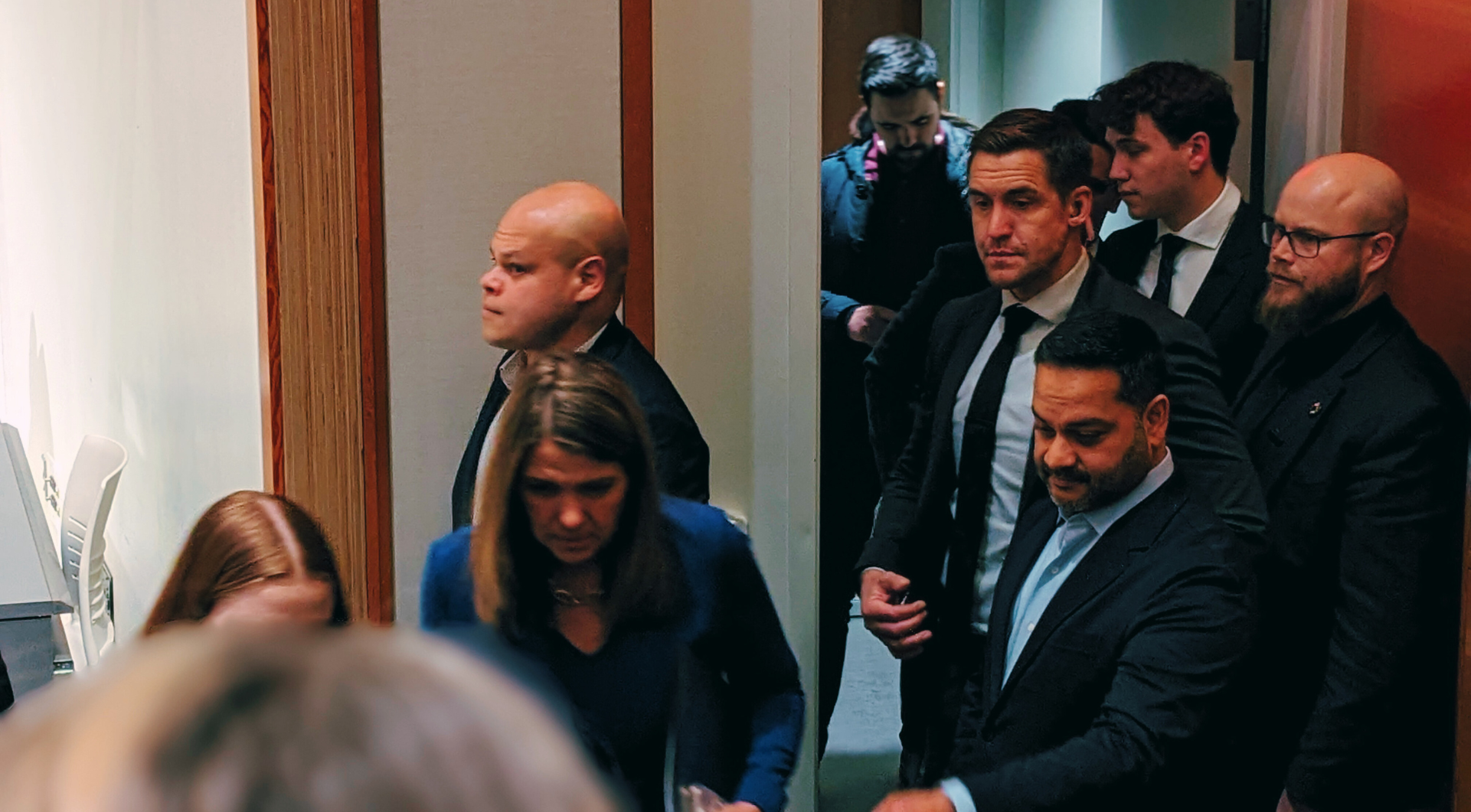
The crowd itself was a living portrait of this modern Conservative coalition. There were the sharp-suited campus activists, the party faithfuls, and the policy wonks asking about inter-provincial trade barriers. But weaving through them, visible to anyone looking, were the more radical filaments: the men in “Make Alberta Great Again” hats, representatives from the western separatist Alberta Republican Party, and staffers from the controversial party OneBC.
They were not shouting. They were listening. They were part of the furniture. The event's mainstream, polished messaging on “elite capture” and “Ottawa overreach” is the gentle river current that carries along these more extreme ideological boats. The leadership may slap down a “weirdo” who disrupts the voyage, but they are happy to have the boats in the flotilla.
The most revealing moment came right before mine, almost as an aside. An older man asked about the struggles of young men and a toxic culture.
Jamil's response swiftly veered into familiar, poisonous territory.
He began decrying what he referred to as “gender ideology” and “transgenderism,” arguing these concepts make it impossible to talk about the distinct needs of men and women.
There was no shouting, no “weirdo energy.” It was delivered calmly, as accepted mainstream truth. This was the radicalism that was welcome in the tent. Not the screaming protester, but the calmly stated othering of a vulnerable minority, seamlessly woven into a speech about helping young men. This wasn't ejected; it was integrated.
And that is the ultimate truth of “Restore the North.”
Final Thoughts
The CalgaryU event was not the chaotic circus of Canada Christian College. It was far more sophisticated, and therefore, far more effective. It is a movement expertly sorting its impulses. The raw, paranoid nativism is being gently guided and rebranded. The libertarian-tinged anger at health policies is debated. But the energy is ultimately harnessed for a mainstream political project: electing Conservatives.
The old, morally absolutist culture war warriors (the screaming anti-abortion activist) are being told to sit down—their “weirdo energy” is bad for optics. Meanwhile, a new, more politically-palatable culture war (“anti-gender ideology”) is given a prime-time speaking slot from the main stage.
I walked out of the TMU event skeptical of its staged emptiness. I left Canada Christian College alarmed by its embrace of paranoia. I left the University of Calgary with a different, colder understanding. I watched a movement that knows exactly what it's doing. It is not losing control of its fringe. It is curating it. It is building a coalition where you can debate the Great Replacement over dinner, so long as you don't yell “murderer” in the restaurant.
They are not restoring the north, or the promise of Canada. They are restoring a political machine. And in Calgary, it is running with a quiet, terrifying efficiency. The most radical thing in the room is no longer the guy yelling, it's the calm, polite, and utterly calculated machinery making room for him, just so long as he learns to say please and thank you.
This piece was written by an individual contributor and reflects the editorial position of The Provincial Times and Left Lane Media Group. Read our Content Policy here.