
ADAMS: Inside the Restore the North event at Canada Christian College
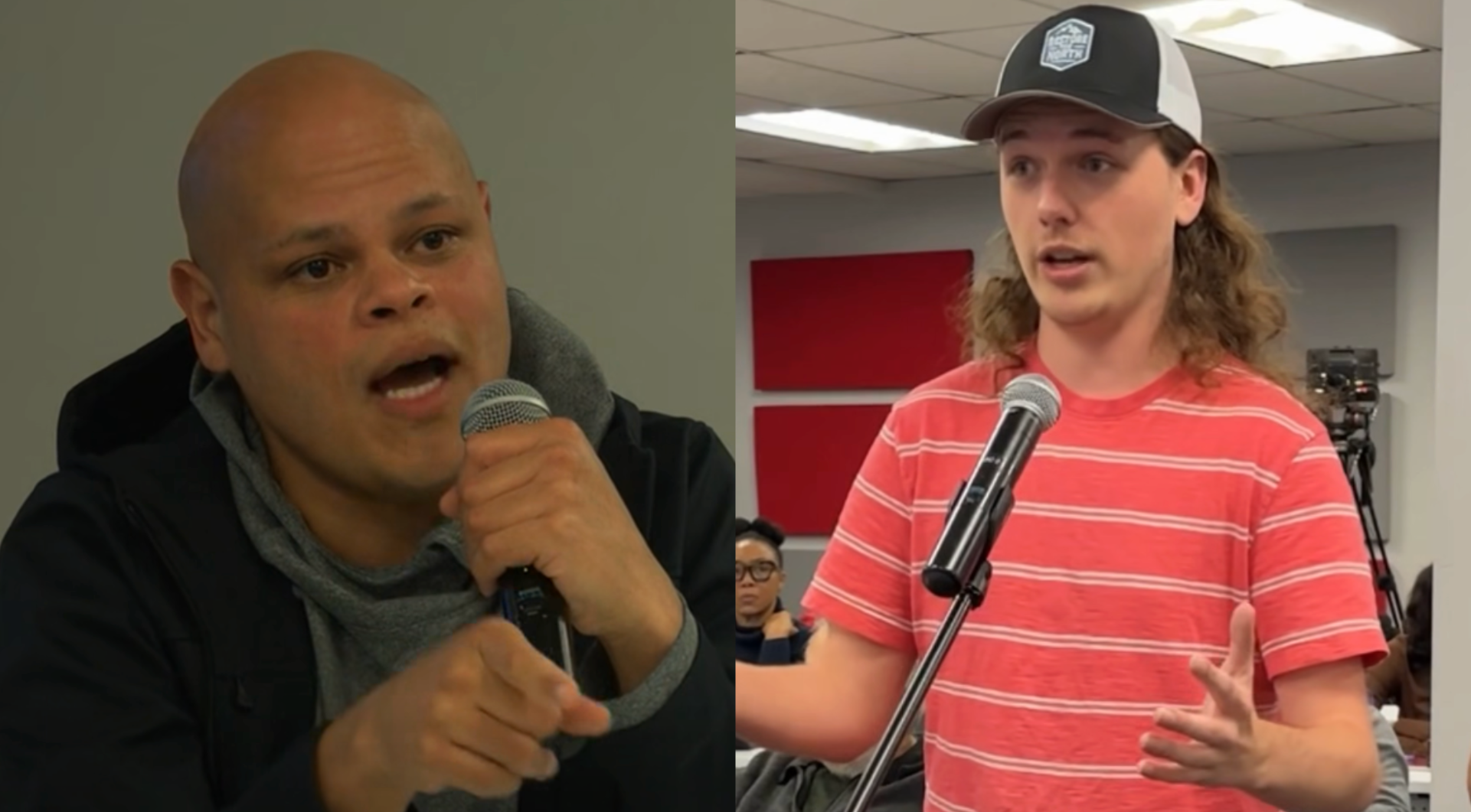
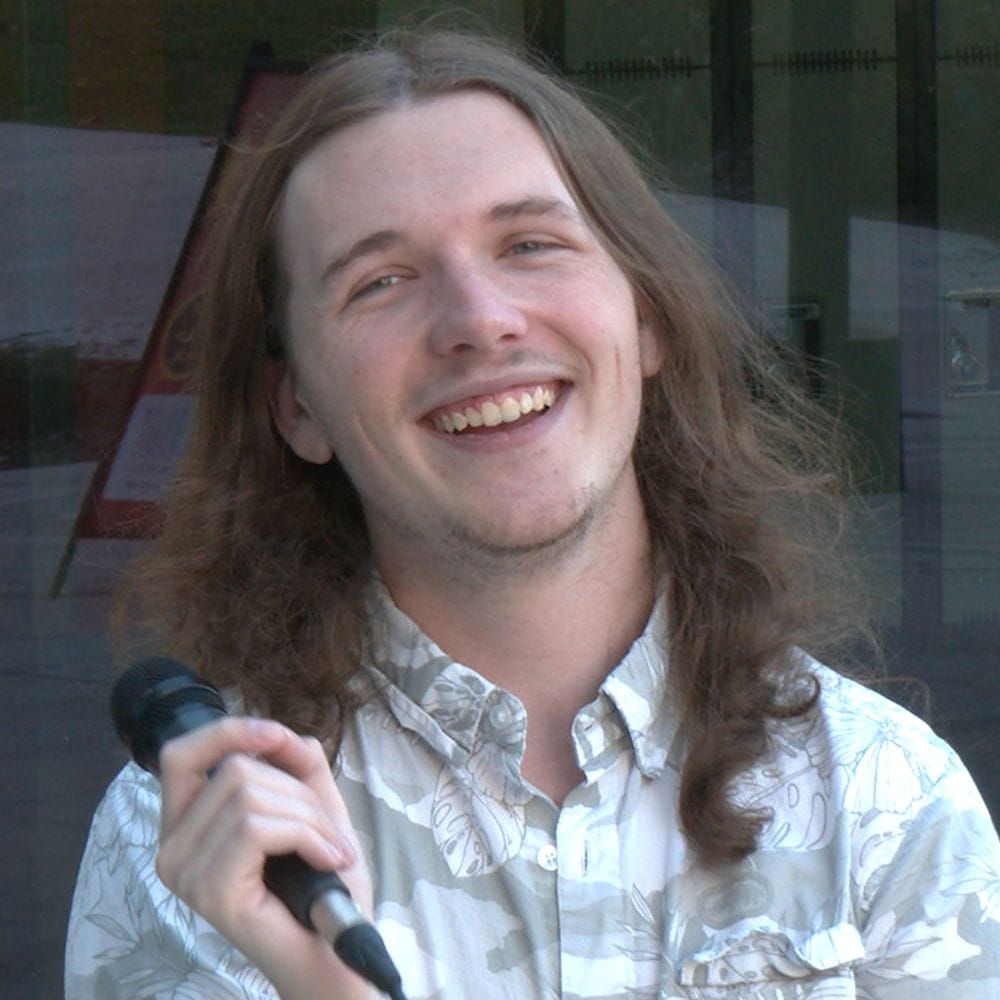
The Restore the North tour arrived at Canada Christian College on a weeknight in late 2025 as part of Jamil Jivani's effort to take the Conservative Party message into spaces he believes the mainstream media ignores. The evening was framed as a conversation about faith, freedom, and the future of the country; the kind of event where people who feel unrepresented by legacy institutions could speak plainly.
By the end of the 90-minute session, that promise had been kept, but not in the way the organizers likely intended.
The audience was modest—roughly three dozen people scattered across a campus meeting room—and notably less charged than the hangar crowds Pierre Poilievre draws. There was no chant of "axe the tax," no sea of flags.
These were, by all appearances, normal-ish Christians: retirees, working-class parents, a handful of students. Many arrived clutching printed articles, notebooks, and the particular earnestness of citizens who believe they have uncovered truths the rest of the country has been conditioned to ignore.
The event opened with a sermon from a college official, blending scripture, political philosophy, and the suggestion that Canada has been spiritually hijacked by hostile forces. It set a tone that was less civic and more confessional.
Supporting speakers followed: 2025 candidate Greg Brady, who declared everything broken but fixable through hard work, and another candidate who blamed the Carney Liberals for the death of local commerce.
When Jamil and his co-host Ned Kurek took the stage, the message crystallized around a familiar triad—free speech is dying, immigration is too high, crime is exploding—delivered with enough generalized unease to keep the room nodding.
Then the floor opened, and the evening began its long drift away from policy and toward something harder to categorize.
The Q&A: A Pattern Takes Shape
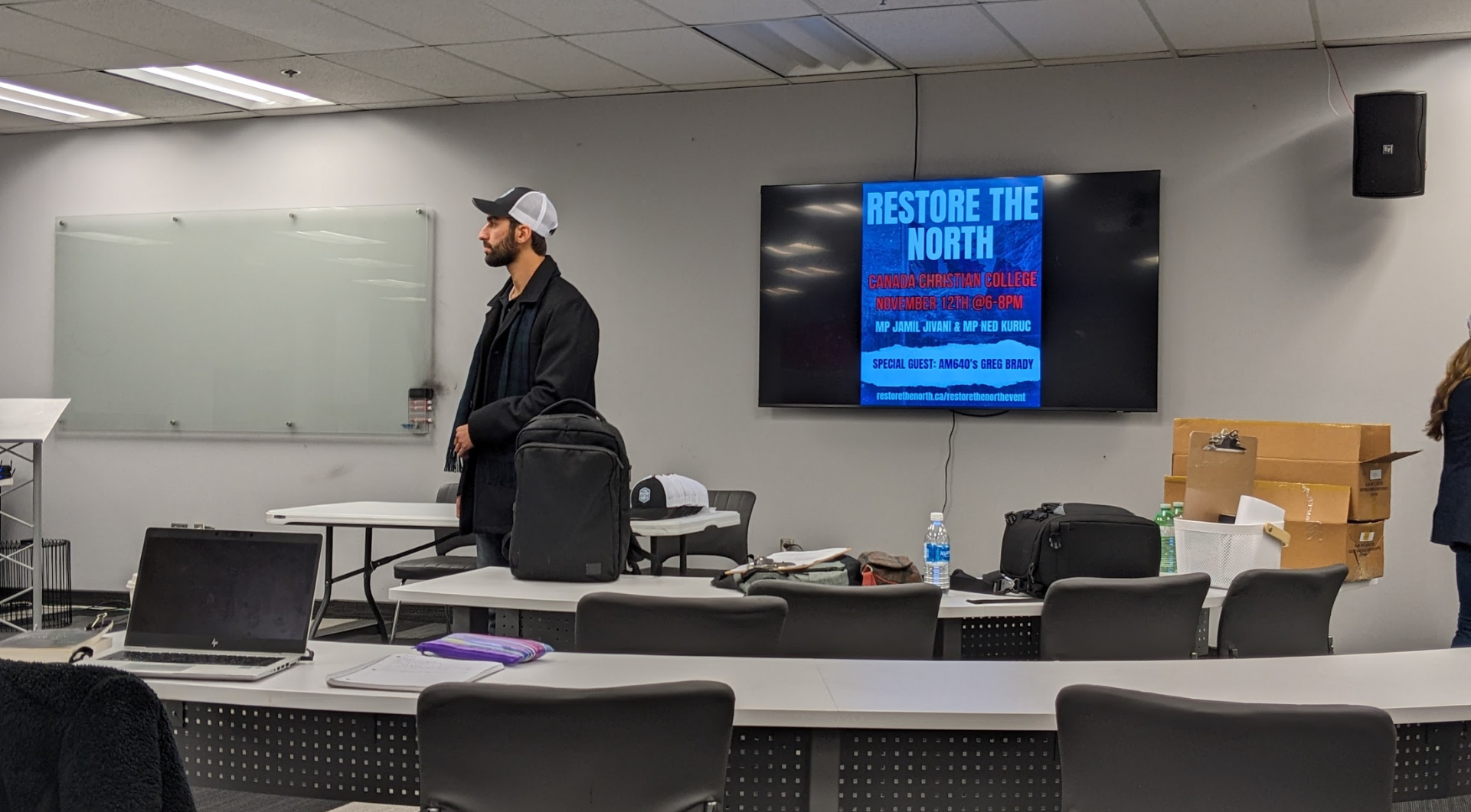
The question line filled quickly, and what followed was a case study in how a politician's silence can function as endorsement. With one exception, Jamil either validated falsehoods, amplified fringe ideas, or ignored the question asked.
The first speaker approached the microphone as though about to unveil a government plot and announced that carbon dioxide at 50,000 parts per million “doesn't cause anything”—a level that would induce unconsciousness. He pivoted to gun crime, the "persecution" of legal firearms owners, and closed by urging Jamil to "step on the snake." Jivani thanked him warmly and moved on.
A woman followed to declare that "progressivism is a disease," corrupting children and destroying the country's Christian foundations. She called for a Conservative Party purged of compromise and PC's. Jamil nodded and told her she would find a home in the movement.
A man rose to insist Canada was full and demanded a total pause on immigration. Jamil blamed the Temporary Foreign Worker Program, Bill C-75, and the Liberal government in a packaged reply that avoided any mention of provincial funding cuts or housing supply. When the response was more of a direct question, Jamil said he agreed with the person calling for a moratorium.
Then, briefly, the temperature shifted. A mother who had survived a brain injury stood and described her daughter’s school: newcomers without language support, overcrowded classrooms, a system stretched past breaking. Her voice was strained by the weight of someone carrying a real burden. Jamil responded with partial empathy, acknowledging that education funding was a genuine failure.
For roughly four minutes, the conspiratorial hum receded. It did not last.
A woman approached the microphone to warn of Agenda 2030, the United Nations, the World Health Organization, and a sprawling technocratic bureaucracy she believed was eroding Canadian sovereignty. Jamil validated every word.
Then came the moment that made the evening's dynamic unmistakable.
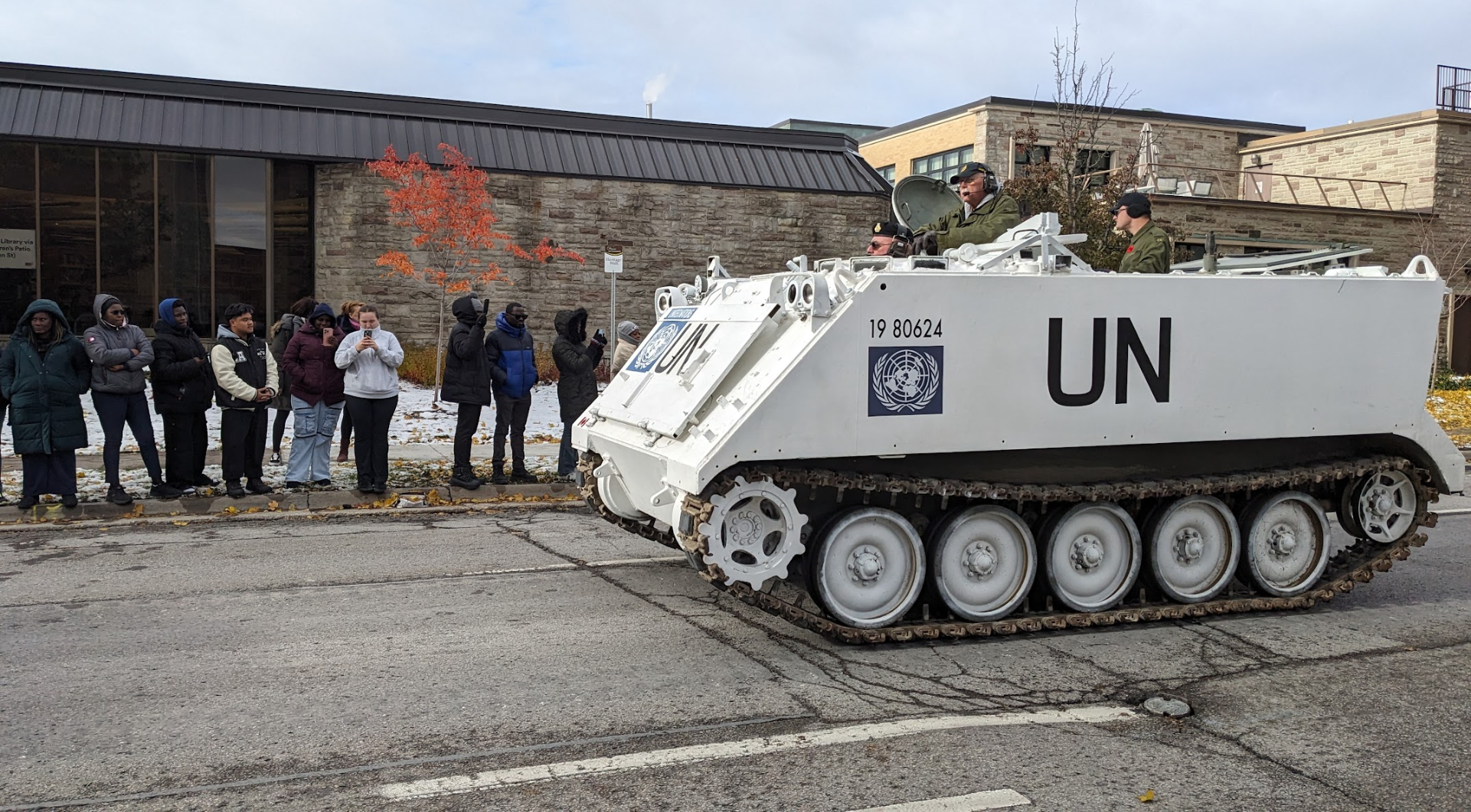
A woman stood and claimed she had seen a United Nations tank at the Oshawa Remembrance Day ceremony, proof, she believed, of a globalist infiltration of Canadian soil. The tank in question was a Korean War memorial, bearing a UN insignia because Canada fought in that war under the UN flag. This is not hidden or disputed history. Jamil let her statement pass in silence, giving an answer about sovereignty before moving to the next question without comment.
A subsequent speaker asked why the public conversation focused so heavily on the Temporary Foreign Worker Program when the International Mobility Program brought in a larger share of foreign labour. Jamil acknowledged the point briefly, then pivoted to youth unemployment and more familiar ground.
The MAID Question: A Misrepresented Exchange
When my turn came, I raised a 2024 video in which Jamil had claimed Christian doctors were being “forced against their will” to provide Medical Assistance in Dying or face unemployment. I laid out the full context and made clear I was not disputing his position on MAID itself, but the integrity of the claim.
At first, he did not address the substance. Instead, he accused me of “linguistic tricks.”
What I did not understand until later was that he had posted a trimmed clip of the exchange to Instagram, cutting the entire opening setup so the question read as dishonest rather than contextualised. He then complained in the clip that I had used a linguistic trick. It was, put plainly, an edit that reversed the facts.
I'm finishing a piece on Jamil Jivani's Canada Christian College stop, and surprise! I woke up to find he had posted our exchange, minus the entire minute where I set up my question, named the video I was addressing, and even said I DON'T necessarily disagree with him. Poof.… pic.twitter.com/jJdjtlJttk
— Will Adams | Left Lane Media Group (@ThisIsWillAdams) November 22, 2025
I followed up with a straightforward question: did he have actual cases of doctors being fired by the government for refusing to provide MAID, as he had claimed? He offered a speculative monologue about how it could hypothetically happen and argued that publicly funded doctors should have the right to refuse legally available medical services for reasons of conscience.
In this viewpoint, a vegan employed at a deli could refuse to serve any sandwich containing meat and expect to keep the job, and the duties of the profession you chose should become optional accessories, to be accepted or discarded according to private belief.
Abortion, Addiction, and the Questions That Weren’t Answered
The next speaker, a young woman, called for the criminalization of abortion, describing it as murder and framing sexually active women as careless. This time, Jamil broke his pattern. He told her that criminalizing abortion would "tear the country apart." It was the only moment of the evening in which a clearly fringe demand was met with public resistance, though he framed the objection entirely in terms of social division rather than medical reality or bodily autonomy.
The final speaker was a young woman whose voice cracked before she could finish her thought. She spoke through tears about losing people she cared about to drug addiction and stated the hard truth policymakers often avoid: you cannot force people into treatment if they are not willing. She asked for a policy grounded in that reality and in compassion.
Jamil responded with a personal anecdote, attacks on safe supply programs, warnings about diverted prescription drugs, and praise for abstinence-based recovery centres. What he never did was address her actual question. She left the microphone with no plan, no clarity, and none of the comfort she had clearly come seeking.
The Cost of a Silent Microphone
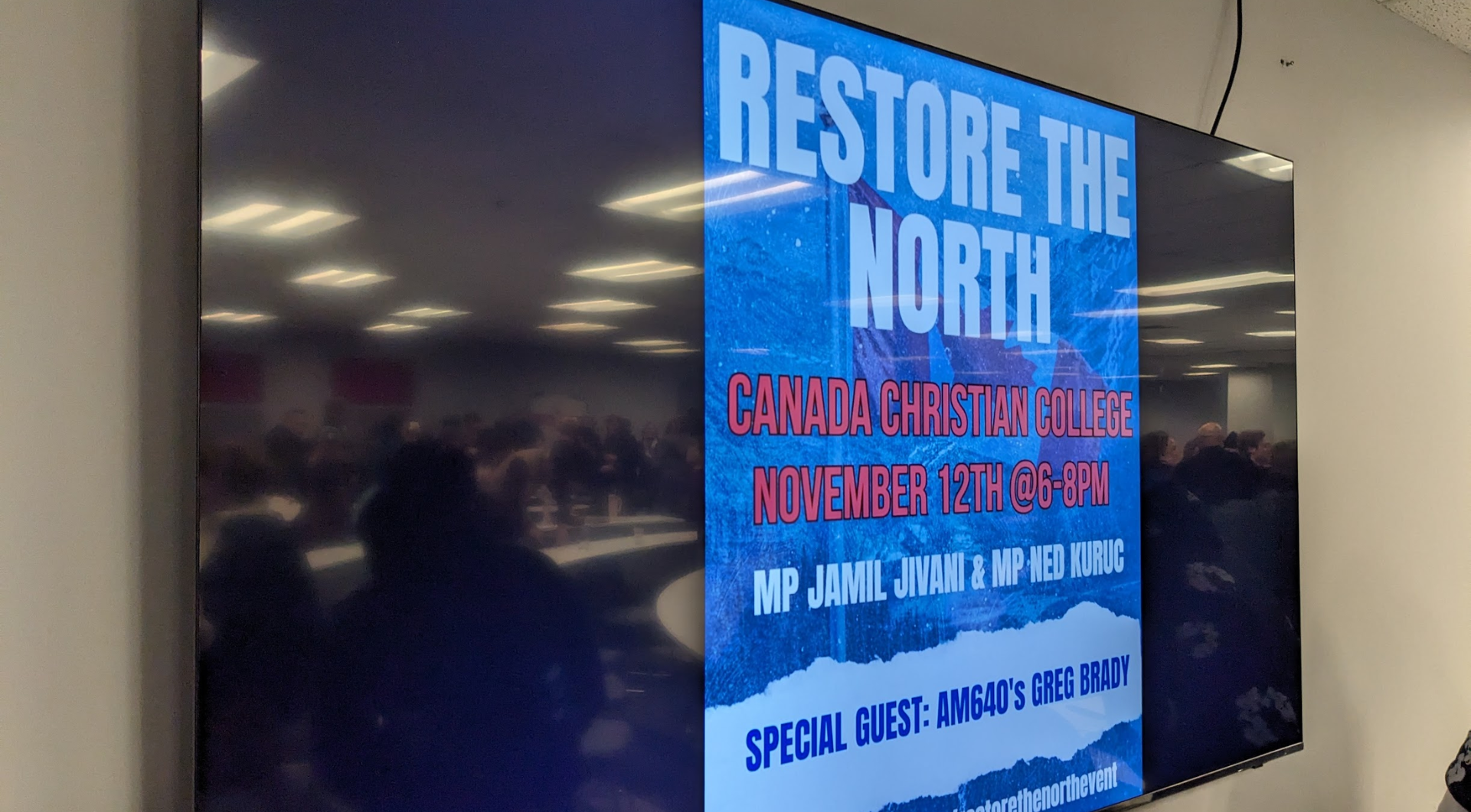
What distinguished the Canada Christian College event from the other Restore the North stops was the absence of the boundary-management Jamil had demonstrated elsewhere.
At the University of Calgary, when a participant advocated for so-called "remigration," he nudged the man to clarify what "remigration" means. Rather than endorsing, he gave a soft deflection that refused to name the Dominion Society's ideology while also declining to embrace it. At Toronto Metropolitan University, he fielded pointed questions with at least the appearance of intellectual engagement.
Here, the guardrails vanished. The CO2 claim was met with silence. The "progressivism is a disease" rhetoric was welcomed. The UN invasion tank thesis passed without correction. The weeping woman asking about addiction policy received anecdotes and ideological side-steps. My question was answered with an edited clip on social media designed to misrepresent what was asked.
Listening is an essential democratic skill, and politicians who lecture rather than hear are rightly resented. But there is a difference between listening and validating. When an elected official sits silently as constituents recite claims that would embarrass a late-night radio host, he is signalling that the boundary between fact and fantasy is irrelevant to the political project he represents.
Most of the people in that room were not bad people. Many were hurting from economic insecurity, cultural disorientation, and the genuine pain of feeling unseen by the institutions that claim to serve them. Those grievances are real, and they warrant political representation.
The question the evening raised was whether that representation should take the form of an MP who challenges his constituents to think more clearly or one who holds the microphone while they recite whatever the right-wing establishment media served them last. At Canada Christian College, the choice was made, and it was made silently.
Editor's note: This article is a revised and updated version of a piece originally published on November 24, 2025, rewritten to remove the raw anger that coloured the first publication and to bring the piece tonally in line with the author's other reporting. All factual observations remain unchanged. Read our Content Policy here.Read our Content Policy here.
Comments