
ADAMS: Why the Conservative collapse rests squarely on Pierre Poilievre’s shoulders

Mark Carney now leads a majority government.
It is historic, cobbled together in ways that are easy to criticize and difficult to defend on purely procedural grounds—five floor crossings by opposition parties, three byelection sweeps, one of which is a Supreme Court‑mandated rematch in a riding the Liberals first won by a single vote. But history does not care how the tent got built. It only asks who built it.
And the honest answer, the one the Conservative Party must eventually face without flinching, is that Poilievre built a considerable portion of it himself.
In Terrebonne, the Conservatives drew 18% of the vote in the 2025 federal general election. Monday night, they drew 3.3%. That is not a setback. That is not a soft cycle, a bad candidate, or an unfavourable demographic shift. That is a party in active retreat from relevance, folding inward on itself in real time while its leader issues social media statements from somewhere other than the ridings in question.
He did not campaign in any of them. Not a rally, not a handshake, not a beer at the local pub as a gesture of solidarity toward the candidates fighting under his banner. Hell, one of those candidates attempted to run a campaign out of a storage locker.
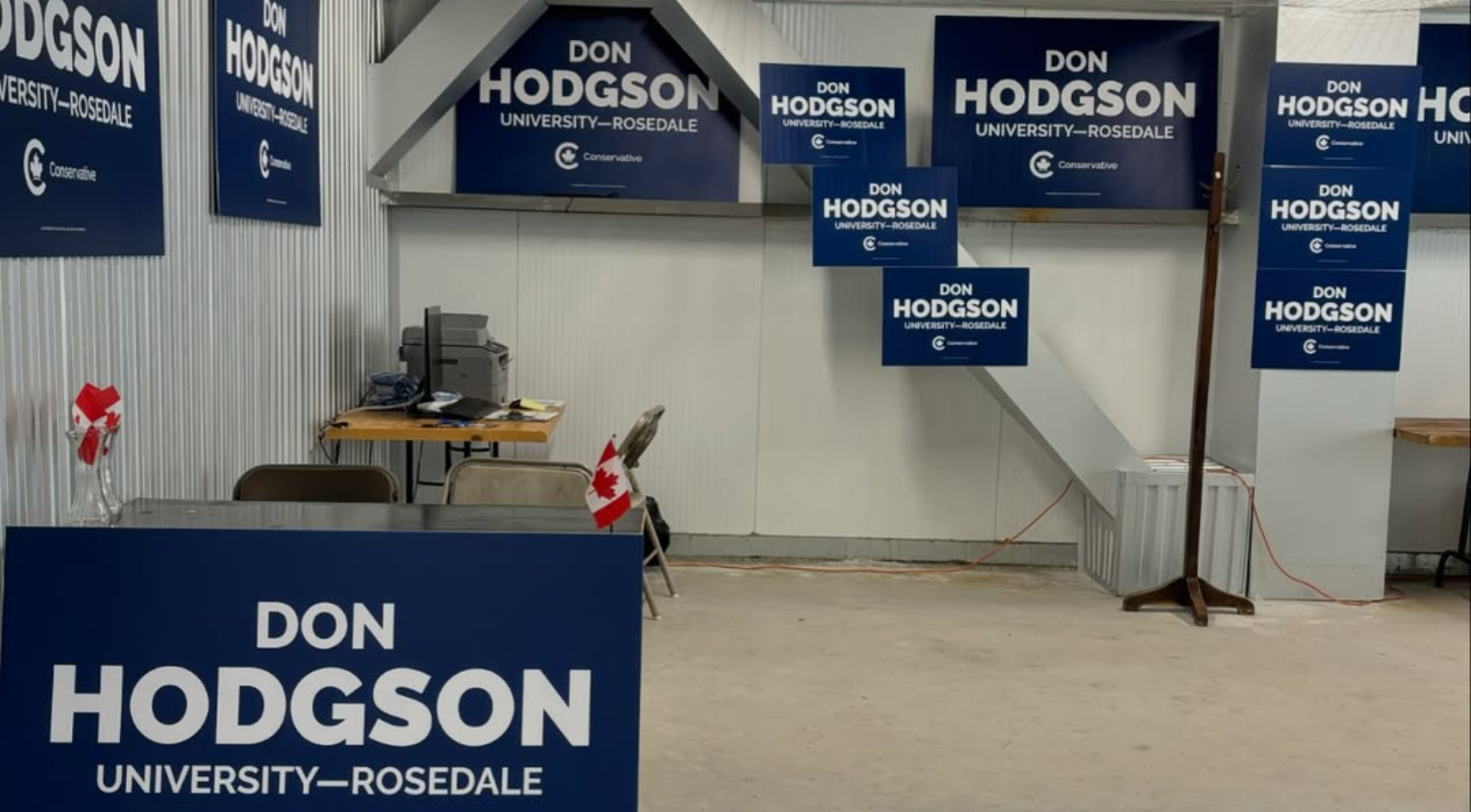
Whatever the precise circumstances behind this decision, the symbolism in this picture is irreducible: Poilievre abandoned his candidates before the race even began, and the most visible evidence of that abandonment was a campaign headquarters that looked like somewhere you store what you no longer want.
The floor crossings are, in this context, a diagnosis. Chris d'Entremont, Michael Ma, Matt Jeneroux, Marilyn Gladu: these are, or were, mainstream Conservatives who looked at their leader, looked at the polls, looked at the trajectory, and concluded that the party as currently constituted was not a vehicle for governance. They did not leave because Carney seduced them with backroom deals, as Poilievre's social media feed insists. They left because the room was on fire and their leader was arguing about who lit the match.
The irony Poilievre cannot escape—and will not address—is this: he spent the better part of four years accusing the Liberals of being undemocratic, of ignoring the will of ordinary Canadians, of serving an elite that had forgotten the middle.
Then he lost his own seat in the general election and responded by displacing an MP in Alberta by forcing an unnecessary, costly by-election so he could keep fighting, keep fundraising, keep occupying the leader's residence, which, strictly speaking, he had no remaining democratic mandate to occupy, as he wasn't the Leader of the Opposition for five months. He then called the floor crossings undemocratic. His own supporters, if they are paying attention, might reasonably ask what principle he was applying.
None of this is to say that Carney's majority is without complication.
A government that needed five defectors and three by-elections to clear a two-seat threshold is not riding a wave so much as it is threading needles. Long-stalled legislation that has sat dormant for the better part of a year will now move. Whether Carney governs with the magnanimity he has repeatedly promised, or whether the majority becomes an invitation to overreach, is a test that begins now and will define this government's legacy.
But the crisis in the Conservative Party of Canada is not Mark Carney's problem to solve. It is the party's, and it is urgent. The centre-right voters who once formed the coalition that elected Stephen Harper are not hiding, waiting to be reclaimed. They are sitting in Liberal benches, literally and figuratively. The people who crossed the floor did not become different people. The party moved away from them.
The choice before Conservatives is not complicated, even if it is painful. They can spend another cycle telling themselves that Poilievre was right and that over half the country is stupid. Or they can look at 3.3% in Terrebonne, at Don Hodgson's storage locker, at the MPs who left, at polling that has Carney preferred as prime minister by more than two to one, and decide that enough is enough.
Leadership means knowing when you've done all the damage you can do.
This piece was written by an individual contributor and reflects the editorial position of The Provincial Times. Read our Content Policy here.

Comments