
Carney defends temporary gas tax cut as 'bridge' for working Canadians squeezed by Iran war fallout
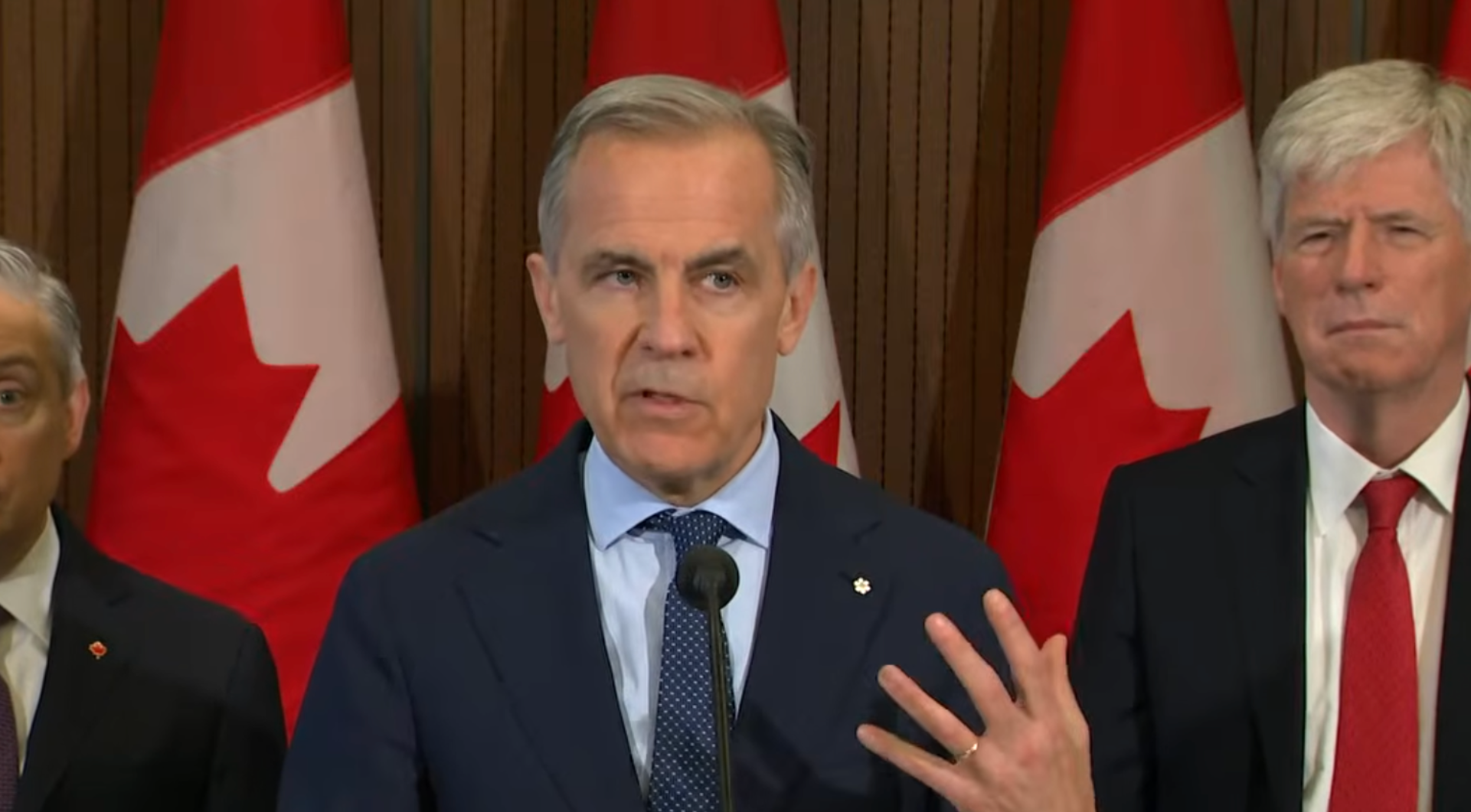
Prime Minister Mark Carney pushed back against criticism that his government's temporary suspension of the federal fuel excise tax is either a Conservative idea in disguise or an inefficient use of public funds, framing the measure instead as a necessary and targeted intervention to shield working families from the unpredictable shockwaves of war in the Middle East.
Flanked by his finance and natural resources ministers at a morning press conference Tuesday, Carney announced that starting next Monday and lasting through Labour Day, Canadians will stop paying the 10-cent-per-litre federal excise tax on gasoline and the 4-cent levy on diesel. When stacked on top of his government's earlier elimination of the consumer carbon tax, the Prime Minister said, the combined relief at the pumps will reach up to 28 cents per litre.
“Canadians are feeling the pressures of everyday expenses right now. They need a boost today and a bridge to tomorrow,” Carney said, explicitly linking the move to the escalating conflict with Iran that has roiled global energy markets.
“We can't control what other countries do. We can control what we choose to do.”
The temporary tax holiday is expected to cost the federal treasury approximately $2.4 billion. While that figure is not insignificant, the government is banking on a near-term uptick in revenues from higher commodity prices to offset much of the hit, essentially recycling windfall energy receipts back into the pockets of drivers and domestic air travellers—the suspension also applies to aviation fuel.
The announcement immediately drew questions about whether the Prime Minister was borrowing from the opposition's playbook. Conservative Leader Pierre Poilievre has long campaigned on scrapping various fuel charges, and the tax cut bears a superficial resemblance to a Conservative demand.
But Carney was unequivocal when asked if the idea originated across the aisle. "No," he said flatly.
More importantly, he drew a sharp distinction between campaigning and governing. “When you're in government, to govern is to choose,” Carney said. “We didn't just say get rid of all taxes on gasoline and let's spend $9 billion as if we're not in government, which is actually what you do say when you're not in government. But when you're in government, you have to choose, you have to balance.”
That balance, the Prime Minister argued, is evident in the temporary nature of the cut. By sunsetting the measure on Labour Day, the government avoids permanently hollowing out a revenue stream that helps fund the very social programs—$10-a-day child care, dental care, pharmacare—that Carney has made a cornerstone of his working-class appeal.
It is a fiscal scalpel, he suggested, not a campaign sledgehammer.
The working-class lens is central to the government's messaging. For a family in Oshawa or Scarborough filling up a minivan to get to the night shift or driving the kids to summer soccer, 28 cents a litre is real money.
Combined with the previously announced Canada Groceries and Essentials Benefit—which will put up to $1,800 in some family bank accounts this summer—and the elimination of the GST on new homes under $1 million, the government is weaving a narrative of tangible, immediate relief.
“It's targeted in a couple of ways,” Carney explained, noting the finite, four-month window coincides with peak summer driving season. “It's an obvious time when Canadians are travelling a bit more.”
The Prime Minister also sought to reassure markets and fiscal hawks that this $2.4-billion measure is not a prelude to reckless spending. He pointed to $60 billion in planned savings over five years from government operations and noted that even with the Middle East turmoil, the International Monetary Fund had just hours earlier forecast Canada to be the second-fastest-growing economy in the G7.
“We're balancing support for Canadians with responsible fiscal management,” Carney said. “That's the type of strategy that really pays dividends.”
For now, the government is focused on the dividends that matter most to the family budget: a few extra dollars left in the wallet after a fill-up, and a promise that the bridge to a better tomorrow won't cost a fortune to cross today.

Comments