
Carney secures majority mandate as Liberals sweep several by-elections, cementing path to 2029
Prime Minister Mark Carney now commands a majority government after his Liberal candidates cruised to victory Monday in two Greater Toronto Area ridings and one Quebec riding, completing a six-month parliamentary realignment that has fundamentally reshaped the House of Commons and handed the Carney Liberals an unencumbered runway to implement his ambitious "Canada Strong" agenda.
Dr. Danielle Martin, the prominent family physician and healthcare advocate, easily captured the downtown Toronto riding of University—Rosedale, while former Ontario NDP deputy leader Doly Begum prevailed in Scarborough Southwest, and Tatiana Auguste remained the MP for Terrebonne. The three by-election wins bring the Liberal seat count to 174, two seats above the majority threshold in the 343-seat House.
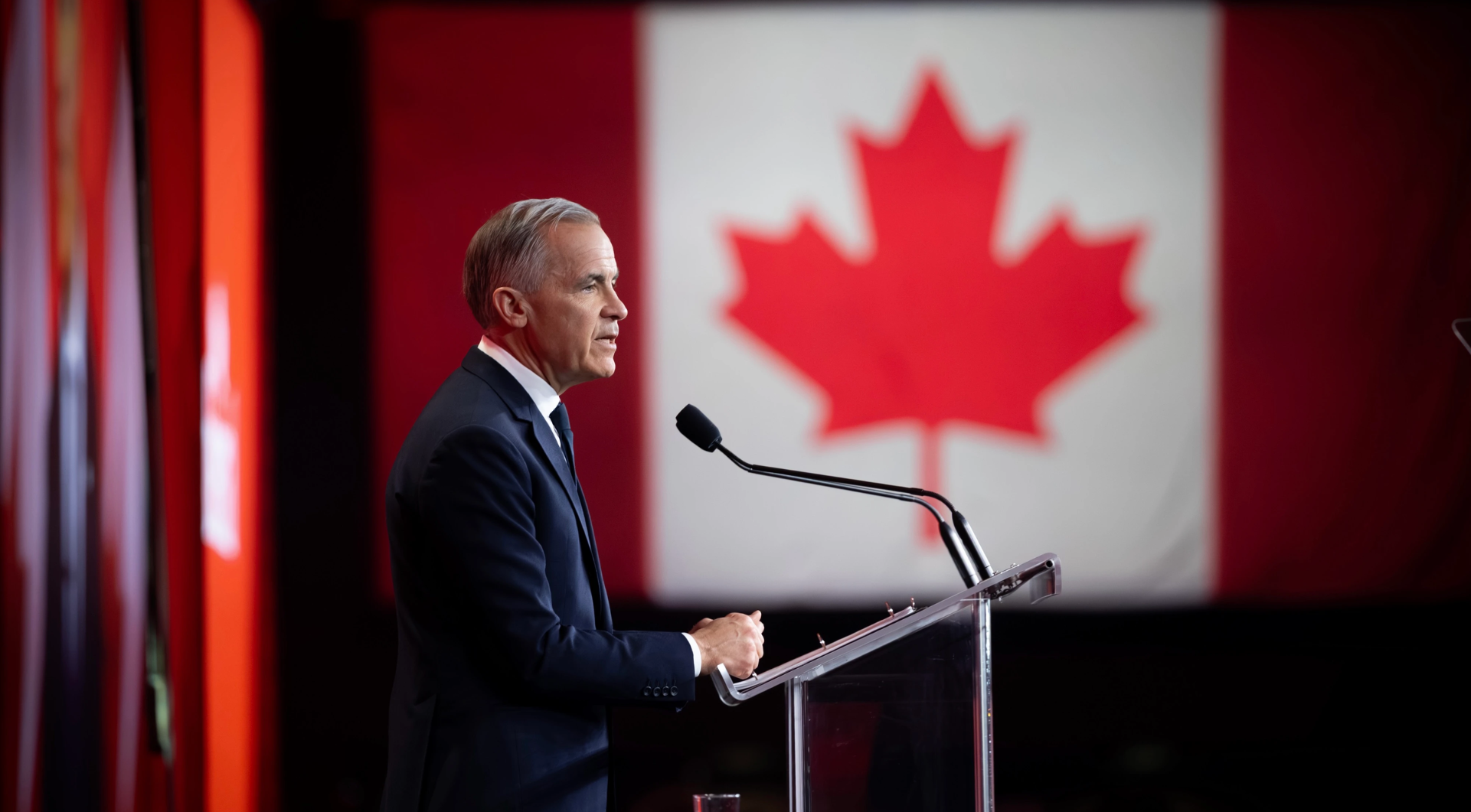
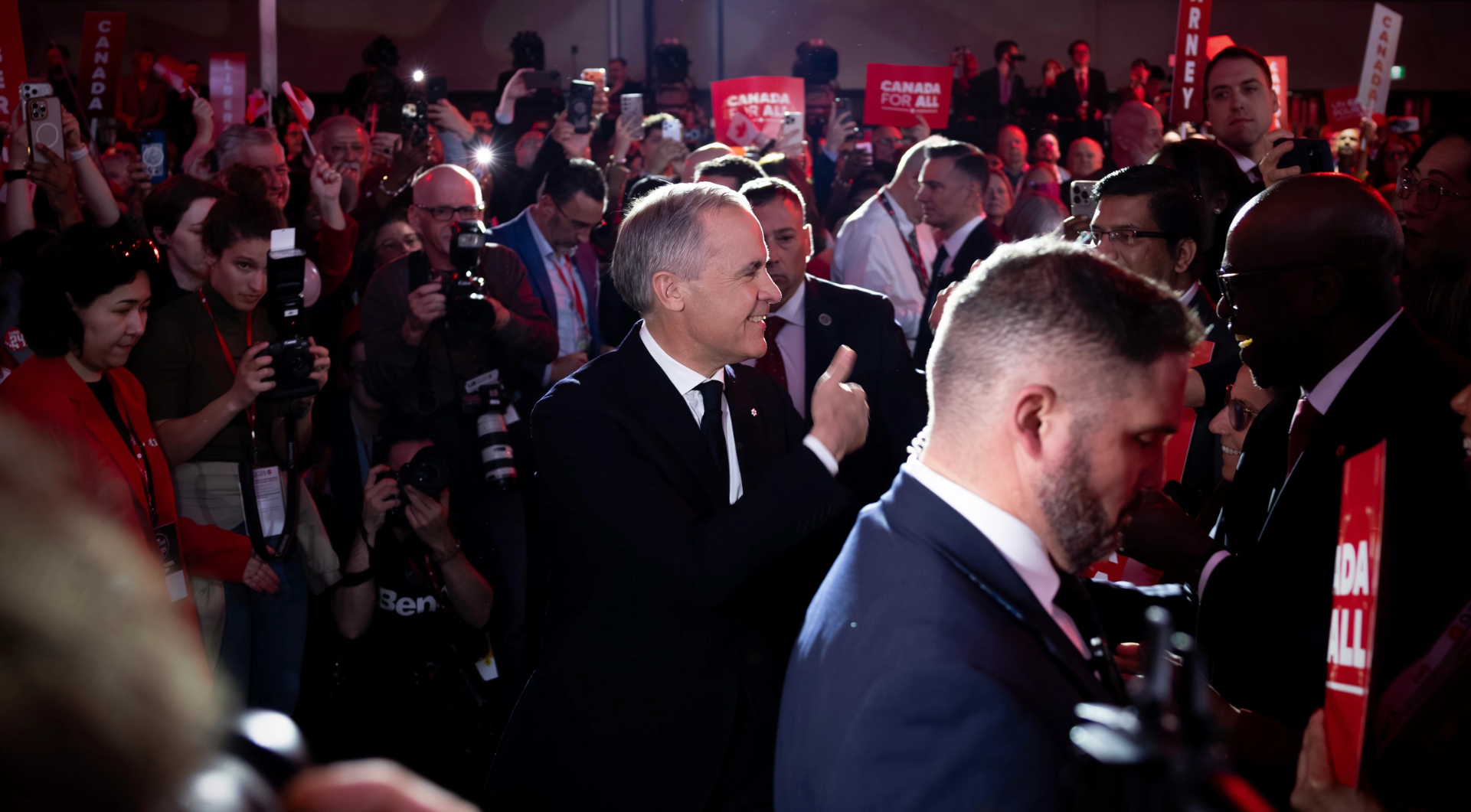
The victories arrive just two days after Carney used his address to the Liberal Party convention in Montréal to lay out a sweeping vision of national renewal, economic sovereignty, and generational investment. That speech now reads as a declaration of intent from a Prime Minister who no longer needs to ask permission.
“United, we will build Canada Strong,” Carney told delegates Saturday, “a Canada Strong for all—a Canada strong that no one can ever take away.” With a majority in hand, those words carry the weight of inevitability.
A parliamentary transformation
Monday's results mark the final step in a remarkable political transformation that began last November, when Nova Scotia MP Chris d'Entremont crossed the floor from the Conservatives, citing Carney's "better path forward" for the country.
Four additional opposition MPs—Michael Ma, Matt Jeneroux, Marilyn Gladu, and Lori Idlout—followed in subsequent months, steadily eroding the opposition's ranks and positioning the Liberals for this final push.
The new parliamentary math reflects the popular vote from the April 2025 general election, in which the Liberals secured 44% nationally, a level of support that had previously been frustrated by the peculiarities of regional vote distribution. Monday's by-elections correct that imbalance, delivering the governing majority that the electorate's collective judgment suggested was warranted.
No federal election is now required until the autumn of 2029, though the fixed-date calendar already points to that year. The Liberals have nearly four full years to deliver on the agenda Carney outlined in Montréal and codified in Budget 2025: a $450-billion plan built around major infrastructure, defence spending, housing construction, and productivity-enhancing tax measures.
That timeline represents both opportunity and risk. Carney used his convention speech to frame the current moment as a historic rupture, “a transformation that will define this country for generations,” and to argue that standing still would mean surrendering Canada's future to forces beyond its control.
“The world is changing, not gradually but suddenly,” he said. “Some are still in denial. Rather than starting this journey, they're waiting for the past to return. But hope isn't a plan, and nostalgia isn't a strategy.”
The speech previewed the governing approach Canadians can now expect: an aggressive decoupling from U.S. economic dependence, a defence industrial strategy designed to catalyze half a trillion dollars in domestic investment, new trade corridors from the Mackenzie Valley to Churchill, and a federal procurement policy that selects Canadian suppliers by default.
“From now on, with our new 'Buy Canadian' Policy, when the federal government spends, we will select Canadian suppliers by default,” Carney declared. “The days of Canada's military sending 70 cents of every dollar to the United States are over.”
Budget 2025, tabled last November, provides the detailed roadmap: $115 billion in infrastructure spending, $30 billion for defence and security, $25 billion for housing, and $110 billion for productivity and competitiveness initiatives. The document explicitly frames these investments as a response to "generational shifts" in the global economy and the need to build Canadian resilience in an increasingly fragmented world.
Opposition parties confront existential questions

For the opposition parties, Monday's results pose uncomfortable questions that will only grow louder in the years ahead.
Conservative Leader Pierre Poilievre, already under scrutiny after losing four MPs to floor crossings, now faces renewed pressure. The Battle River—Crowfoot MP secured his party's leadership in 2022 on a promise to channel discontent into electoral victory, but instead presided over a period in which a previously unpopular Liberal Party not only survived but secured a majority government.
With Poilievre losing his original Ottawa-area seat of Carleton in April 2025 and forcing an unnecessary, costly by-election only five months after the 2025 federal election, revelations that only 2,500 of the party's more than 600,000 members participated in his leadership review do little to bolster his position. A non-confidence vote among Conservative MPs is now considered increasingly likely.
The New Democratic Party (NDP), having been reduced to just seven seats after the 2025 election, finds itself in an even more precarious position. The party has lost Idlout to the Liberals, leaving it with six MPs. The party's leadership contest recently concluded, but the party's new leader, Avi Lewis, does not have a seat in the House of Commons, forcing an unenviable choice between a risky by-election in one of the party's few remaining seats, running in the eventual Beaches—East York by-election once Liberal MP Nathaniel Erskine–Smith resigns, or remaining outside Parliament until 2029, watching from the gallery as the Liberals govern.
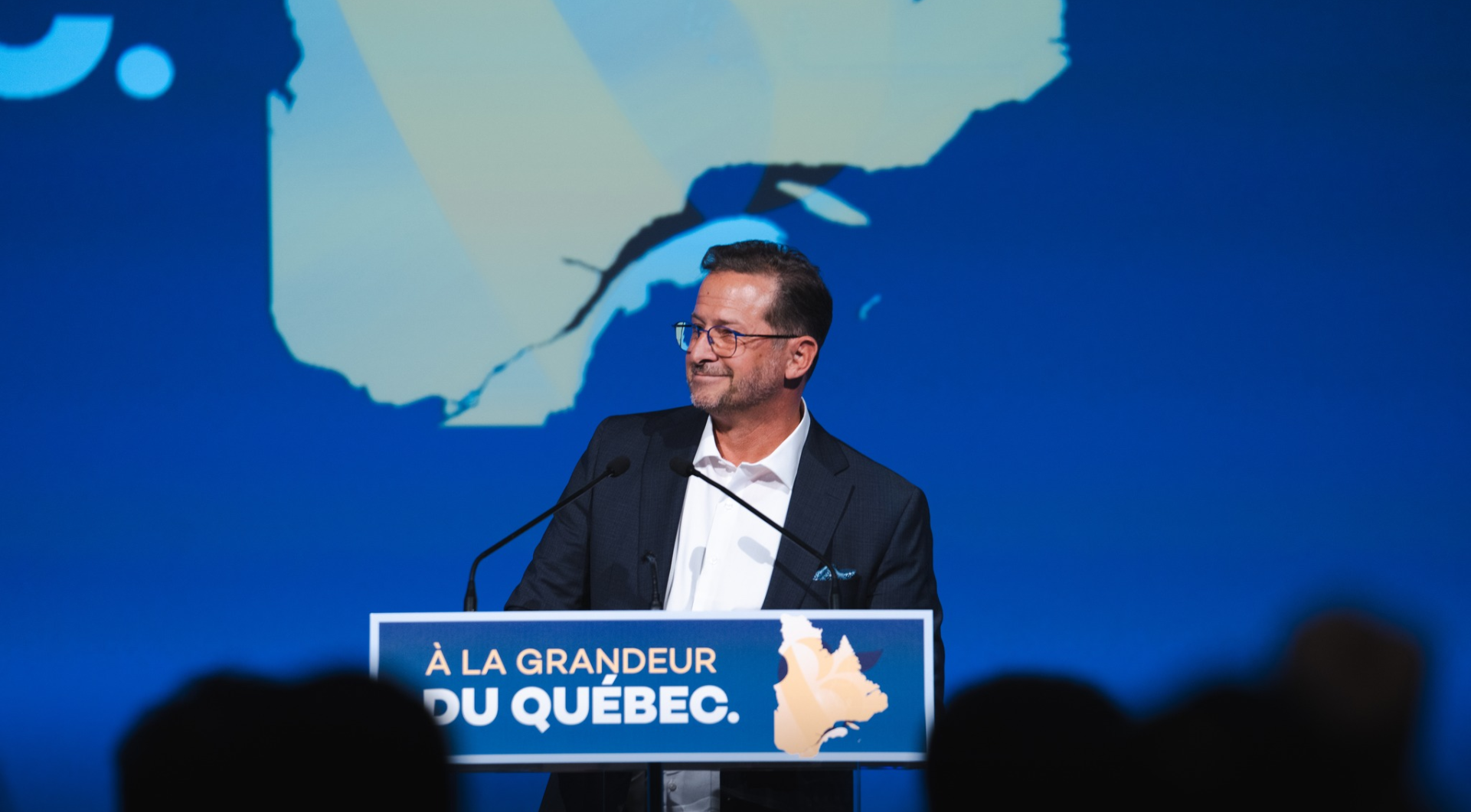
For Yves-François Blanchet's Bloc Québécois, the calculus is similarly stark. As the third-place party in the last election, the Bloc's leverage on confidence votes and legislative priorities has evaporated entirely in this new majority government, but the party that will suffer the most is Elizabeth May's Green Party. With the new NDP leader being a self-described "ecosocialist" and May being the sole Green MP, the fate of the Green Party of Canada is now in serious jeopardy.
Whether the Carney Liberals remain popular through to 2029 will depend entirely on the success of the projects they have now been empowered to pursue. The Budget 2025 agenda is ambitious by design, "high risk, even higher reward," in the words of one government official.
If it succeeds, delivering jobs, housing, and economic security, the Liberals will have cemented a governing realignment that could endure for another decade. If it falters, the years of restrained program spending and fiscal discipline baked into the current budget could grow deeply unpopular, leading to the Poilievre Conservatives or Lewis NDP regaining momentum. Lewis NDP regaining momentum.
No excuses, no obstacles

In Montréal, Carney closed his convention address with a story of Gander, Newfoundland, whose residents welcomed thousands of stranded passengers into their homes on September 11, 2001. He quoted a young girl's thank-you note: “Your kindness motivates me to use my kindness.”
“That virtue is like a muscle,” Carney said. “It grows with exercise. When we are kind, kindness grows. When we seek unity, unity grows. When we are Canadian, Canada grows.”
It was a fitting metaphor for the road ahead. Carney now possesses the political strength to act decisively; the speech made clear that his project relies as much on the collective muscle of Canadians as it does on parliamentary arithmetic. The "Canada Strong" agenda is a bet that Canadians are ready to build something together again—to take the risks, endure the setbacks, and push through the headwinds he described.
The Prime Minister has been handed a mandate without obstruction and a country that, in his own framing, is only truly strong when it works for everyone. The muscle memory of national ambition is there, waiting to be reawakened. The exercise now begins in earnest.

Comments