
HELANI: Debunking the fantasy of a landlocked republic
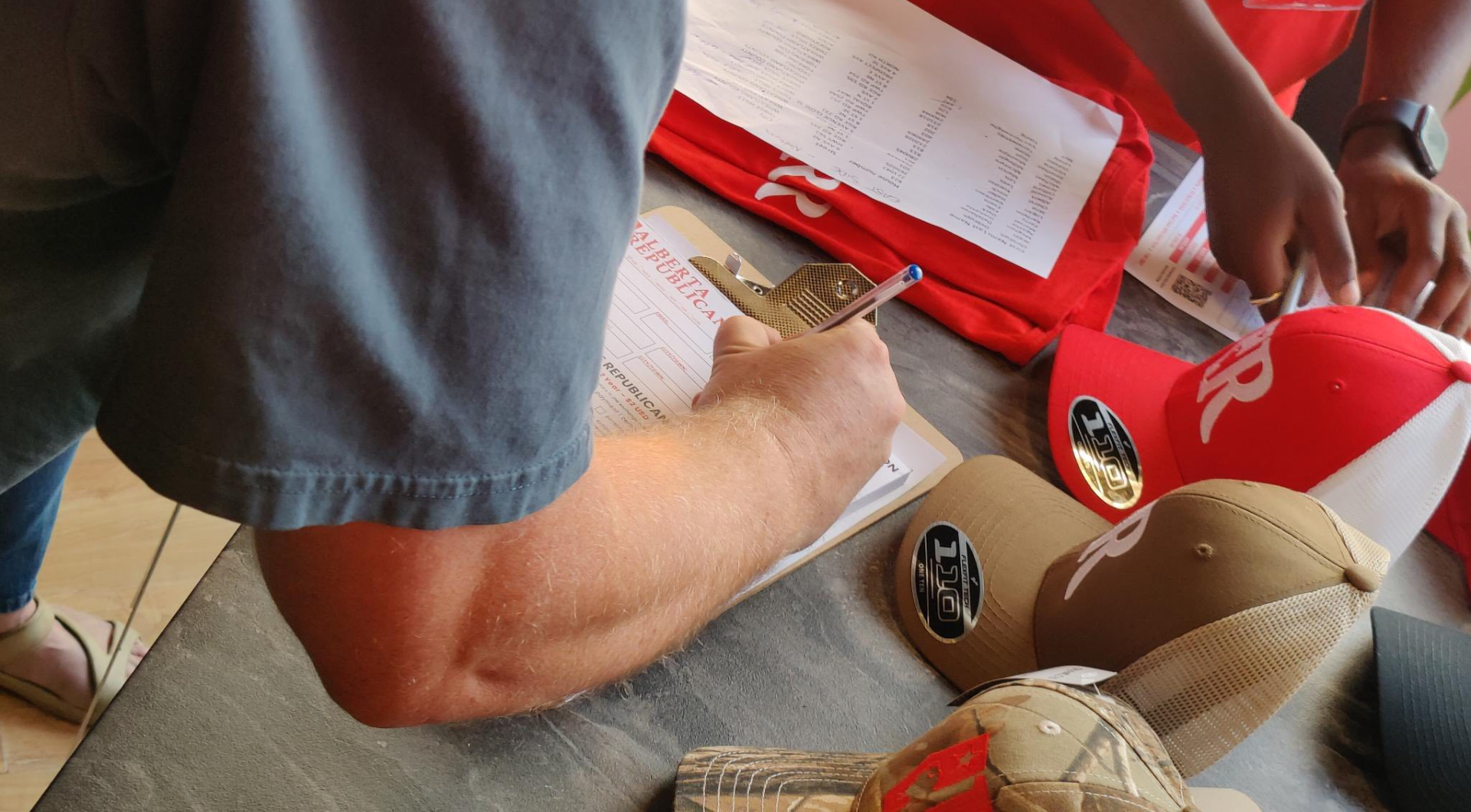
As you may have heard, there is a movement in my province, Alberta, where some Albertans perceive the Canadian government, particularly the Liberal government, as their enemy. They believe that Ottawa has been slapping us in the face, and now, they have concluded that our nation is effectively dead at this point and feel that we must move forward by separating from the rest of the country to create a new, independent Alberta.
As for now, many have signed the petition to put this plan to a referendum.
One of the most tyrannical beliefs a person can hold is that reform is impossible and that exit or rupture is the only option. They do this because they stop investigating and accept the narrative that Canada is dead and that democracy is not functioning in our country.
I'd put it this way: the Albertan separatists are in a psychological shift where they have mentally surrendered. They stopped engaging politically; they assume the system is broken, so they become open to drastic alternatives like separation.
The question we should consider now is this: Is it truly possible for Alberta to achieve independence? And can Alberta sustain itself in the long term?
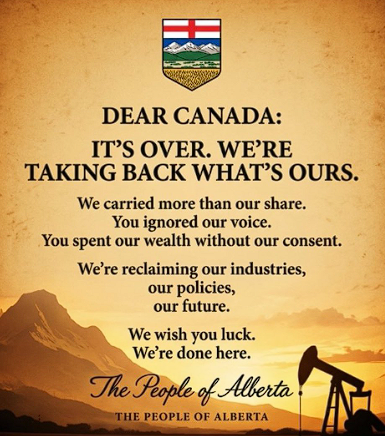
Three main things a newly independent country should have: a stable government, an existing constitution, and effective manpower. These elements are essential for long-term survival, and they were present in countries like Bangladesh when they gained independence from Pakistan, as well as in every other formerly colonized country at the time of their independence.
But how is it a different story, especially within Canadian domestic land?
Since its founding in 1905, Alberta has been deeply integrated within Canada, just like every other province, whether constitutionally, economically, or legally. Independence would not be a simple political decision; it would require not only a referendum but also complex negotiations with Canada as a nation, addressing Indigenous treaty obligations, and lastly, the British Crown. Negotiating with Indigenous nations won't be a simple job because they have treaties with the Crown, written prior to Canadian Confederation in 1867.
This means they won't be automatically bound to a new "Republic of Alberta," because that would create legal fragmentation, potential territorial disputes, and moral and constitutional challenges.
More importantly, Alberta is landlocked, its economy heavily tied to internal trade and national infrastructure, including pipelines that go through other provinces or the US. Becoming an independent nation turns those from internal market access to international negotiations, and that'll make Alberta lose the current leverage it had within a united Canada.
Currency will also not be an easy solution, as Alberta would have to choose whether to continue using the Canadian dollar, create a new one, or peg to another currency. But in reality, all these options invite instability from the start.
The moment independence becomes serious, there will be capital/investment flights: investors will pull back, companies will delay decisions, and some could relocate. All of this will happen before independence even occurs. As mentioned, an independent country should have effective manpower, and currently, we have many CAF bases in Alberta. When independence occurs, these bases, as well as the Canadian military, are no longer valid in our province, which means we have to build our own military from scratch.
In Canada, we have federal asset divisions like debt share, pension obligations, and federal infrastructure. If we separate, these negotiations can take years and create uncertainty. Leaving Canada means Alberta will lose its access to pensions, federal transfers, and national programs, and that'll make Alberta rebuild itself or renegotiate everything.
As a result, separating from the entire country will not only make you symbolically Albertan, but it will also destroy your province completely, and you'll have to rebuild the entire state from scratch. Dissatisfaction with Ottawa does not prove that our nation is illegitimate; in a democracy, it is required that we participate even when it's frustrating.
If Alberta leaves, federalism stops working altogether, which will lead to other provinces reconsidering unity, and constitutional uncertainty increases.
Separating from the entire nation will create a high-cost political rupture that replaces a functioning federal system, whether perfect or imperfect, with economic uncertainty, constitutional instability, and weakened bargaining power.
So we have to choose these two options: We are either Albertans first, Canadians second, or we are Albertans and Canadians at the same time. It is the time for us in our federal democracy, regardless of our political differences, to reform & cooperate, not exit.
When our province was founded in 1905, former Prime Minister Wilfrid Laurier said, “Let them be Canadians.” So now, it is our job as Albertans to pledge our allegiance to our beautiful Maple Leaf flag. We should be as courageous as we can; staying engaged in our democracy and liberties requires patience, courage, and discipline.
Walking away may be easy, but it's riskier politically. And that is why it is Better to stay united than divided.
This piece was written by an individual contributor and reflects the editorial position of The Provincial Times. Read our Content Policy here.

Comments