ADAMS: Carney’s China EV deal extends Trudeau’s record of weakness
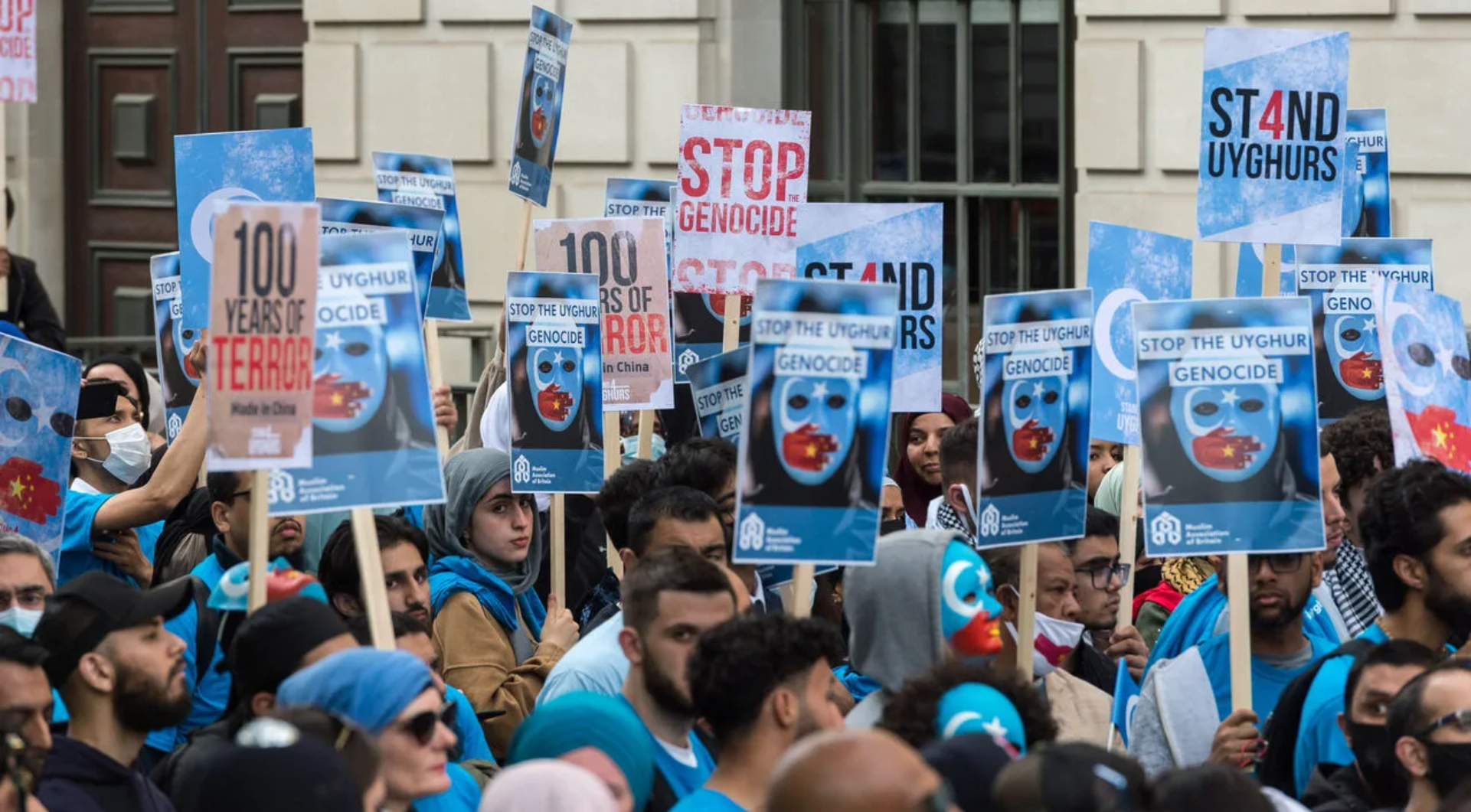
Prime Minister Carney has presented himself as a fresh start for the Liberals since the last election. On many issues, he is a breath of fresh air, but on China, he is not. The Janurary deal to let tens of thousands of Chinese electric vehicles into our economy at sharply reduced tariffs continues a pattern of putting commercial convenience ahead of clear Canadian principles on human rights and supply chain integrity.
In 2020, when evidence of mass detention, forced labour, and cultural erasure of Uyghurs in Xinjiang was impossible to ignore, three federal party leaders stood together. Yves-François Blanchet, Erin O'Toole, and Jagmeet Singh all called on Justin Trudeau to act.
Former Conservative Party leader Erin O'Toole says China should not be allowed to host the 2022 Olympics due to their treatment of Uyghurs and the kidnapping of Robert Schellenberg, Michael Kovrig, and Michael Spavor. Video credit: Candice Bergin, Facebook
Parliament held a motion declaring China's treatment of the Uyghurs a genocide. The motion passed because enough members from across parties refused to look away, but the former prime minister was notably absent from that vote.
That episode reflects a broader Liberal reluctance to confront Beijing on core issues of forced labour, hostage diplomacy, and economic coercion. Michael Kovrig and Michael Spavor spent nearly three years in Chinese detention on trumped-up charges. They came home only after a prisoner swap arranged by the Biden administration. Canadian diplomacy alone had not been enough.

Carney did not create this record, but he owns the decision to lower barriers to Chinese EVs while the supply-chain risks remain unresolved. The January agreement trades tariff relief for Canadian canola and other farm products in exchange for opening space for up to 49,000 Chinese-made electric vehicles annually at the standard rate. Supporters—including myself early on—have argued that this will deliver more affordable EVs and eventual Chinese investment in Canadian plants.
But major components in many of these EVs trace back to regions and industries where multiple independent investigations have documented forced labour of Uyghur muslims. A serious break from the Trudeau-era approach would mean applying the existing rules rigorously rather than managing around them.
Canada already has a forced labour law that puts the burden of proof on importers, so the Carney Liberals' plan to implement that law through a targeted list decided by his cabinet raises the obvious question: will Chinese EVs and their key inputs actually appear on it, or will the list be written narrowly enough to let the quota proceed with minimal friction? Past enforcement has been thin.

There is also no need to accept a false choice between heavily subsidized Chinese vehicles and expensive imports from elsewhere. Mexico recently unveiled the Olinia Uno, a compact, affordable electric vehicle designed for urban use. The fact that another North American country can move quickly on lower-cost domestic or near-shore production shows what is possible with focus and political will.
Canada has the engineering talent, the critical minerals, and the industrial base to develop our own affordable EV options. What has been missing is sustained leadership willing to treat automotive innovation as a national priority rather than something to be solved by opening the door wider to China.
Granted, economic engagement with China is not the issue. Canadians benefit from trade that is rules-based and reciprocal, regardless of which nation we choose to do business with. The problem is granting broad market access while key conditions on ethical sourcing remain effectively optional.
If Ottawa cannot realistically compel Beijing to change its labour practices in exchange for tariff relief on canola, then the responsible course of action is to limit and restrict Chinese access to our economy until those practices change. Lowering barriers on EVs without ironclad safeguards does the opposite.
The Prime Minister has an opportunity to draw a clearer line than his predecessor. That would mean treating the forced labour law as a real constraint, not a process to be shaped around a trade opening. It would mean accelerating Canadian production of affordable electric vehicles instead of defaulting to Chinese supply chains. And it would mean applying the same standards on human rights and supply chain integrity to every trading partner, including China.
The 2020 parliamentary motion showed that a majority of MPs from different parties are prepared to call China's actions what they are. The current EV quota tests whether that willingness still exists when commercial interests are on the table. A genuine break from the past requires more than new branding.
It requires applying the standards Canada has already set for itself.
This piece was written by an individual contributor and reflects the editorial position of The Provincial Times. Read our Content Policy here.