
Durham MP’s Canada Day address draws scrutiny for inflammatory rhetoric and factual gaps
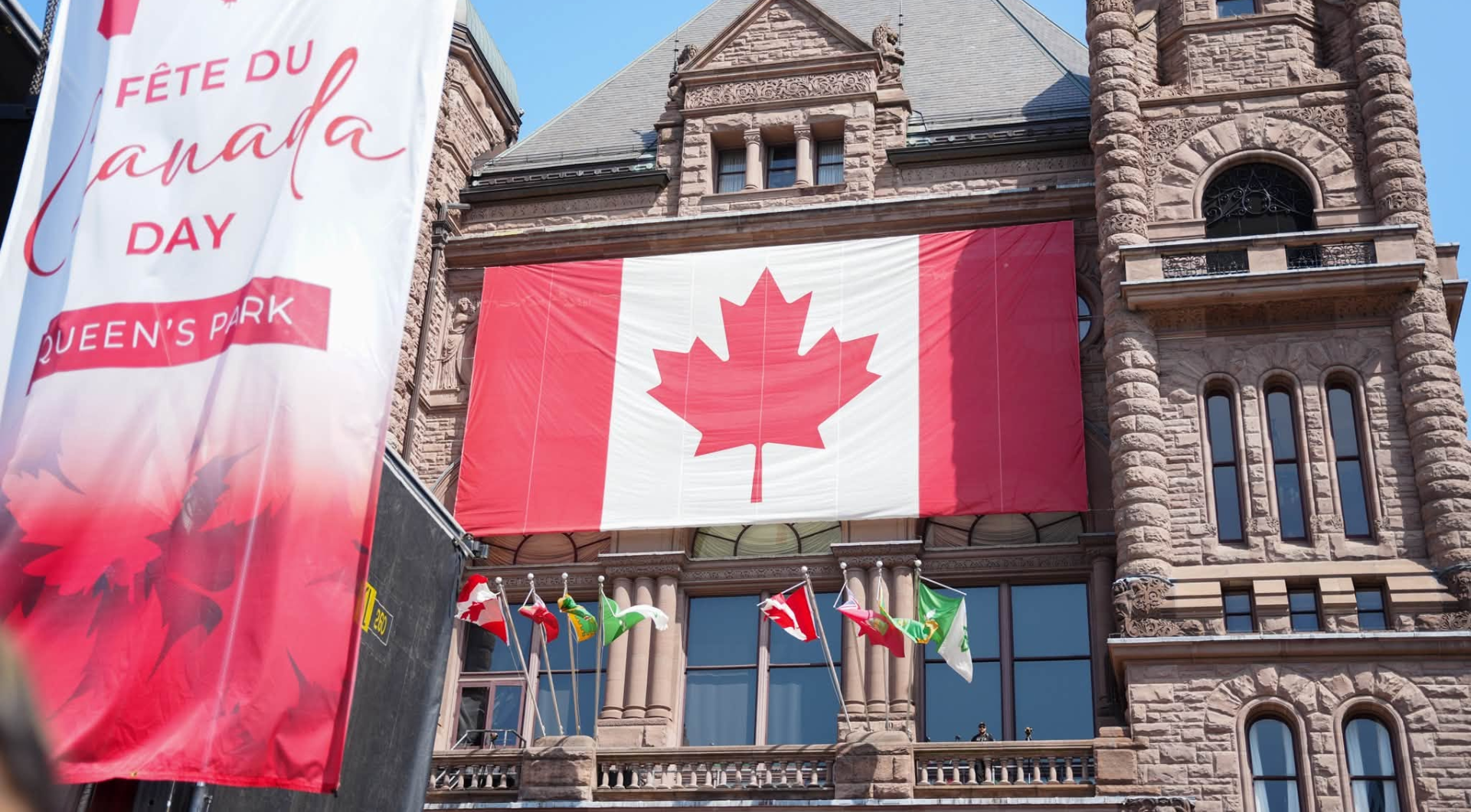
A Canada Day address from Bowmanville—Oshawa North MP Jamil Jivani is raising questions about the role of elected officials on the country's national birthday, after a video posted on his social media this morning marked a pointed departure from the usual non-partisan overtures that typically mark the occasion. In the message, which runs just over two minutes, Jivani urges Canadians to “be proud” of the country's British and French foundations, and emphasizes a model of assimilation over “multicultural fragmentation.”
But the address quickly pivots to a litany of grievances, from flag protocol to immigration enforcement and foreign aid, framing them as threats to a Canadian identity he says is under systematic attack.
Jamil Jivani's Canada Day address, where he took aim at multiculturalism, immigration enforcement, and foreign aid. Video credit: Jamil Jivani, X
The most jarring moment comes midway through, when Jivani takes issue with prayers from “another religion” being heard in Regina's public square. The reference to the Muslim call to prayer, which Saskatchewan's capital has hosted at city hall during Ramadan in recent years—sits awkwardly beside his opening praise for Canada as a nation founded on “religious freedom.”
Critics of the line have pointed out that the public expression of minority faiths is not an erosion of tolerance, but a direct exercise of it. Jivani offered no explanation for why the presence of those prayers would constitute a threat to Canadian values.
He also took specific aim at the decision to fly the national flag at half-mast for “months on end.” The address appeared to reference the summer of 2021, when federal buildings lowered their flags following the discovery of unmarked graves at the Kamloops Indian Residential School—a discovery that prompted a national reckoning with the country's residential school system. At the time, government officials described the gesture as a period of collective mourning for the hundreds of children who never came home.
On immigration, Jivani offered a broadside against the government's inability to remove those who have overstayed their visas, though he did not specify whether he was referring to a processing backlog, a legal bottleneck, or a lack of political will. Jivani's remark on people who've "overstayed visas" sidesteps the complex administrative and judicial layers of the Canadian immigration enforcement system, including appeals and hearings, which often delay removal proceedings.
But perhaps the most emotionally charged pivot comes when he links foreign aid to domestic struggles, telling listeners that “every dollar you see going out of our borders” comes at a direct cost to military veterans and patients waiting in emergency rooms. It's a compelling narrative, but a review of the arithmetic suggests a less tidy connection.
Federal spending records show Canada's entire international assistance envelope for 2024 totalled just 2.1% of the $534.5 billion in overall program expenses. That works out to roughly $28.92 per Canadian per year—hardly the bottomless drain on resources his framing implies. Meanwhile, the taxpayer-funded maintenance of Stornoway, the official residence of the leader of the Opposition, costs upward of $170,000 annually just to keep the lights on and the floors waxed, and that's before you add the MP, MLA, and Senator pensions, salaries, and the taxpayer-funded credit cards they're given to spend whenever they choose.
More critically, Jivani's attempt to draw a straight line from foreign aid disbursements to overcrowded ERs ignores the constitutional division of powers. Health-care delivery in Canada falls squarely under provincial and territorial jurisdiction. The federal government's role is largely limited to cash transfers through the Canada Health Transfer, but the management of emergency rooms, hiring of nurses, and funding of hospital operations are determined by provincial governments—including several Conservative premiers who have faced sustained criticism for underfunding primary care and freezing staff wages.
Today's address does not acknowledge that provincial budget decisions, rather than federal humanitarian spending, have historically been the primary driver of hallway medicine and staffing shortages.
To his credit, Jivani begins with a sentiment few would argue against—that Canadians deserve better than long wait times and struggling military personnel. But his diagnosis of the root causes veers into selective arithmetic and jurisdictional overreach, while his framing of diversity as a zero-sum threat to national pride lands with a particular thud on a day meant to celebrate the broad, complicated tapestry of the country.
Canada Day messages from federal politicians have long skewed toward the aspirational, with speeches emphasizing shared geography, collective sacrifice, and the resilience of the social safety net. Jamil Jivani's offering, by contrast, reads less like a traditional holiday greeting and more like a stump speech—one that asks Canadians to be proud, but only after listing a litany of reasons to be angry.

Comments