
EDITORIAL: Five years after Kamloops, reconciliation is still waiting on results
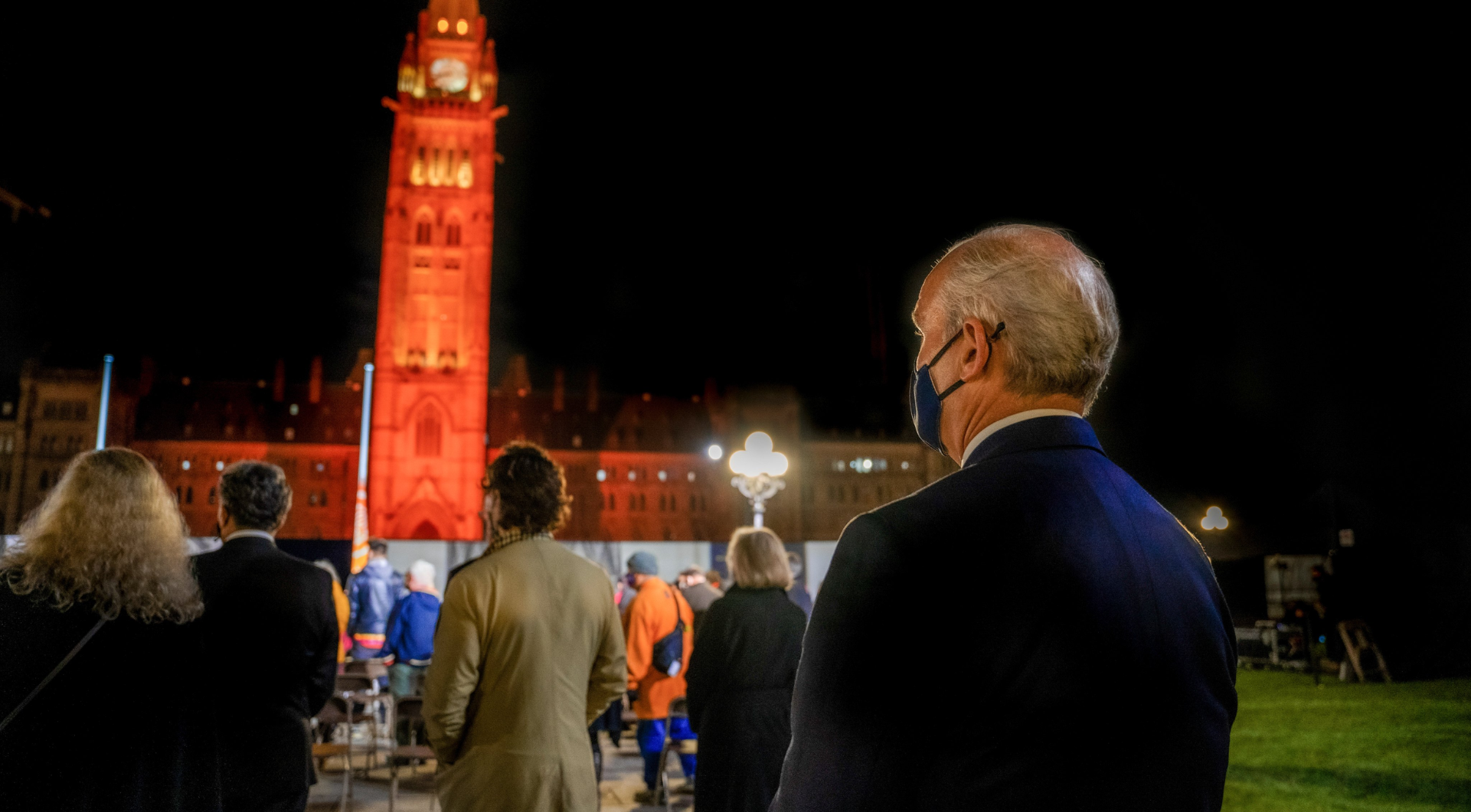
Most Canadians remember exactly where they were in May 2021 when Tk'emlúps te Secwépemc First Nation announced it had found 215 potential burial sites near the former Kamloops Residential School. It was one of those moments when the whole country seemed to stop and take a breath.
Indigenous families had been telling this story for generations. Survivors had described it in detail. The Truth and Reconciliation Commission gave an entire volume of its final report to missing children and burial records. The devastation many of us felt said more about us than about the news.
None of this was hidden. Too many of us simply hadn’t listened.
That summer, politicians of every stripe lined up to promise change. Orange shirts hung in windows from Victoria to Fort St. John. Children’s shoes were left on the steps of the legislature. Statues came down, and Ryerson University took a new name.
So five years later, it’s fair to ask a simple question: what did we actually get done?
News of burial searches don’t lead the evening news anymore. That’s how the news cycle works, but it has a real cost. Ground-penetrating radar surveys, archival research and the slow, painful work of identifying children are still being carried by small communities with limited budgets and staff, and by families reliving the worst chapters of their history. That work didn’t end when the headlines did.
Then came September 27. Members of a white nationalist group called the Second Sons showed up on Tk'emlúps te Secwépemc land carrying signs that read "Got bones?"
That incident was intimidation, aimed at a community that is still grieving. It deserves to be called what it is: denialism, and ugly denialism at that. Nobody in public life should hesitate to say so.
Governments have to be judged on results, not announcements, and that principle applies here as much as anywhere. Denialism fills the gap when promises aren’t kept. When people see years of speeches and little measurable change, cynicism grows, and cynicism is exactly what groups like this feed on.
So let’s look at the results.
In 2015, the TRC released 94 Calls to Action, and Justin Trudeau, then running for prime minister, committed to implementing all of them. According to Indigenous Watchdog’s September 2026 analysis, only about 17% have been completed. Almost 40% are stalled or haven’t been started. Ottawa’s own reports tend to paint a rosier picture, but independent tracking tells a tougher story. If a private company reported that kind of progress to its shareholders after more than a decade, the board would be asking some hard questions.
The raw count also doesn’t tell you everything. Some of the completed calls matter a great deal, but many are symbolic. A new statutory holiday or a formal apology has value, but neither one changes how a child welfare system operates or how a school on reserve is funded.
That’s why the first 42 calls, the "Legacy" calls, deserve the most attention. They deal with child welfare, education, language, health and justice, the systems that shape daily life. Indigenous kids still make up a hugely disproportionate share of children in care. Schools serving First Nations communities are still underfunded year after year. Indigenous Canadians still live shorter lives on average, face worse health outcomes and are far more likely to end up in jail.
Four of those Legacy calls, numbers 2, 9, 19 and 30, ask governments to set clear benchmarks and report on them every year in child welfare, education, health and justice. None of the four has been completed.
These are the most basic management tools there are. You can’t fix what you won’t measure. If governments won’t publish the numbers, nobody — certainly not the communities affected — can tell whether the money being spent is working. Those reports are how the public holds governments accountable, and it’s hard to see the refusal to produce them as an accident.
But it would be foolish to say that this is only Ottawa’s job, or Victoria’s. Reconciliation isn’t a box to tick, and it isn’t a press release. It needs steady public pressure from voters, reporters, teachers, universities, businesses, service clubs and neighbours who won’t let the country quietly move on. That means asking your MP and your MLA what’s actually been done and expecting a real answer. It means insisting on transparent reporting and adequate funding. And when someone shows up on a reserve with a sign like "Got bones?", it means calling it out instead of shrugging it off as a stunt.
What happened in Tk'emlúps last weekend shows us what grows when the truth is treated as optional and everyone assumes accountability belongs to someone else. We should expect more from our governments. We should also expect more from our institutions, our media and ourselves.
Reconciliation won’t happen just because someone promised it. The test is simple and measurable: are Indigenous people's lives actually getting better? If we aren’t willing to hold ourselves to that standard, "reconciliation" will stay a comfortable word for people who’d rather nothing changed.
This piece was written and published by The Provincial Times Editorial Board and reflects the editorial position of The Provincial Times. Read our Content Policy here.
Comments