
Nintendo eShop flooded with low-quality ‘eSlop,’ critic says after spending hundreds on junk games

A Canadian YouTuber who has spent years reviewing obscure and under-the-radar video games says Nintendo's digital storefront has become a dumping ground for low-effort, deceptive, and sometimes outright stolen software. Shane Luis, better known online as Rerez, detailed the problem in a video published March 2026 after deliberately buying and testing dozens of titles he collectively labels “eSlop.”
Luis, who describes himself as a longtime Nintendo fan and day-one Wii U owner, argues the issue goes beyond ordinary bad games. In his view, that includes quick asset-store flips, AI-generated visuals, near-identical clones of popular titles, and experiences designed mainly to separate players from their money.
“eSlop is something more,” he said. “It's pretty much any game published to Nintendo's eShop with nefarious intent.”
He pointed to several concrete examples. One fighting game called Urban Showdown appeared to be little more than a barely altered Unity Asset Store template sold for a few dollars. Screenshots on the store page did not match the actual game, and the characters showed classic signs of generative AI work.
“This whole game was purchased directly from the Unity Asset Store,” Luis said. “It was barely repackaged and then spat back out onto the eShop.”
Walking simulators assembled from the same stock assets, broken motorcycle fetch-quest games, and a children's “audiobook” experience that leaned heavily on Jurassic Park-style branding rounded out the early portion of his investigation. In one case, he noted a talking dinosaur character whose anatomy raised immediate questions, due to having a second tail where a penis usually goes.
“There's something wrong with this image,” he remarked, before choosing to blur the offending area.

Luis found the eShop packed with near-clones of successful indie games. A title that mimicked Dave the Diver killed the player the moment they touched certain fish, another borrowed the name and concept of a popular multiplayer climbing game but offered no multiplayer at all, and a long list of military-themed first-person shooters copying games like Call of Duty and Battlefield used virtually identical AI-generated thumbnails and in-game screenshots, making it nearly impossible to tell one from another.
“After a while my brain just refused to accept that I was looking at different titles,” he said.
More troubling still was an apparent case of outright theft.
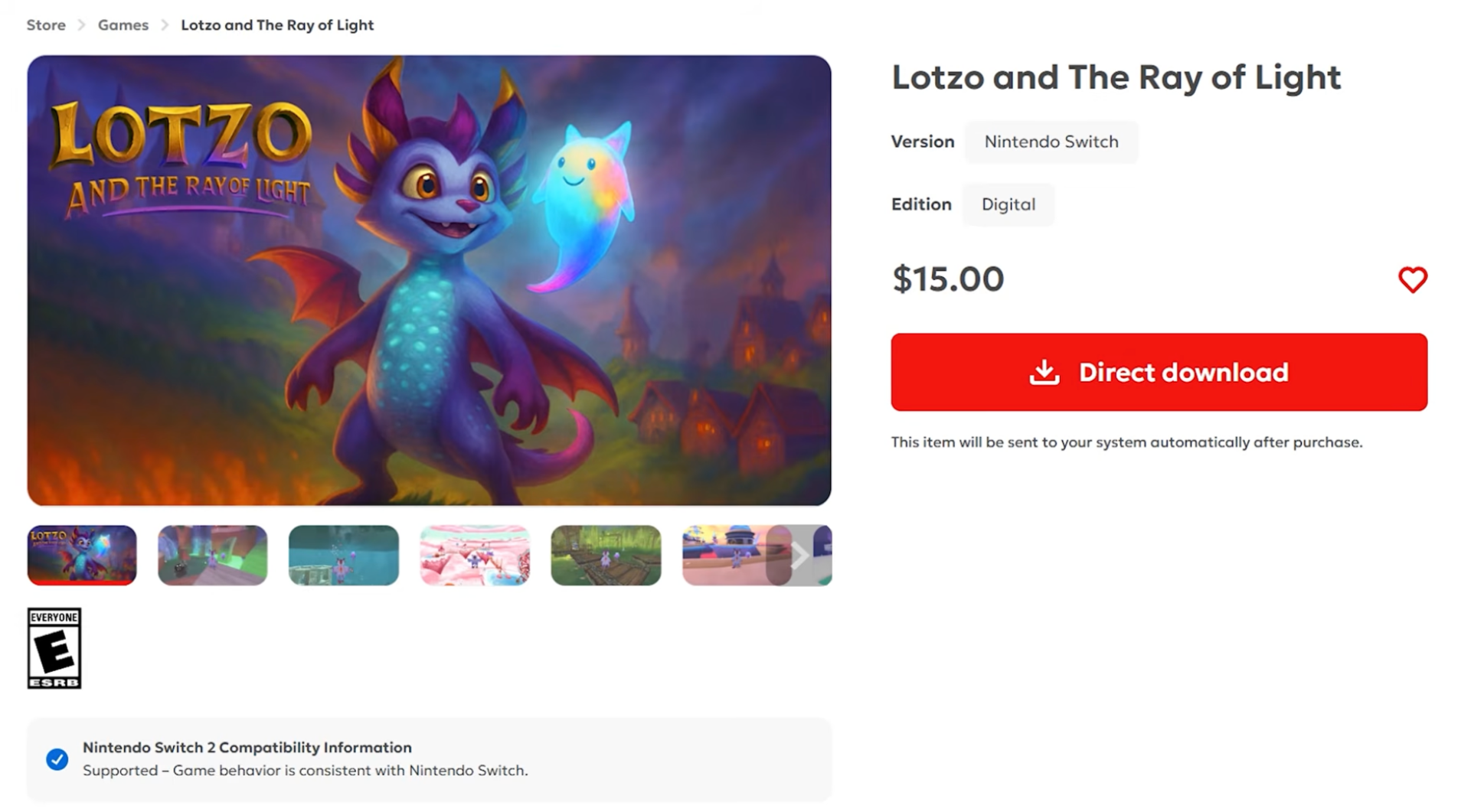
Lotzo and the Ray of Light turned out to be a recoloured and heavily broken version of a free demo called Zera: Myths Awaken, originally released by an independent developer on itch.io. Luis contacted the original creator, who confirmed the work had been taken without permission or payment.
The game was later delisted, but Luis noted that neither Nintendo nor the publisher contacted the original developer or issued refunds to buyers.
Luis also criticized the volume of adult-oriented puzzle games that rely on suggestive AI imagery and appear regularly in the recent-releases feed. He observed that parental controls can restrict the launch of software but leave the thumbnails and trailers fully visible.
“If there is a way to hide this from them, I couldn't find it,” he said.
Unlike Steam, the PlayStation Store, or the Xbox marketplace, the eShop provides no star ratings, written reviews, or like-to-dislike ratios, made worse by digital purchases on the eShop being non-refundable.
“Nintendo's online buying ecosystem doesn't provide gamers any way to give feedback on the games they purchase,” Luis said. “No official way to warn a consumer that they're about to buy a scammy piece of slop.”

Legitimate independent developers suffer as a result because high-quality small games vanish from the top of the recent-releases list within hours, pushed down by the constant flood of new low-effort titles. Luis pointed to one polished fighting game featuring animated food characters that he initially dismissed as more junk before realizing it was a carefully made original work that almost no one would discover.
Nintendo has not publicly responded to the specific claims in Luis's video. The company has long maintained strict quality standards for its own first-party software and historically has exercised tight curation on earlier digital platforms such as the Wii Shop Channel and the 3DS/Wii U eShop.
On the Switch eShop, however, the barriers to entry appear lower and the oversight lighter.
Luis made clear he is not opposed to independent development or experimental games. His complaint centres on the deliberate packaging of non-functional or deceptive products as finished experiences.
“There are no hidden gems here, folks,” he said. “It's just garbage all the way down.”
He closed the investigation with a direct challenge.
“Nintendo, clean up your storefront, or I'll have to keep exposing all the slop you allow on there. And please hurry. 'Cause I really don't wanna keep playing these games.”
Whether the company will tighten approval processes, introduce user ratings or expand refund options remains to be seen. For now, the eShop continues to offer both genuine independent work and a steady stream of the low-quality titles Luis spent hundreds of dollars documenting.

Comments