
ADAMS: I was almost thrown out of Olivia Chow’s campaign launch. I left thinking she deserves another term.
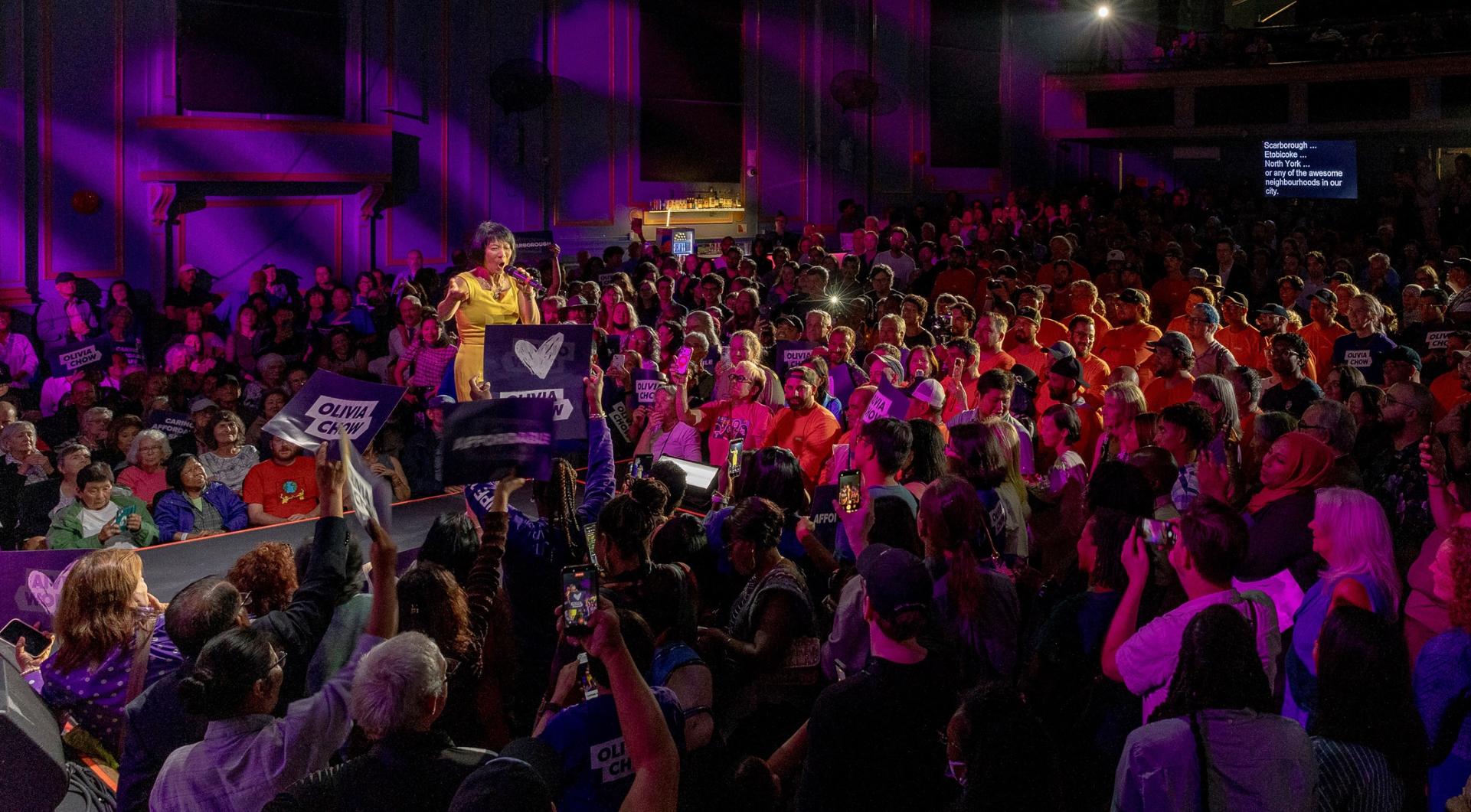
I nearly left Olivia Chow’s campaign launch before the first speaker took the stage.
Not because of anything the mayor had said. I had not heard her yet. I nearly left because of a bag, a $9 coat check, a confusing security process, and an apparent decision to send me to the back of a line that had grown roughly a kilometre long.
The RSVP had not said bags were prohibited. When I arrived, I was told I could not bring mine inside and had to check it at what appeared to be an arcade or bar. The fee was $9—money I had planned to use toward dinner.
That was irritating, but manageable. Political events are often chaotic. Volunteers are given instructions at the last minute, venues have their own rules, and nobody expects a campaign launch to run like an airport.
The situation became much more difficult when I returned to the entrance. A security guard appeared ready to let me resume my place in line. Before I could do so, a woman overseeing the entrance intervened and directed me to the very back.
When the security guard explained I had already been in line, he was told, in effect, that I could be sent there specifically. A friend working at the event eventually intervened, and I was allowed inside, but not before I was asked whether I was a “citizen journalist,” and told I was not to take pictures or record video, and warned that I would be kicked out if I did.
A campaign launch is designed to accomplish three things: attract attention, communicate their vision, and, most importantly, persuade people. They are not supposed to treat documentation as a threat, and if they do, in my experience, that's usually a sign that the event in question will not be very good.
It was implied that my previous collaboration with Caryma Sa'd's team at Ford Fest played a role in how I was treated at the door, where their footage helped corroborate something I was documenting. But I do not work for Caryma. I do not automatically endorse every position she has taken, and working with another journalist when our goals overlap does not make me that journalist's employee, representative, or political surrogate.
Independent journalists should not be treated as security risks simply because they operate outside traditional media organizations.
The experience was rude and unnecessary, and it also nearly cost the campaign my attention. Then the program began, and the people onstage won me back.
The energy actually felt genuine
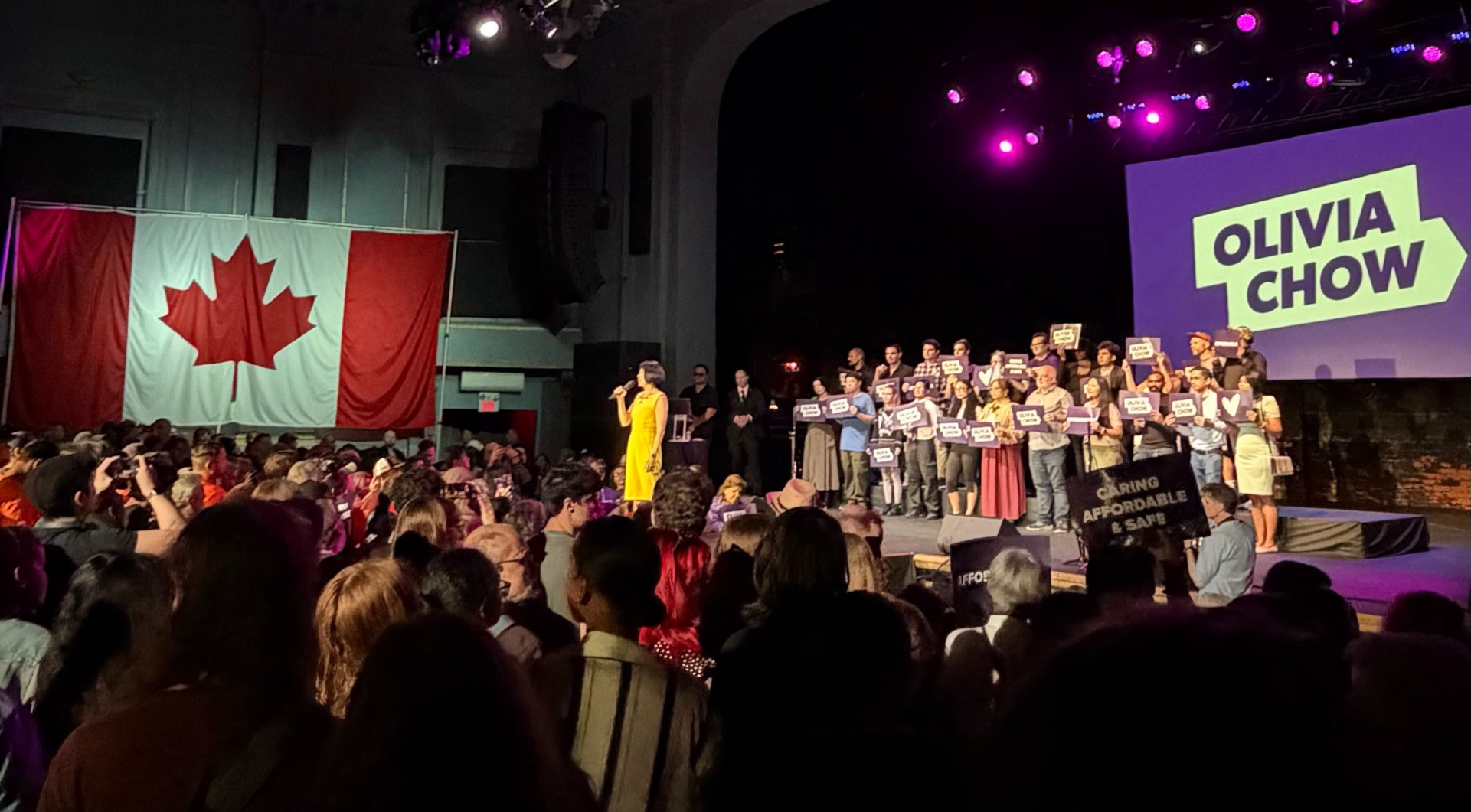
The room was packed, but this is the first rally I've ever attended where somebody had the foresight to book a space big enough that you weren't gasping for air the whole time. That detail matters quite a bit. As does the detail of how exciting this event was to actually attend. I have attended political events where enthusiasm is mostly a performance for cameras. This was different. Before the speeches, musicians played, and the audience sang and danced without needing to be instructed to look excited.
Comedian Sunthar V, who would spend the event introducing the audience to various guest speakers and the Mayor herself, was exciting, funny, and unapologetically partisan. His joke about selling out Massey Hall while still living in his mother's basement in Scarborough landed because it captured how the affordability crisis makes a person able to succeed in Toronto and still be unable to afford to leave home.
Guest speakers talked about Chow's support for Tamil Canadians during the protests over the atrocities in Sri Lanka, her work with artists and young people, and the relationships she has built with communities across Toronto—especially communities that often feel ignored by government.
A few speakers talked about how Chow stood with Tamil Canadians back in the late 2000s during the protests over what was happening in Sri Lanka. A couple of people mentioned her work with artists and young people, especially in neighbourhoods that don't usually get a second look from City Hall.
But the speech that stayed with me was the one from the tenant organizer. He talked about what it was like living in his building—mould everywhere, water coming through the ceiling, balcony guards so rusted you couldn't lean on them. The underground parking got so bad the city had to shut it down entirely.
So they contacted the mayor.
The broader argument about Olivia Chow's public life
Chow visited the building herself. She walked through it, met residents and saw the conditions firsthand. The tenants' concerns later became part of a wider effort to improve enforcement against negligent landlords.
That story does not prove that every city housing problem has been solved. It does demonstrate something important: listening is only the beginning. Leadership means using the machinery of government after the listening is done.
That was the broader case for Chow's re-election that was made that night.
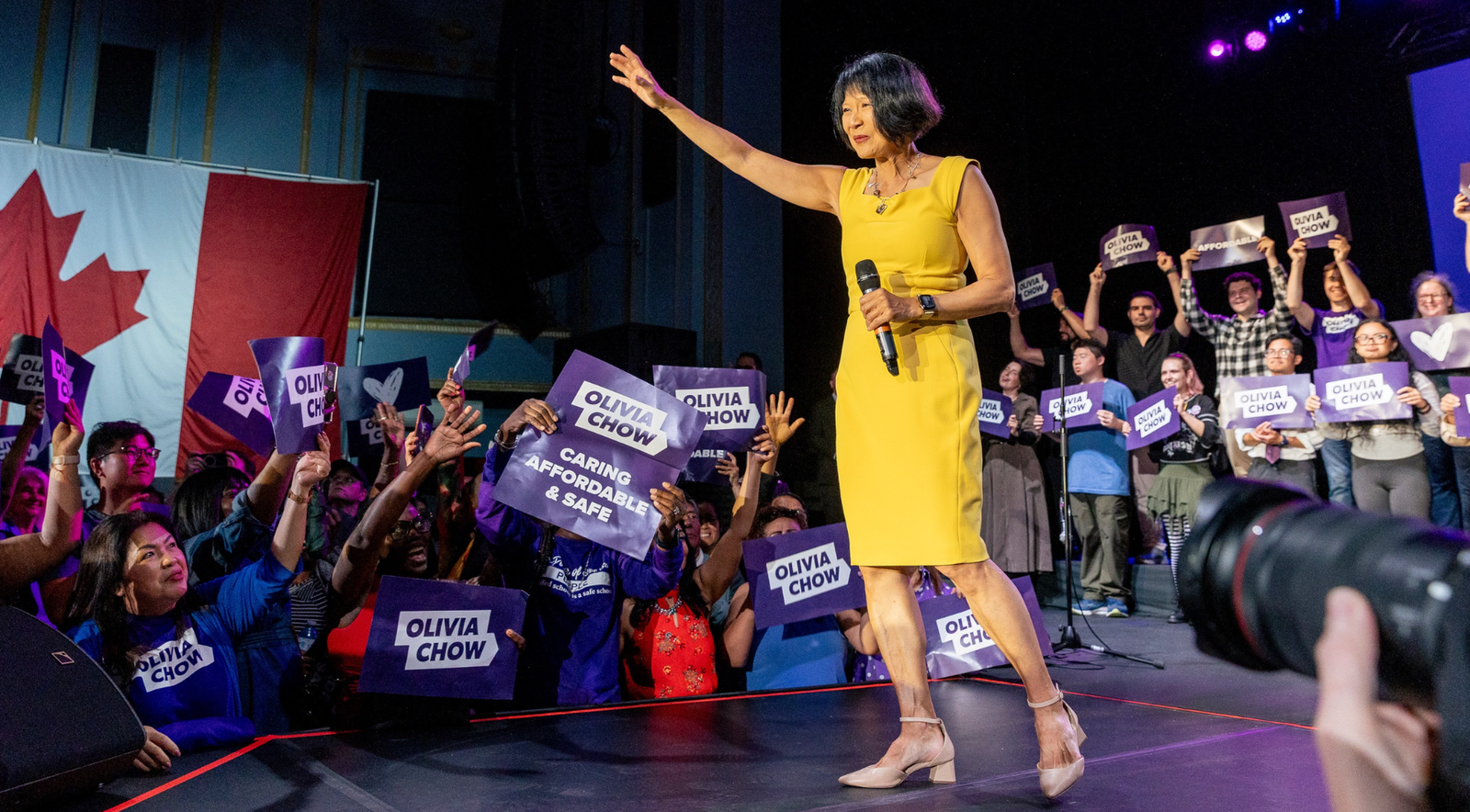
Her own speech focused on concrete accomplishments: affordable housing under construction, library access, TTC service and fares, faster 911 response times, mental-health crisis workers, school food and enforcement against landlords.
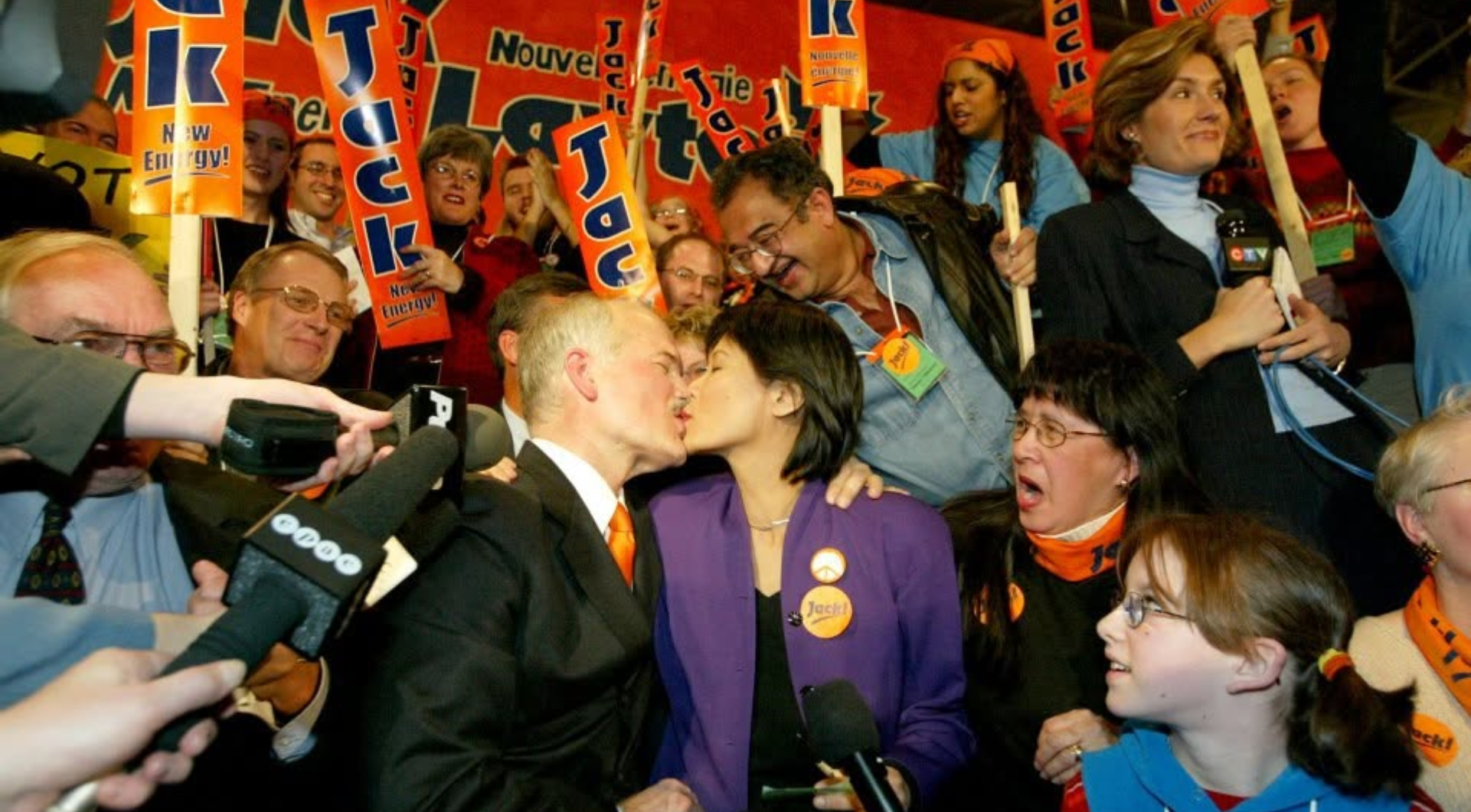
Chow also talked about the school food program and tied it back to her late husband. Jack, she said, always believed government was supposed to deal with the real stuff: whether people can pay rent, whether kids are hungry, whether working families have any breathing room. The food program, in her telling, was a piece of that.
I'll admit that landed. Invoking Jack Layton is an easy applause line in a room like that, and everyone knows it. But the program exists. Kids are eating. That's harder to dismiss than a slogan.
A campaign speech is not an independent audit, and politicians naturally present their records in the most favourable light. Still, Chow's approach was rhetorically effective because she emphasized things her government had actually attempted or implemented instead of offering only vague promises about a better future.
What moved me, and what needs work
I arrived at the event thinking Chow has been too willing to retreat when political pressure intensifies. The stormwater charge reversal remains the clearest example. The proposal had a defensible purpose: properties with larger impermeable surfaces place greater pressure on infrastructure and should reasonably be expected to contribute more toward that system. But rather than make that case forcefully, Chow backed away.
The retreat left working Torontonians carrying more of the burden for infrastructure that benefits the entire city. Her response to provincial interference over Toronto's bike lanes has also raised similar concerns.
Chow cannot build a truly progressive city while she continues to allow the right-wing establishment media to set the terms and conditions of what is politically acceptable. That criticism does not erase her accomplishments, nor does it erase what her supporters see in her.
By the end of the evening, I remained critical of Olivia Chow, but I also understood her supporters more clearly. They were not there simply because she was not Brad Bradford. They were there because she shows up for them—in tenants' buildings, immigrant communities, libraries, neighbourhoods and public institutions.
Olivia Chow deserves the opportunity to finish what she and Jack Layton started: a Toronto where newcomers can build lives, working families can remain in their communities, artists can contribute without being priced out, and renters can live with dignity.
This piece was written by an individual contributor and reflects the editorial position of The Provincial Times. Read our Content Policy here.
Comments